The short answer
The changes that transform a bathroom are structural to the eye rather than expensive: more light, a larger and better-glazed shower, a continuous floor, and a vanity that is the right height and depth. Almost every dramatic before-and-after is those four things, and the finishes get the credit.
The trends worth committing to are the ones that stay useful when they stop being fashionable — large-format tile, frameless glass, layered lighting, wall-hung storage, and restrained neutral surfaces. The ones that age badly are the ones that date a room to a year: a signature tile shape, a strong accent colour in ceramic, or a fixture finish chosen because it is currently everywhere.
Keep personality in the layer that changes cheaply — paint, mirror, lighting, textiles, hardware — and keep the permanent layer quiet. That single rule prevents most bathroom regret, and it costs nothing to follow.
Key takeaways
- Light, glass, floor and vanity do most of the visible work in any transformation.
- A frameless enclosure changes the perceived size of a bathroom more than any other single element.
- Large-format tile means fewer grout lines, which is both a look and a maintenance decision.
- Trend risk lives in tile and stone; personality is safer in paint, lighting and hardware.
- Every surface has a cleaning cost — choose finishes for the household that will actually maintain them.
- Ventilation is the least glamorous specification in the room and the one that protects everything else.
Before and After Bathroom Transformations
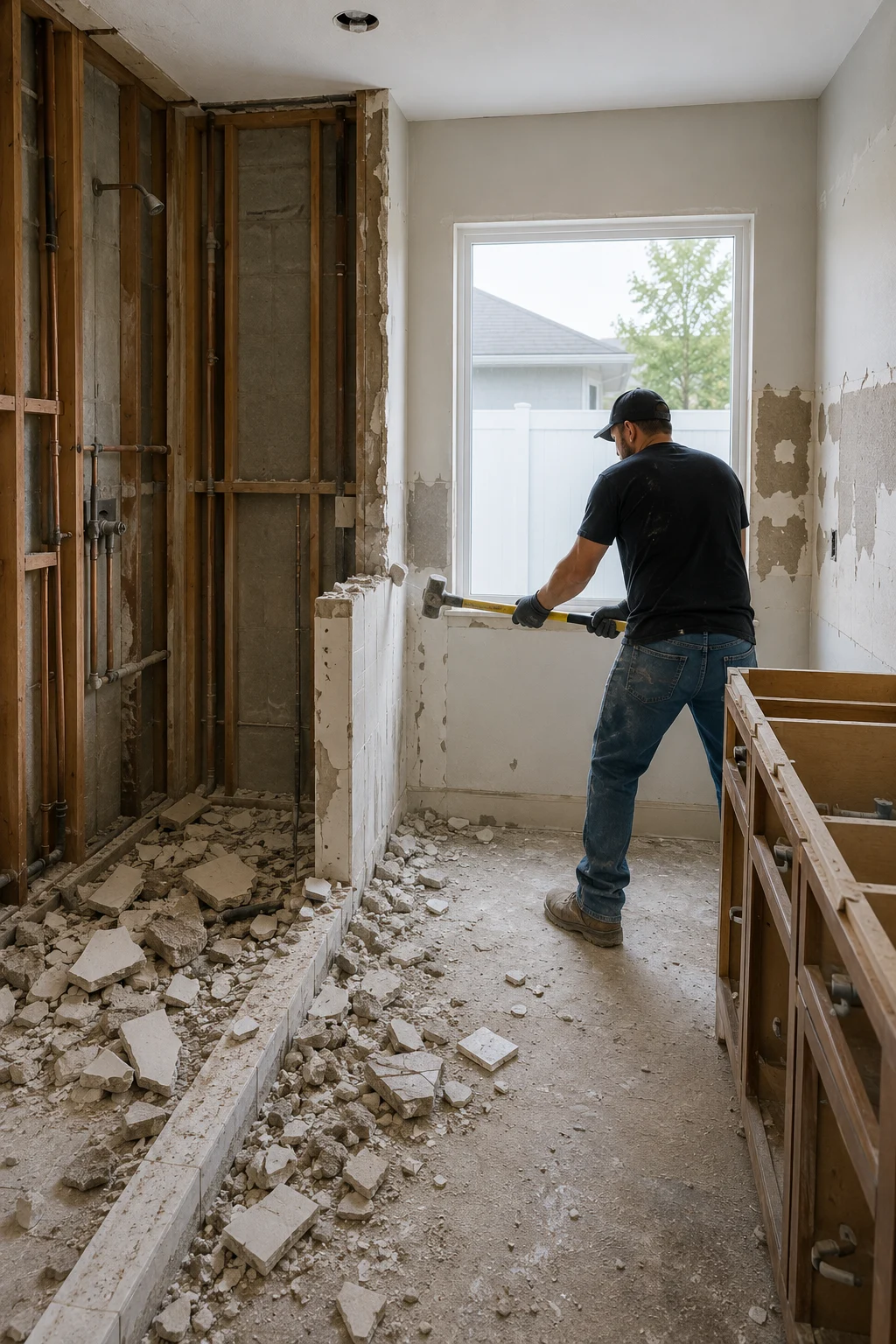
The most useful thing about a real before and after is not that the new bathroom looks better. It is that comparing the two shows which decisions did the work — and it is rarely the ones that get admired.
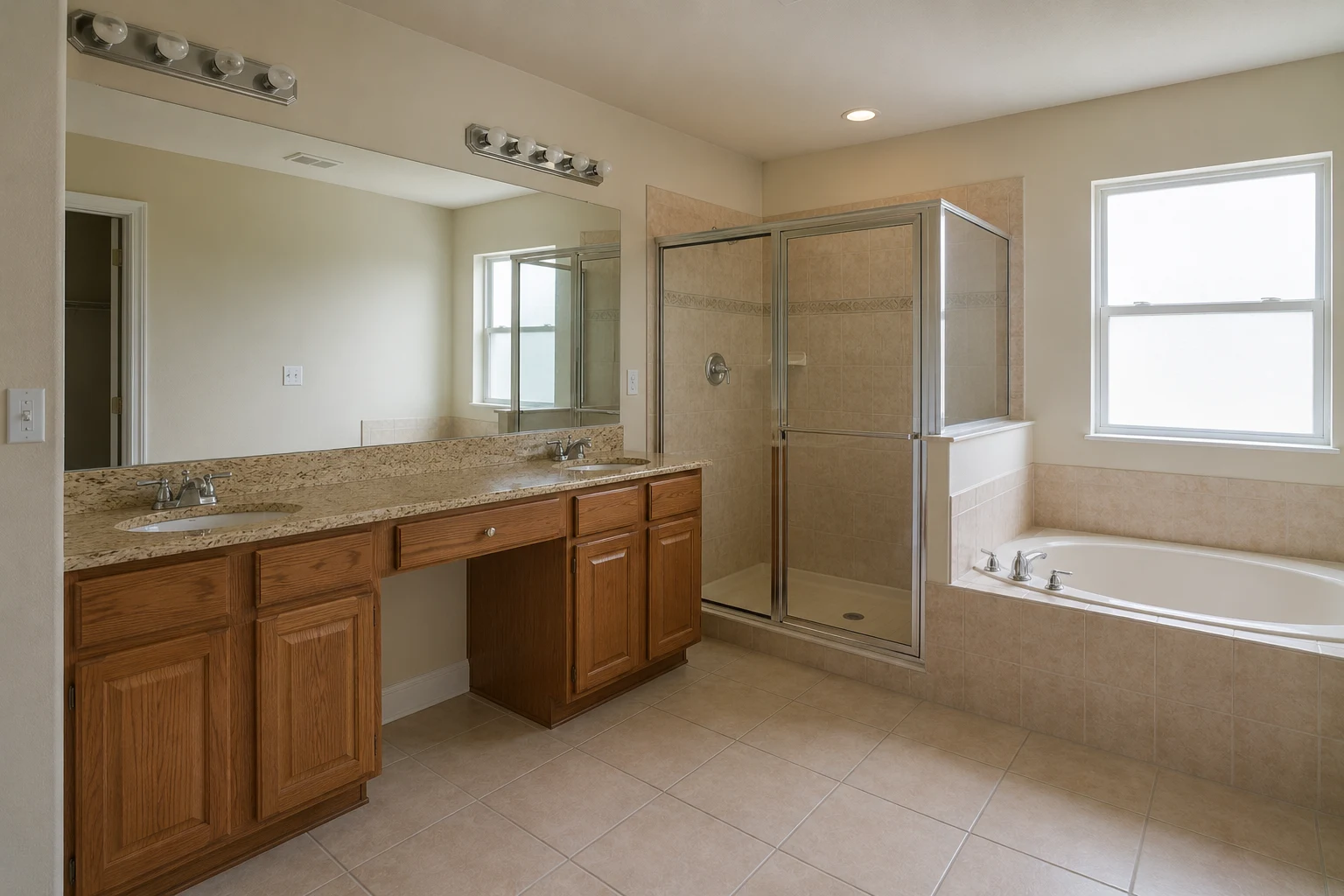
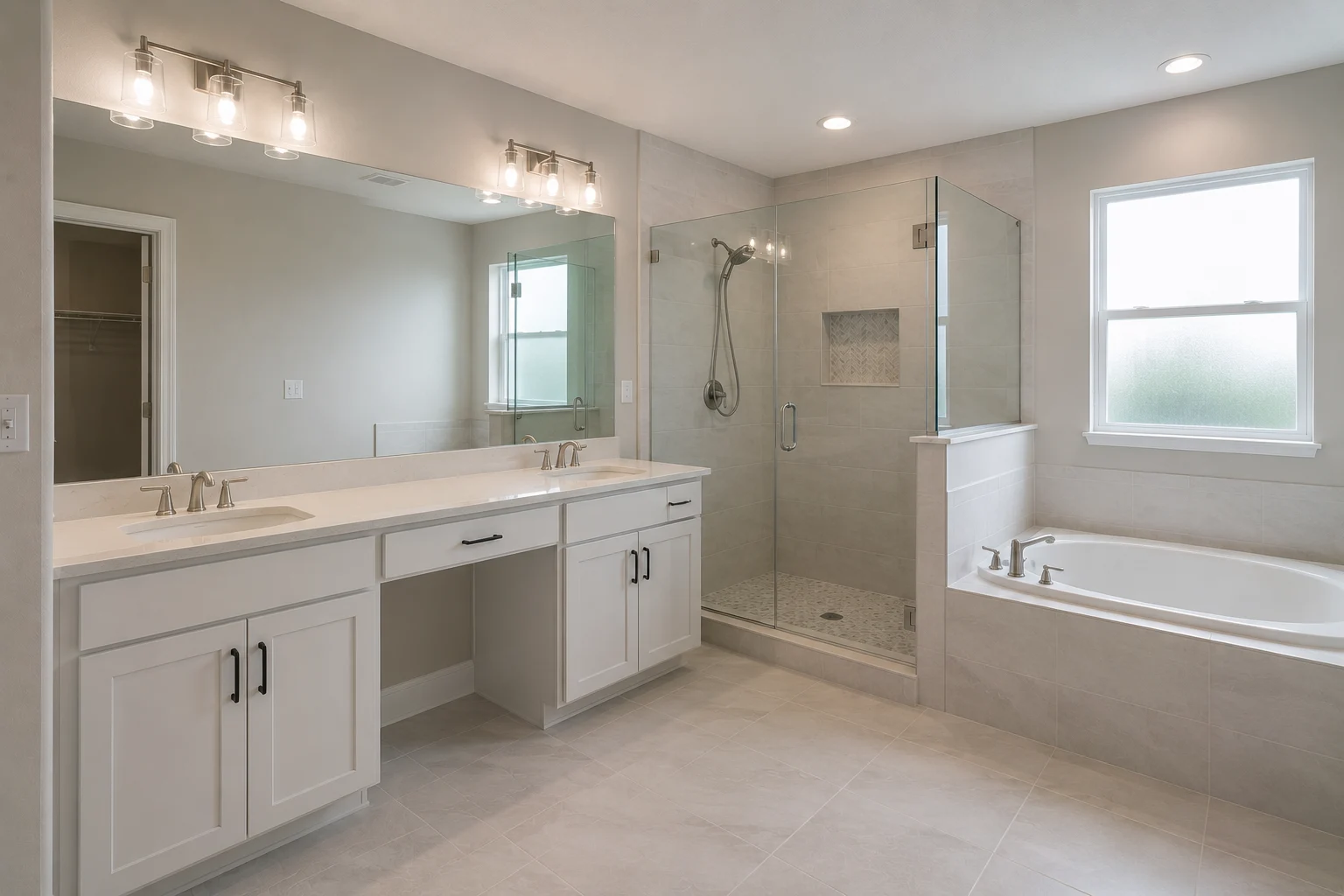
What actually changed
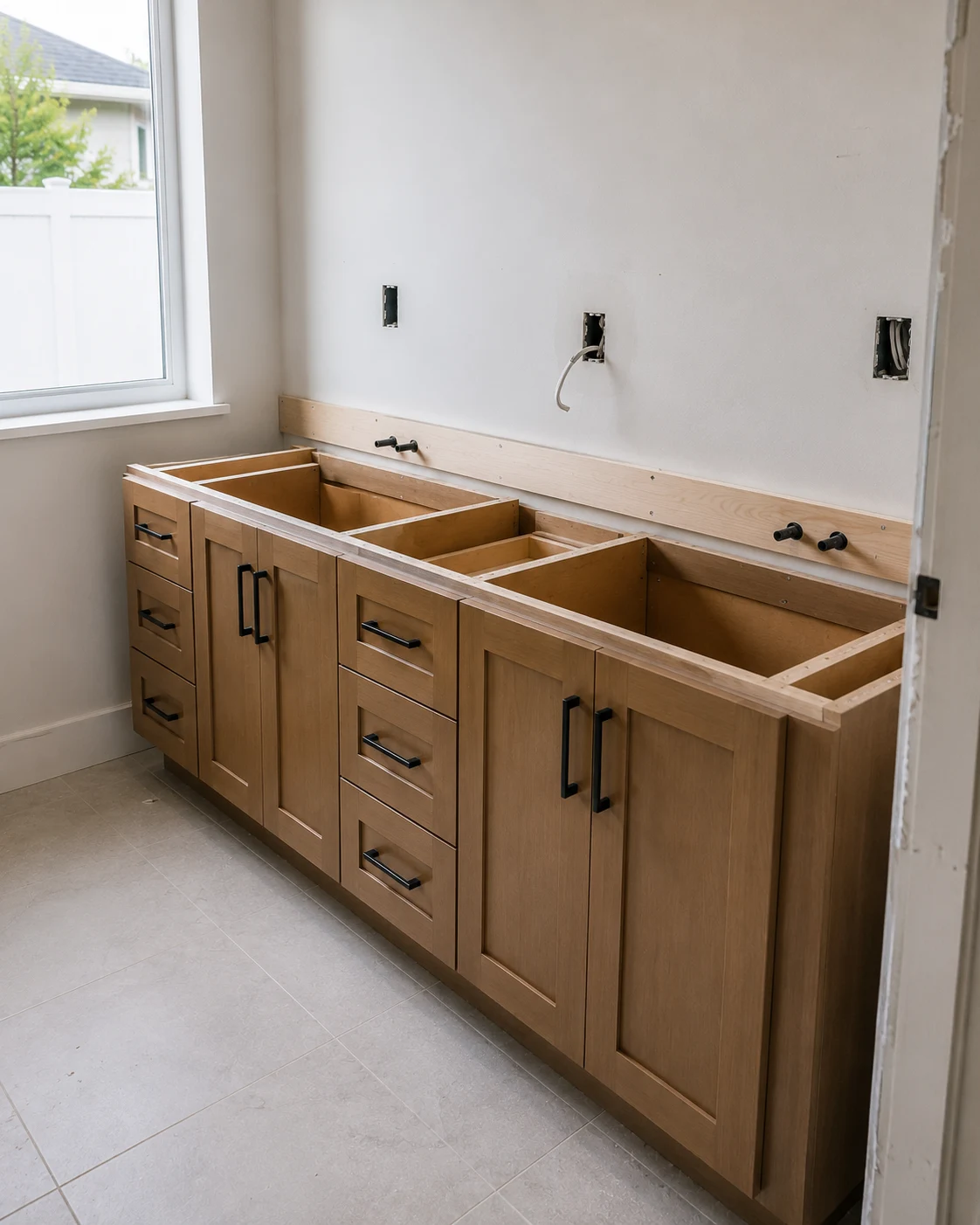
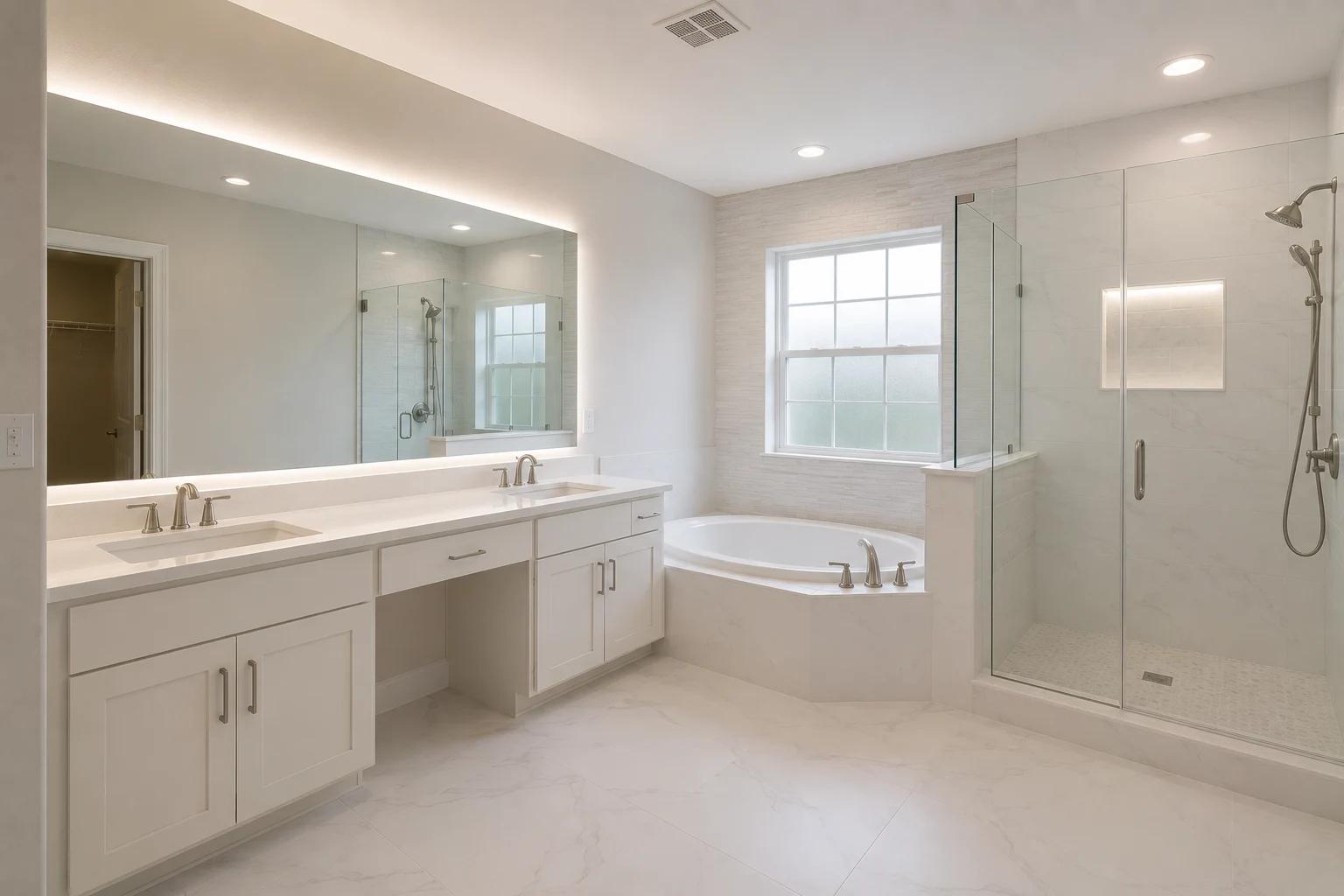
Look at the two images and subtract everything that stayed the same. The walls did not move. The tub is in the same corner. The vanity occupies the same run, with the same knee space in the middle and the same mirror width.
Four decisions did the visible work:
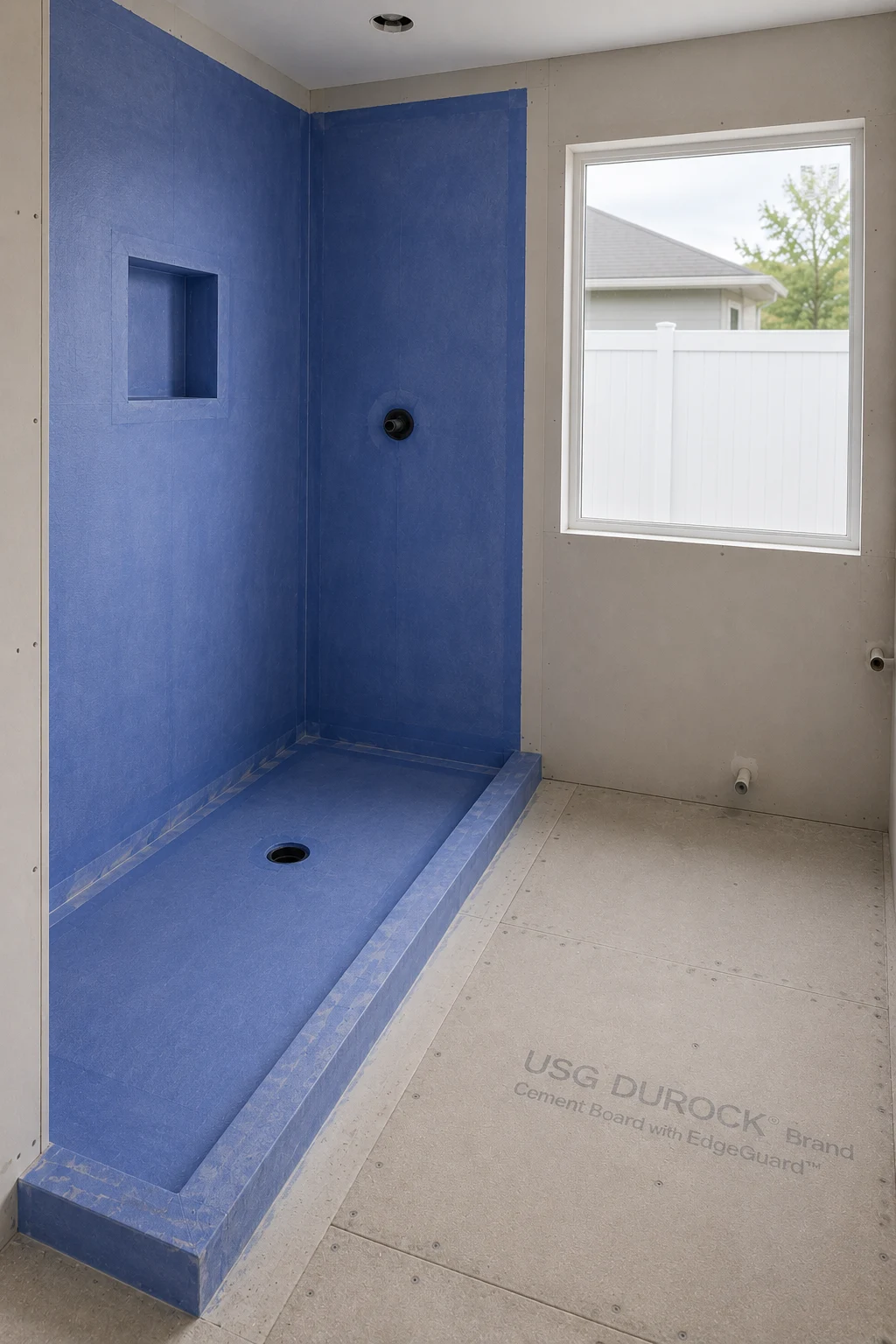
The enclosure. Framed sliding glass became a frameless panel and door. That single change removes a hard metal frame from the middle of the room and lets the eye travel to the back wall of the shower instead of stopping at the glass.
The tile format. Small beige tile with many grout lines became large-format tile with few. The floor now reads as a continuous surface, which is why the room looks wider without being wider.
The cabinet colour and hardware. Heavy honey oak became a pale painted cabinet with dark, simple pulls. This is the change most people notice first and the least structural of the four.
The lighting. An exposed-bulb bar became a proper fixture, and the light quality changed the way every other surface in the room reads.
The principle worth taking from it
Dramatic transformations are usually not dramatic construction. When the layout already works, the money should go into what you see continuously — glass, tile format, light, and cabinet colour — rather than into moving plumbing.
That distinction is also what separates a two-week bathroom from a six-week one, which is worked through in our guide to the bathroom remodel timeline.
When the layout genuinely is the problem
Sometimes it is. A shower too small to use, a vanity that blocks the door, a tub nobody has filled in a decade occupying a quarter of the room — those are functional faults that no finish can fix, and they are the cases where moving plumbing earns its cost.
The honest way to tell them apart is to ask whether your complaint survives imagining the room with new finishes. If it does, it is a layout problem.
Modern and Luxury Bathroom Design Trends
Trends are only useful with a filter, so here is one: a trend is worth committing to when it still makes the room work better after it stops being fashionable.
Trends that pass the filter
Frameless glass. It removes visual clutter, it makes the room read larger, and it is easier to clean than a framed enclosure with tracks. None of that depends on fashion.
Large-format tile. Fewer grout lines is simultaneously a cleaner look and less maintenance. Both hold regardless of what is current.
Layered lighting. General light, dedicated light at the mirror, and something soft at low level. This is a functional improvement that happens to look expensive.
Wall-hung and integrated storage. Floor visible under a vanity makes a bathroom feel bigger, and a recessed niche removes the shelf clutter that spoils otherwise good showers.
Restrained neutral surfaces. The permanent layer is where trend risk is expensive, so quiet surfaces are a structural decision rather than a timid one.
Trends that fail it
Signature tile shapes used at scale. A distinctive geometry across a whole wall names the year the bathroom was built.
Strong colour in ceramic or stone. Colour is wonderful and it belongs in paint, textiles and art, where changing your mind costs an afternoon.
Whatever fixture finish is currently everywhere. By definition it will read as dated when it stops being everywhere, and it is a genuinely expensive item to replace across a full bathroom.
Elaborate shower systems that add complexity, valves and failure points for a feature most households use twice a year.
What “luxury” actually looks like in a bathroom
Not more objects. More space around the objects, better light, better glass, and materials that are consistent rather than numerous.
The single most reliable luxury signal is a genuinely large shower with clear glass and a well-considered niche. The second is continuity: the same tile from floor into shower, one metal finish, one stone. Bathrooms feel expensive when they feel decided.
In the older neighbourhoods around Winter Park, where houses have architectural character of their own, restraint pays twice: the bathroom stays current and it stops fighting the house it sits in.
Tile, Paint, and Fixture Upgrades
This is where most bathroom budgets are actually decided, and where the difference between a good result and an expensive one is mostly sequencing and restraint.
Tile
Choose the format before the pattern. Large-format tile means fewer grout lines, a calmer surface and less maintenance, and it is the decision that most affects how big the room feels.
Running the same tile from the floor up into the shower makes a small bathroom feel less fragmented than changing material at the threshold. Where you want texture, put it in one place — a niche, a single shower wall, the floor of the shower pan — rather than in three.
Grout colour is not a detail. A grout close to the tile colour makes the surface continuous; a contrasting grout turns the tile into a grid, which is a legitimate choice but a much stronger one than most people intend.
Paint
Paint is the cheapest lever in the room and the one that carries the most personality per dollar, which is exactly why colour belongs here rather than in ceramic.
Two practical points. Bathrooms need a finish that tolerates moisture and repeated cleaning, so the product specification matters more than in a bedroom. And ceilings in bathrooms take more abuse than anywhere else in the house, so they are worth including rather than skipping.
The colour reads differently under bathroom lighting than it does on a chip in a store, which is why testing on the actual wall, under the actual fixture, is worth the day it costs — a discipline that applies to any interior painting decision but matters most in a small, hard-surfaced room.
Fixtures and hardware
Pick one metal finish and hold it across taps, shower, hardware and lighting. Mixed metals can be done well, but it is a deliberate design move rather than a default, and doing it accidentally is the most common way a bathroom looks unresolved.
Prioritise the shower valve over the visible trim. The trim is what you see; the valve is what determines whether the shower is pleasant to use and whether it can be serviced without opening a wall in five years.
Ventilation, which nobody puts on a mood board
An adequately sized, correctly ducted extractor fan is the least glamorous specification in the bathroom and the one that protects every other decision in it. In this climate, moisture that has nowhere to go finds its way into paint, grout and cabinetry.
Putting it in order
Decide the layout, then the tile format, then the glass, then lighting, then cabinet colour, then paint, then hardware. Each decision constrains the next, and taking them out of order is how bathrooms end up with a beautiful tile that fights a vanity that was chosen first.
Where the plan is to keep the room for years, that order is worth following properly, and a scoping conversation about the bathroom remodel itself is the point where budget and specification stop being separate lists — the cost side of that conversation is set out in our bathroom remodel cost guide.
Where the room is being prepared for sale instead, the calculation is different and narrower, and it is covered directly in our guide to whether a bathroom remodel increases home value. Around Ocoee and the surrounding established neighbourhoods, that difference decides which half of this article applies to you.
Share this article