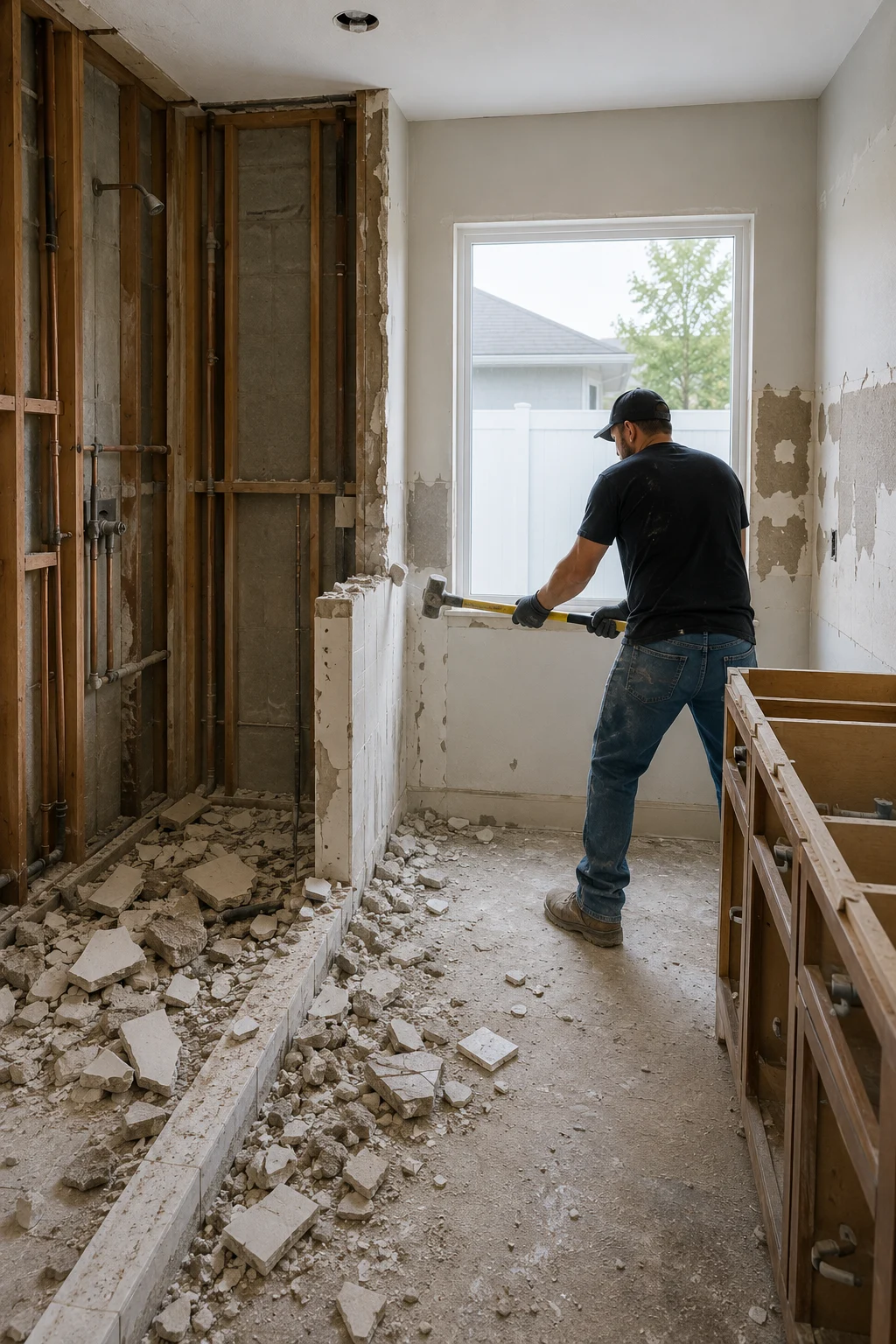
The short answer
A bathroom remodel generally supports the value of a home rather than adding a separate premium to it. A dated or failing bathroom is one of the fastest ways to lose buyers and to attract a price reduction; an updated one removes that objection. That is a real return, and it behaves differently from an investment that adds value on its own.
Published return percentages are national averages of finished projects in other markets, and they cannot be applied to a specific house. What can be said reliably is directional: the return is highest when the bathroom was in poor condition, when the work is permitted, and when the result is in line with what the street supports rather than above it.
Between a tub and a shower, the honest answer depends on how many bathrooms the house has. A home with only one full bathroom should keep a tub, because a proportion of buyers require one. Where a second full bathroom already provides a tub, converting the primary to a large shower is usually the stronger decision.
Key takeaways
- A bathroom mostly removes an objection rather than adding a premium. That is still worth money, and it is invisible in any percentage table.
- An appraiser values condition and quality, and counts area only where it was permitted and finished. Unpermitted work is commonly excluded entirely.
- The return is highest on the worst bathroom in the house, and lowest on the one that was already acceptable.
- Do not exceed the street. A bathroom finished well above what surrounding properties support does not recover the difference.
- Keep a tub if it is the only one in the house. Convert to a shower where another full bath already covers that need.
- If selling within a year, cosmetic condition and cleanliness move a sale more reliably than a full remodel does.
The ROI of a Bathroom Renovation
The question is almost always asked as a percentage, and the percentage is the least useful part of the answer. It is worth explaining why before offering something more usable.
Why a single return figure would mislead you
Published return figures are national averages assembled from completed projects across many markets. They combine houses of different ages, in different price brackets, sold at different points in a cycle, with bathrooms that started in wildly different condition.
None of those variables is neutral. A bathroom remodel in a house where the existing bathroom was failing behaves completely differently from the same remodel in a house where it was merely dated. Applying an average across that gap produces a number that is precise and wrong.
What can be said honestly is directional, and it is more actionable than a percentage.
What a bathroom actually does for value
It removes an objection. This is the main mechanism and the one most often missed. A dated or visibly failing bathroom is one of the fastest ways to lose a buyer, and buyers who do not walk away instead reduce what they are willing to offer, usually by more than the repair would have cost. Fixing that does not add a premium — it stops a deduction.
It affects how quickly a house sells, and speed has a cost of its own in carrying, price reductions and negotiating position.
It adds capability only when it adds a bathroom. Upgrading an existing bathroom improves the house. Adding one changes the category of listing it competes in, which is a different order of effect.
The three conditions that decide the return
Starting condition. The return is highest on the worst bathroom in the house and lowest on the one that was already acceptable. This is the single largest variable and it is entirely specific to your property.
Permitting. Work that was permitted and closed out is documented and countable; work that was not is frequently excluded from finished area and can complicate a sale, as covered in our guide to bathroom remodeling timelines and permits.
Alignment with the street. Every neighbourhood has a ceiling. A bathroom finished well above what surrounding properties support does not recover the difference, and in the more uniform master-planned communities around Horizon West that ceiling is unusually easy to identify — the comparable houses are on the same street.
Does a Bathroom Remodel Increase Home Value?
Understanding how the value is actually assessed makes the previous section concrete, because two different parties look at your bathroom and they do not look at it the same way.
What an appraiser does
An appraiser establishes value by comparing your property with recent sales of similar homes nearby and adjusting for differences between them. A bathroom enters that comparison in two ways: as condition and quality, which move the adjustment within a range, and as count and area, which are structural facts about the property.
Two consequences follow. An appraiser does not add what you spent — the invoice is not evidence of value. And area that was created without a permit is commonly excluded from the finished square footage entirely, which means an unpermitted bathroom addition can cost money without producing any recorded gain.
What a buyer does
A buyer is not appraising. A buyer is reacting, quickly and emotionally, and then mentally pricing the work they think they will have to do.
That second part is what matters. Buyers consistently overestimate the cost of work they can see, which is why a bathroom that looks tired is discounted by more than it would cost to update. It is also why cosmetic condition — clean grout, sound caulk, current lighting, fresh paint — moves a sale more efficiently than a full remodel does when the sale is imminent.
When the remodel is worth doing anyway
Three situations where the answer is clearly yes, regardless of the return arithmetic.
When the bathroom is failing. Water damage, a leaking shower or persistent moisture is not a value question, it is a building question, and deferring it makes everything downstream more expensive — the mechanics are the same ones set out in our guide to bathroom remodel costs.
When you will use it for years. Return matters when you sell; comfort matters every day until then, and several years of daily use is a legitimate reason on its own.
When the bathroom is the reason the house does not work. A single bathroom serving a family, or one that is genuinely unusable for someone in the household, is a functional problem rather than a financial one. For a household planning to stay as needs change, designing a bathroom for aging in place is the version of this decision that pays back daily.
When it is not
When you are selling within a year and the bathroom is merely dated. When the specification would exceed what the street supports. And when the money would be better spent on something the house needs more — which for many properties in the older parts of Winter Park is systems rather than finishes, a distinction developed in our guide to remodeling versus renovation.
That terminology question comes up constantly in this context and is worth settling briefly: a renovation restores what is there, a remodel changes what the space is, and for resale the distinction matters mainly because remodels are more likely to require permits and to change recorded area.
Tub vs. Shower: Which is Better for Resale?
This is the practical decision most bathroom projects actually contain, and it has a clearer answer than the ROI question does — provided it is asked about the house rather than about the room.
The rule that resolves most cases
Count the full bathrooms in the property.
If there is only one, keep a tub. A proportion of buyers — households with small children in particular — treat a bathtub as a requirement rather than a preference, and removing the only one narrows the pool of people who will consider the house at all. Whatever is gained in daily comfort is paid for at sale.
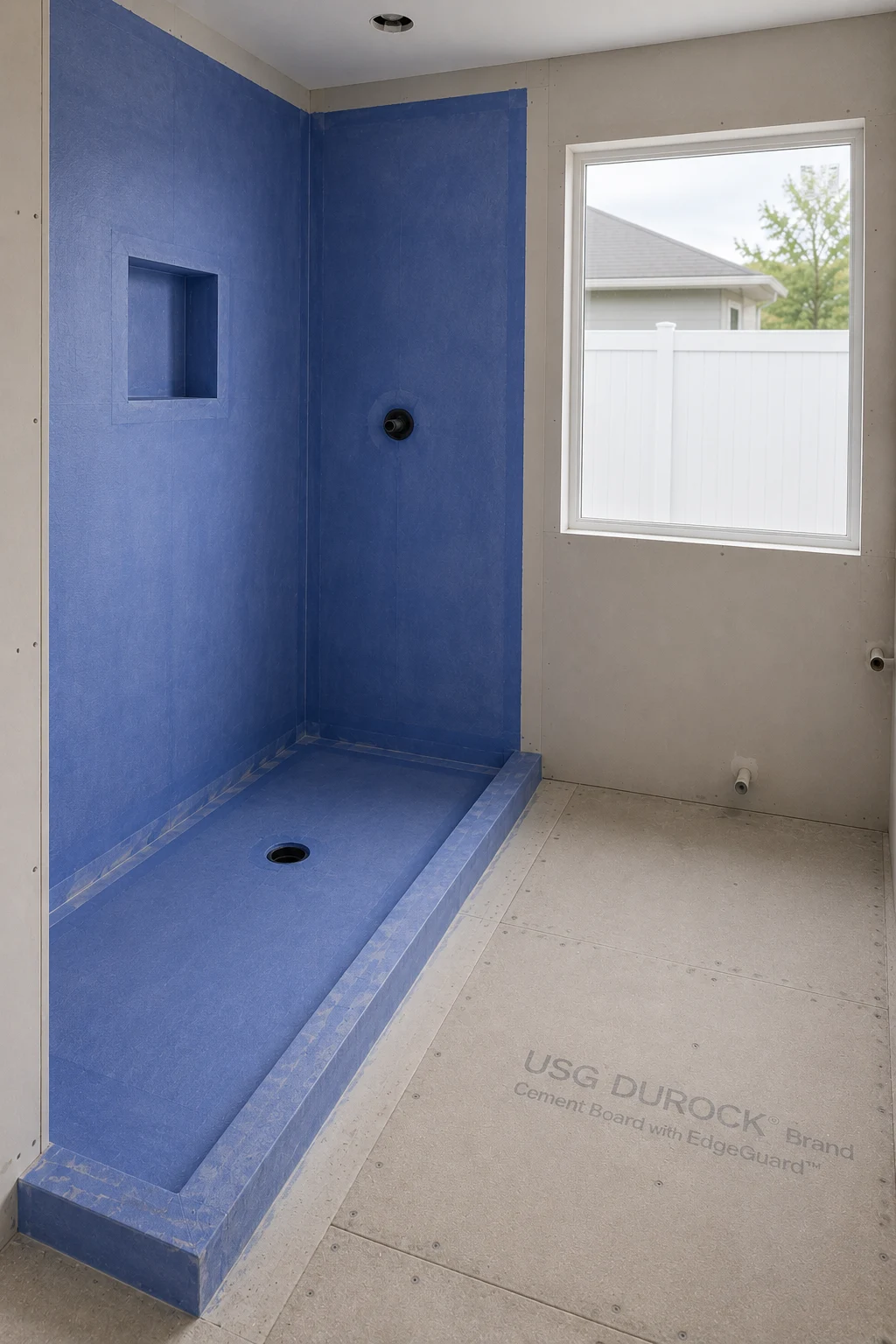
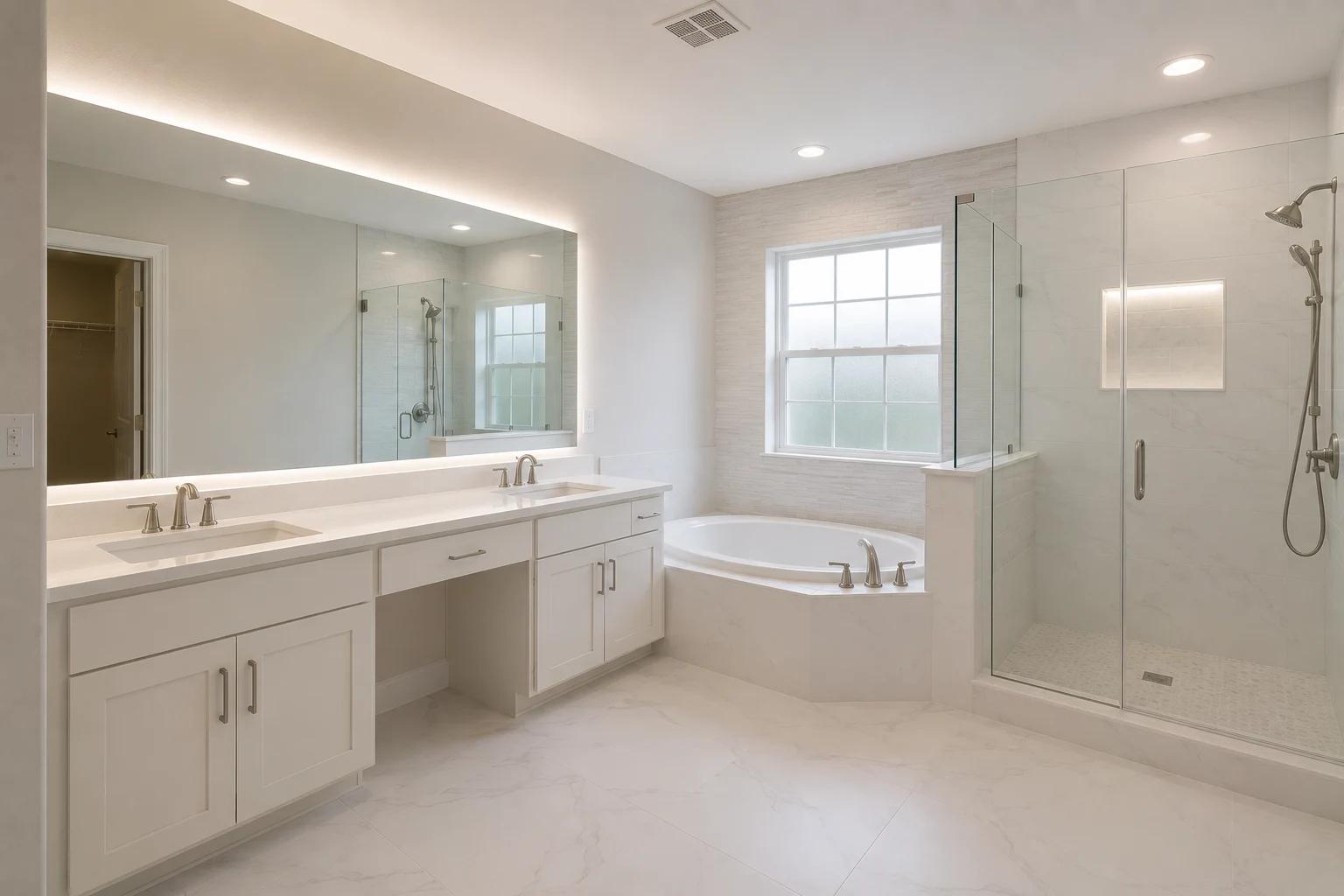
If there is a second full bathroom with a tub, converting the primary to a large, well-detailed shower is usually the stronger decision. It is what most adults use every day, it shows well, and the household requirement is already covered elsewhere in the house. The drain, valve and waterproofing work behind that change is laid out in converting a tub to a shower.
What makes a shower show well
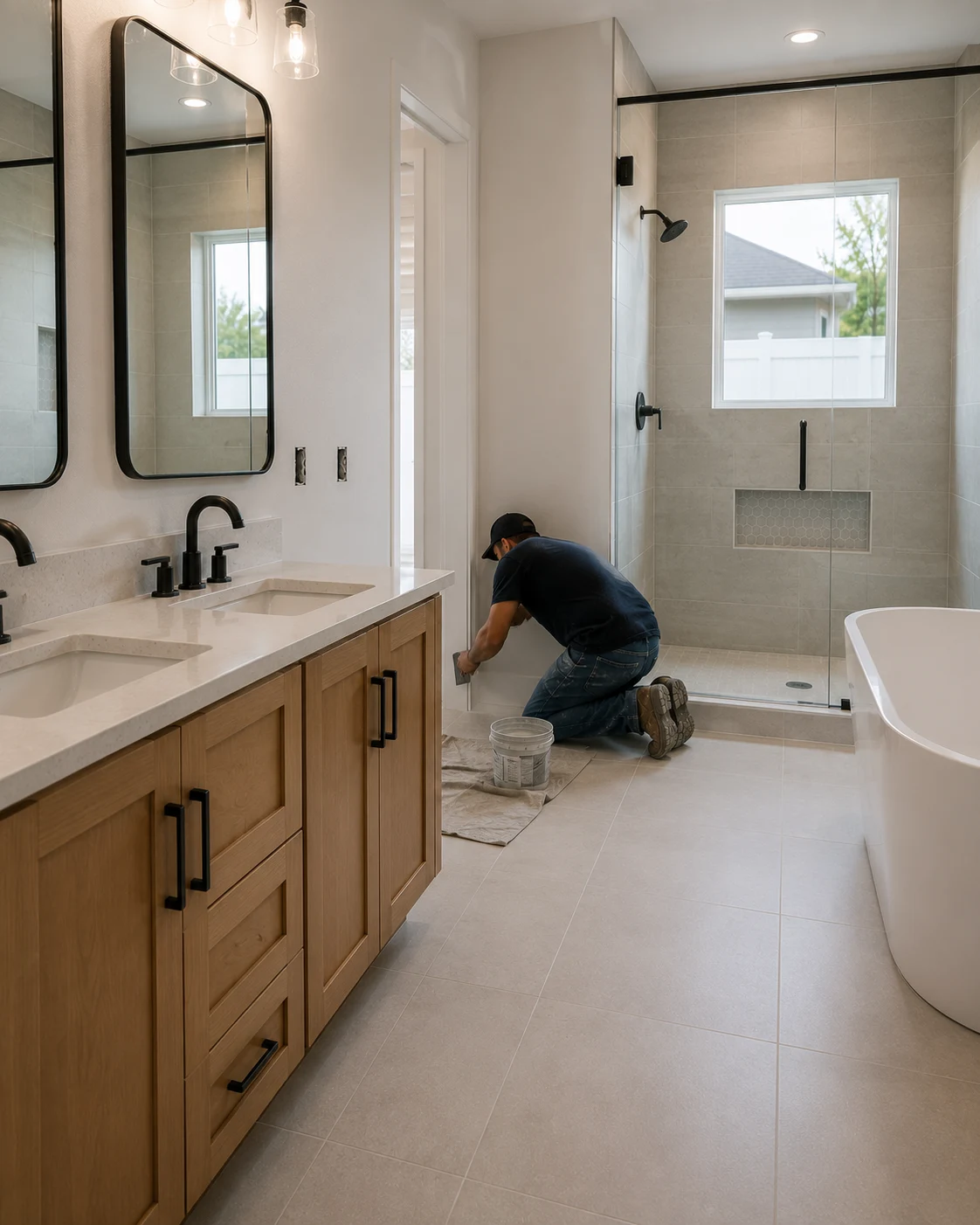
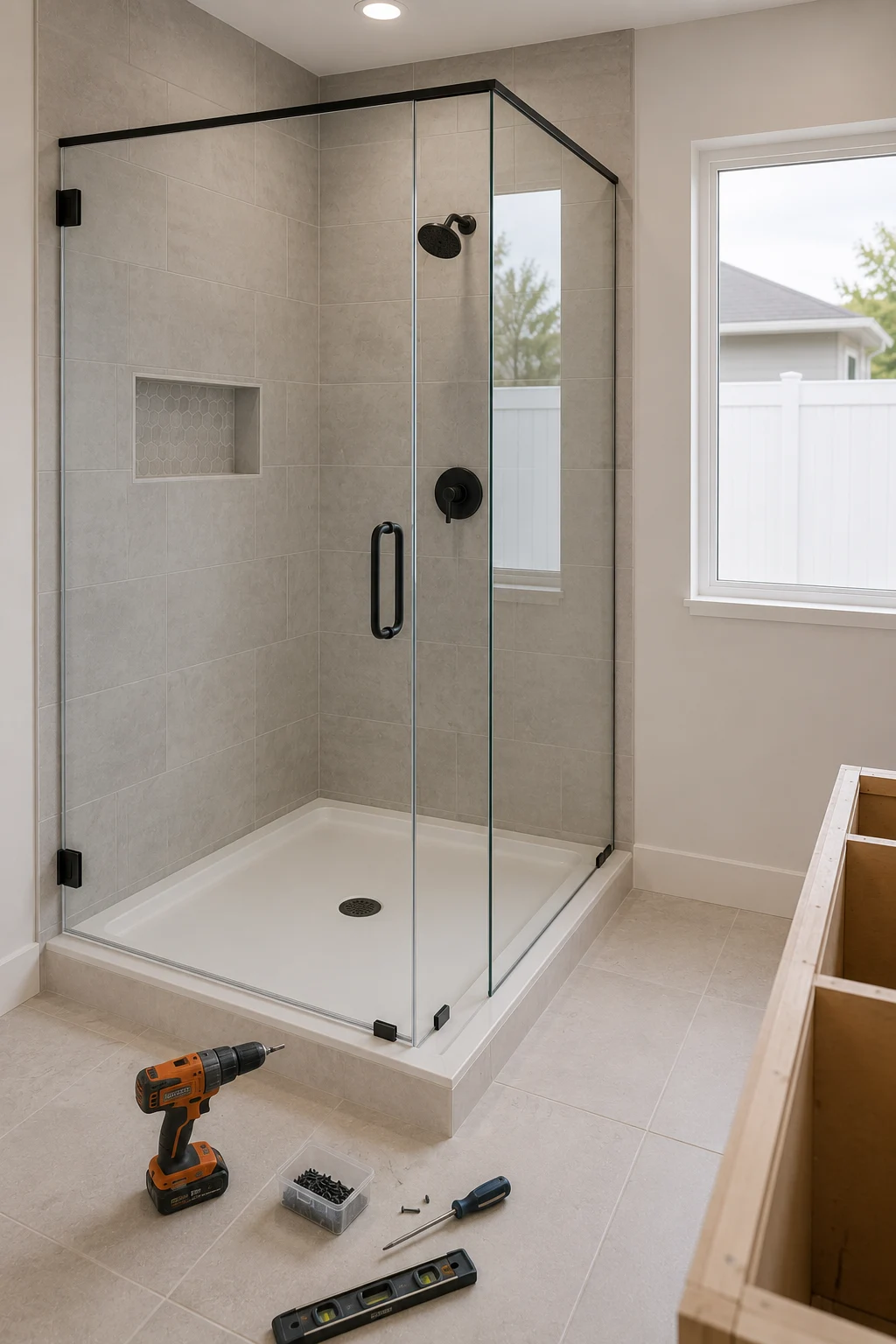
Size first: a shower that is genuinely large reads as a luxury far more effectively than expensive tile in a small enclosure. Then glass — frameless or minimally framed glass changes how big the room looks more than any other single element, and how frameless enclosures are specified decides whether it still looks that way in year five. Then a well-placed niche, a bench where the space allows, and a fixture that looks considered rather than builder-supplied.
None of that requires a large budget so much as decisions made in the right order.
What makes a tub worth keeping
If the tub is staying, it should be a tub someone would actually use. An undersized corner tub with a tiled surround occupying a quarter of the room is the worst of both outcomes: it consumes space and nobody bathes in it. Where the tub is being kept for resale reasons, keeping it in the second bathroom and giving the primary its shower is frequently the cleanest resolution.
| Keep the tub | Convert to shower | Both in the primary | |
|---|---|---|---|
| Right when | It is the only full bath in the house | A second full bath already has a tub | The room is genuinely large |
| Effect on buyer pool | Keeps families in | Neutral where a tub exists elsewhere | Widest |
| Daily use for most adults | Lower | Highest | Highest |
| Space efficiency | Poor if the tub is unused | Best | Requires real floor area |
| Cost position | Lowest if kept in place | Moderate; may move drainage | Highest |
| Main risk | A tub nobody uses | Removing the last tub in the house | Crowding the room to fit both |
Reading it by scenario: keep the tub in a one-bathroom house, convert in a house that already has one elsewhere, and fit both only where the room is large enough that neither is compromised — which is less often than floor plans suggest.
The decision worth making before any of this
Establish what the house needs before deciding what the bathroom gets. A property with one bathroom and a dated kitchen has a different priority order from a property with three bathrooms and failing wiring.
The most useful preparation is unglamorous: walk the street, look at what comparable houses offer, and note where your property sits. Then decide whether this project is being done to live with or to sell into — because those two goals produce different specifications, and trying to satisfy both usually produces a bathroom that does neither well.
Where the answer is to live with it, the decision belongs with your own use rather than with a resale table, and a measured bathroom remodeling conversation should start there. Where the answer is to sell, the cheapest interventions — interior painting, lighting, caulk and grout, and a consistent floor — do more per dollar than anything structural.
Share this article