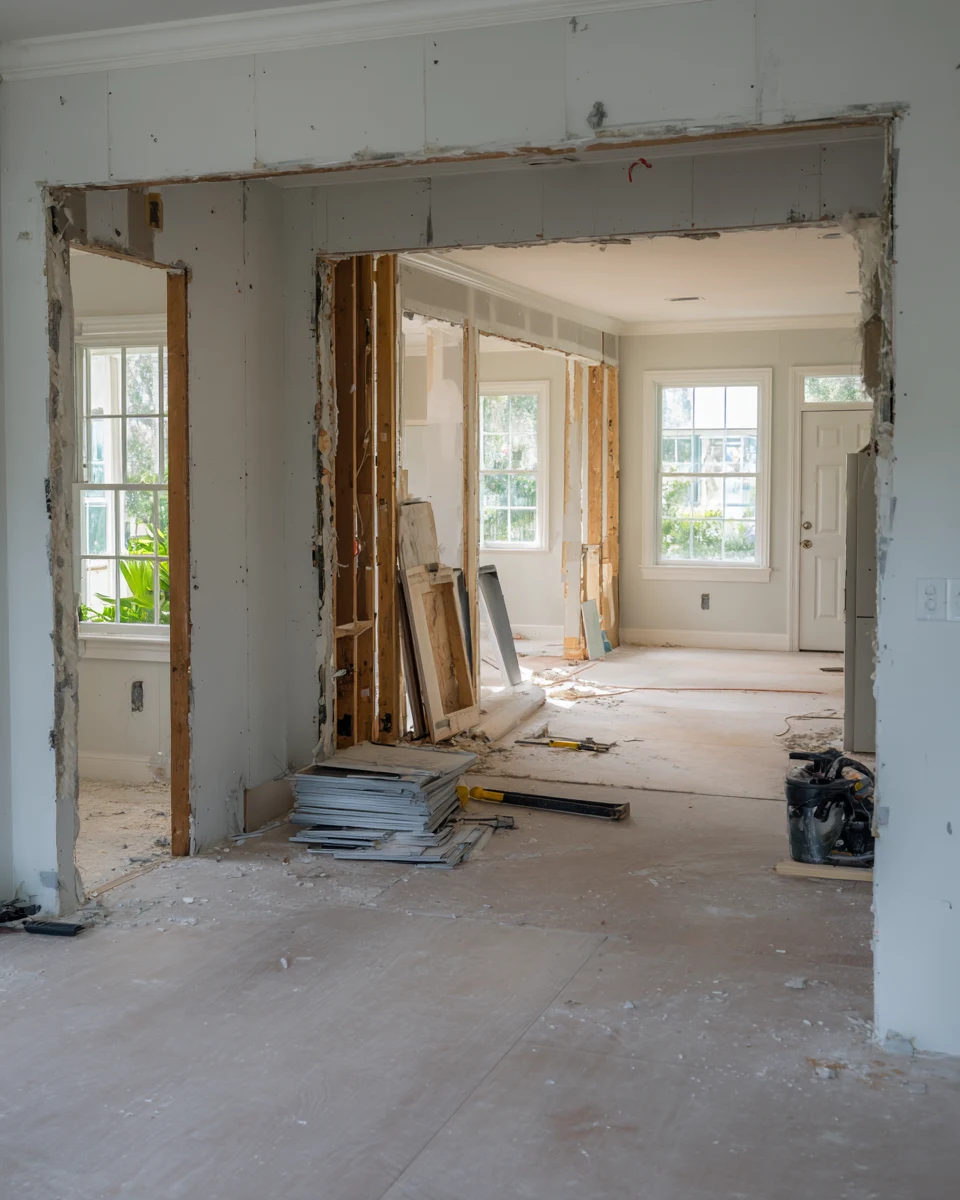
The short answer
Renovation means restoring or updating what already exists without changing what the space is: new finishes, new fixtures, repaired systems, the same rooms in the same places. Remodeling means changing the structure or the use — removing a wall, adding a room, converting a garage, moving a kitchen. The simplest test is whether the floor plan changes. If it does, it is a remodel.
The distinction is not vocabulary. It decides whether a permit is required, how the work is sequenced, how long it takes and what can be discovered halfway through. Renovation is largely predictable because the structure stays. Remodeling is where engineering, permits and unknowns enter.
Most real projects contain both, and the useful question is not which label applies but which parts of your project fall on each side — because that split is what determines the budget and the calendar.
Key takeaways
- If the floor plan changes, it is remodeling. If it does not, it is renovation. That single test resolves almost every case.
- Renovation is comparatively predictable; remodeling introduces structure, permits and engineering, and with them the unknowns.
- Failing systems are renovation work and they protect the value the house already has. Remodeling is what adds capability the house did not have.
- Where a house needs both, systems come first. Finishing a room and then opening its wall a year later means paying for the same finish twice.
- A single project usually contains both, so the useful exercise is splitting your own scope rather than choosing a label.
- Contractors price scope, not words. Describing the work — what moves, what is replaced, what stays — produces a better quote than either term.
Defining Home Renovation (Restoring the Old)
Renovation is work that improves or restores what already exists without changing what the space is. The rooms stay where they are, the walls stay where they are, and the house keeps the shape it had.
What falls inside it
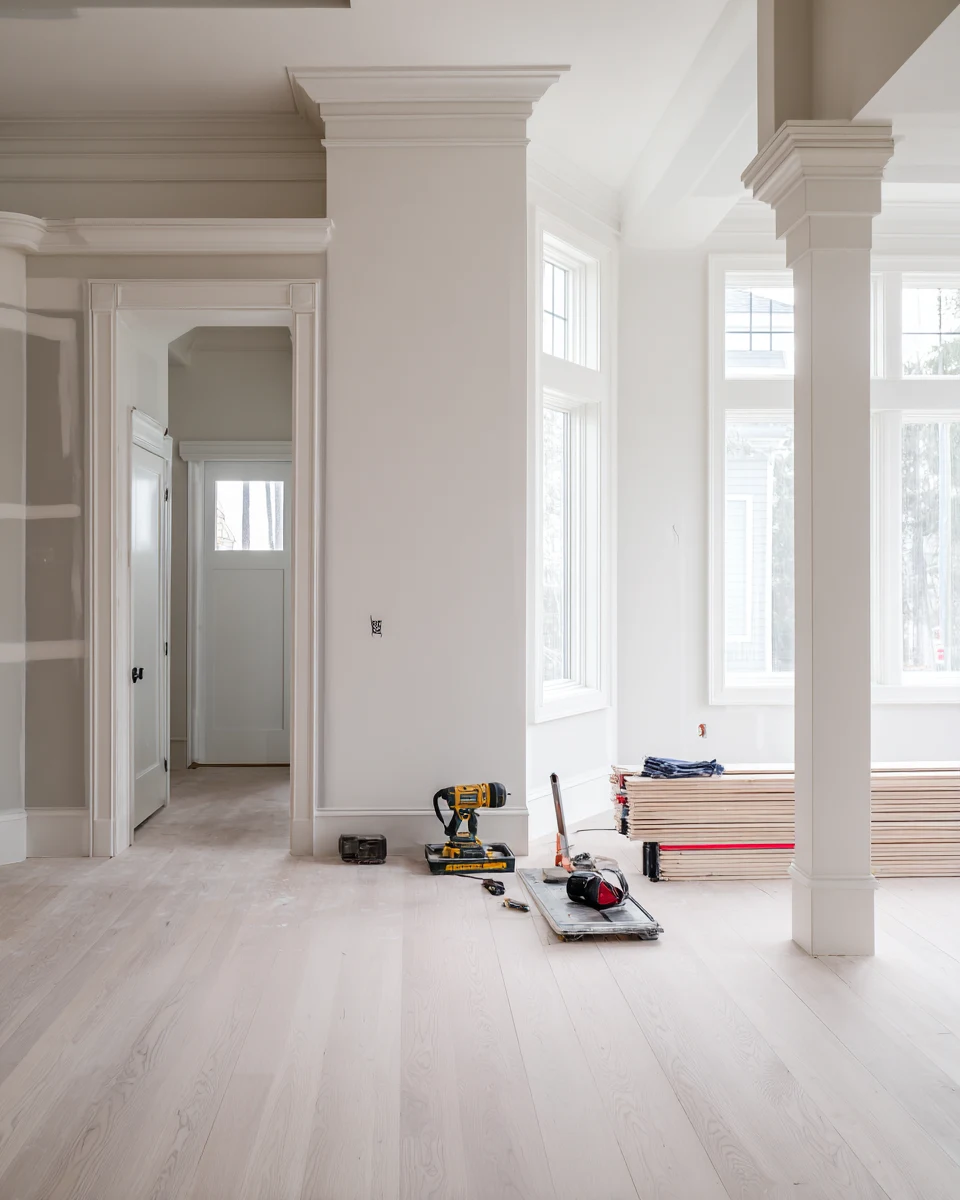
New flooring throughout. Repainting. Replacing kitchen cabinets and countertops in the same positions. New bathroom fixtures where the old ones stood. Replacing windows in existing openings. Rewiring, repiping and replacing ductwork. A new roof.
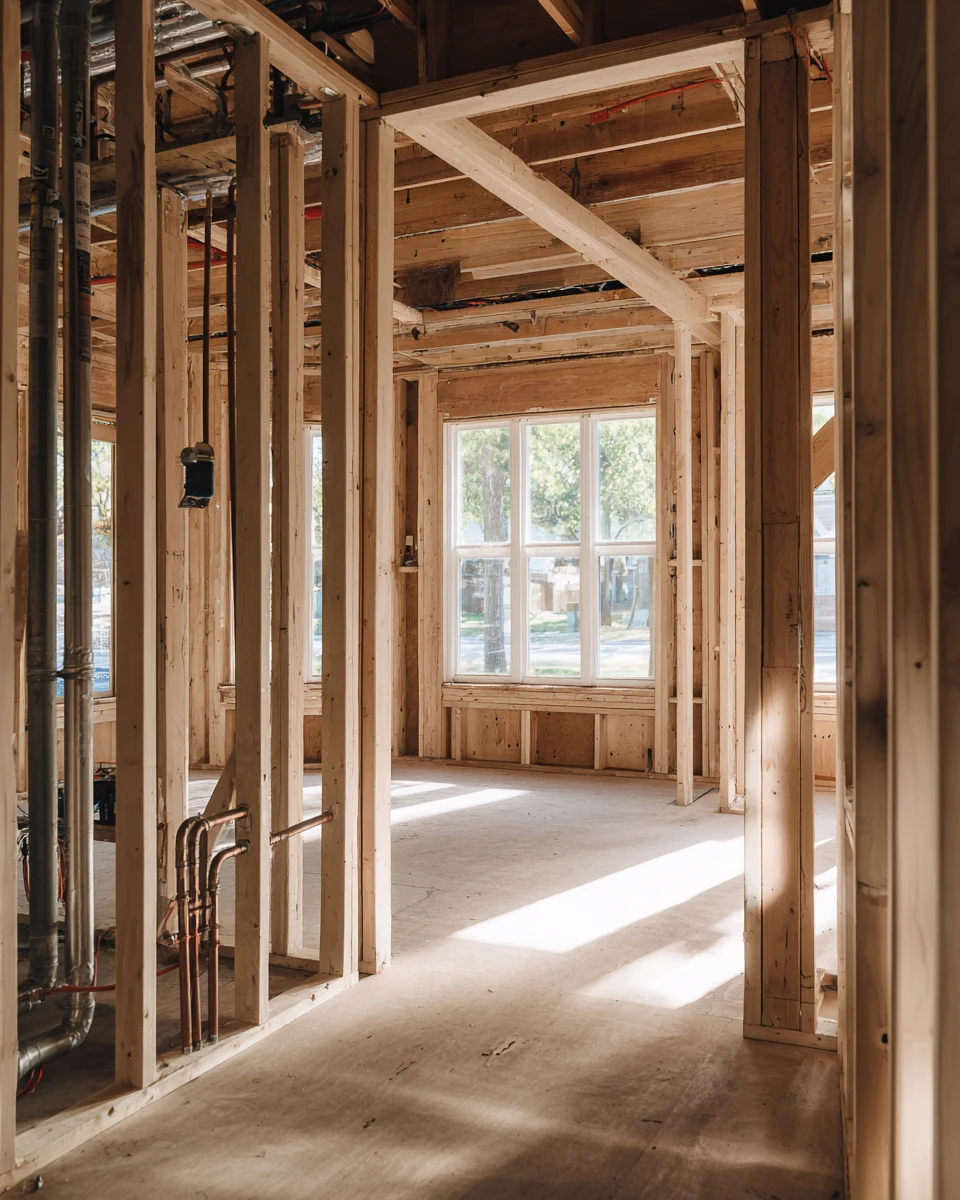
Some of that is expensive and some of it is disruptive — repiping a house is neither cheap nor tidy — but none of it changes what the space is. That is the defining characteristic, and it is why renovation is comparatively predictable to price and to schedule.
Why renovation is the more predictable of the two
Because the structure is not in question. Nobody has to calculate a load path, no engineer has to sign a drawing, and the room you will have at the end is the room you have now with better parts in it.
The unknowns that remain are about condition rather than geometry: what state the wiring is in, whether the subfloor is level, whether there is a slow leak somebody has been living with. Those are real and they are the reason renovation budgets need contingency, but they are a smaller category of surprise than the ones remodelling introduces.
The kind of renovation that is not optional
There is a category of renovation that is really maintenance deferred until it became a project: failing systems. A panel that cannot carry the load, plumbing at the end of its life, ductwork that has been leaking into an attic for a decade. The panel case is covered in upgrading an electrical panel.
This work is invisible when finished and it protects value rather than adding it, which is exactly why it gets postponed in favour of a new kitchen. In the older housing stock around Winter Park, it is frequently the larger half of a whole-house project and almost never the half the owner arrived wanting to discuss.
Defining Home Remodeling (Changing the Structure)
Remodeling changes what the space is. A wall comes out, a room is added, a garage becomes a bedroom, a kitchen moves to the other side of the house.
The test that settles almost every case
Does the floor plan change?
If the answer is yes, it is a remodel. That single question resolves nearly every real project without any need for further definition, and it maps directly onto the practical consequences.
What changes once the answer is yes
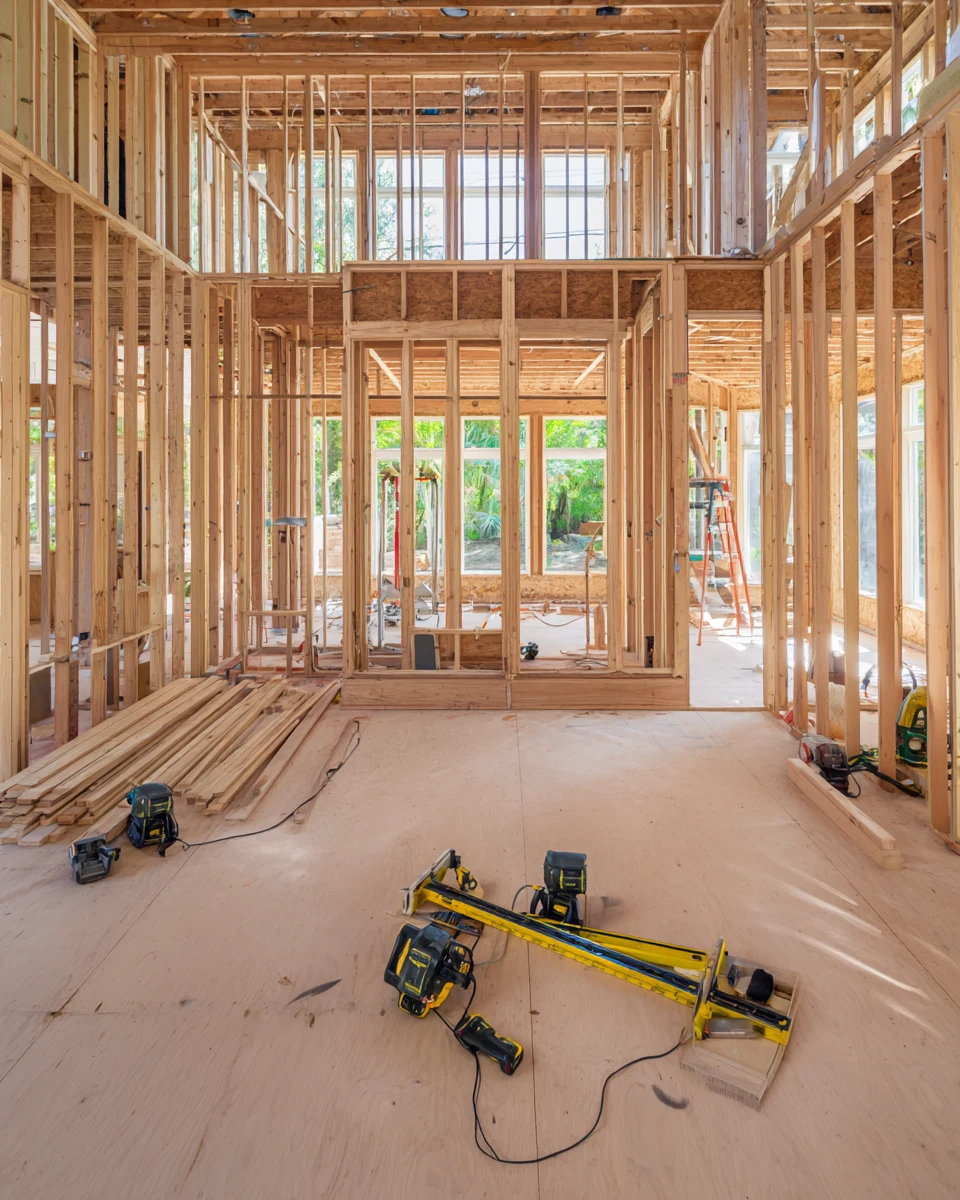
Structure enters. Removing a wall means establishing whether it carries load, and if it does, designing what replaces it. That is engineering, and it is a cost and a calendar item. How that decision is made is covered in converting to an open floor plan.
Permits become near-certain. Structural change, moving plumbing, adding circuits and altering openings are permitted work in every Central Florida jurisdiction, with inspections attached.
Unknowns multiply. Opening a wall reveals what is inside it, and in a house of any age something usually is: wiring that is not what you expected, a vent stack where the new opening was drawn, framing that was modified by a previous owner.
Sequence becomes rigid. Structural work comes first, then systems, then finishes. There is no reordering it.
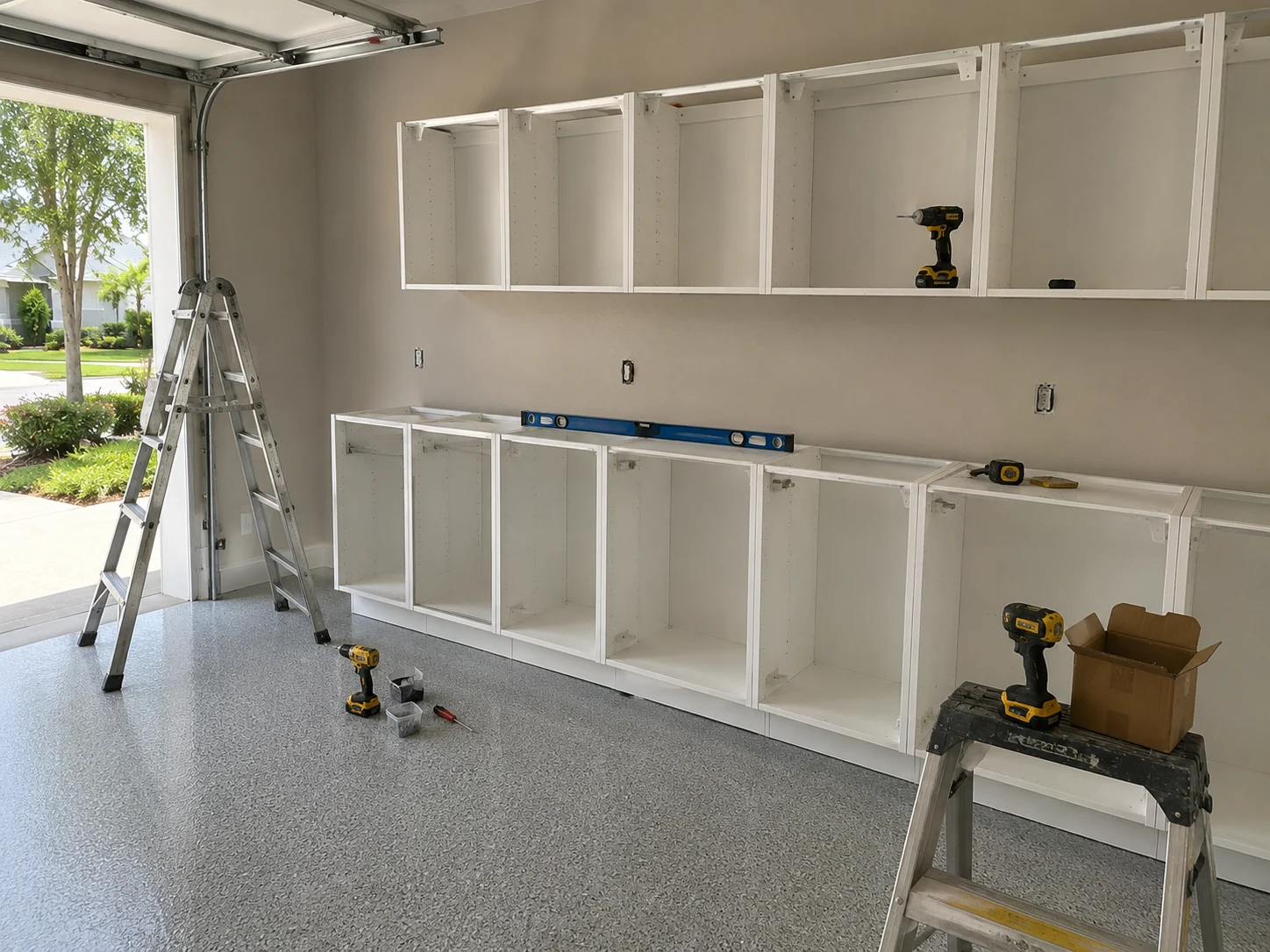
A garage conversion is the clearest everyday example of remodeling in this region, and it shows the pattern completely: nothing about the building’s footprint changes, and yet the use changes, which is enough to trigger the whole apparatus of zoning, permits and inspections described in our guide to garage conversion permits.
The two side by side
| Renovation | Remodeling | |
|---|---|---|
| What changes | Condition and finishes | Layout, structure or use |
| Floor plan | Unchanged | Changed |
| Permit likelihood | Only where systems change | Near-certain |
| Engineering input | Rarely | Often, where load is involved |
| Predictability of cost | Higher; condition is the variable | Lower; structure and discovery are variables |
| What it does for the house | Protects and updates what exists | Adds capability the house did not have |
Reading it by scenario: renovation is the right frame when the house works and is worn. Remodeling is the right frame when the house is sound and does not work — when the problem is the layout rather than the condition. Where both are true, the split matters more than the label, and the systems half comes first regardless of which half is more exciting.
Which Project Has a Better ROI?
The honest short answer is that the question is asked the wrong way round, and it is worth being clear about why rather than producing a number that would not survive contact with your house.
Why a single figure would be misleading
Return depends on the local market, the condition of the house before the work, how long you hold it afterwards, and how well the work matches what buyers in that neighbourhood expect. A national average for a project type tells you what happened somewhere else, to a different house, in a different market, at a different time.
What can be said honestly is directional, and it is useful.
Renovation of failing systems protects value rather than adding it. A house with sound wiring, plumbing and roof does not command a premium for having them — it simply does not lose value or fall out of a buyer’s financing for lacking them. That is a real return and it is invisible.
Renovation of dated finishes affects how quickly a house sells and how it shows more reliably than it affects the price it commands.
Remodeling adds capability, and capability is what changes the category a house competes in: a third bedroom, a second bathroom, an open plan where there were three small rooms. That is where a step change in value can occur, and it is also where it is easiest to overspend relative to the street.
Both can be overdone. The ceiling is set by the neighbourhood, and a house improved well beyond what surrounding properties support does not recover the difference.
The decision that actually matters
For most households the useful question is not which delivers more return, but which the house actually needs — and whether the two are being sequenced correctly.
If the systems are failing, that work comes first regardless of return, because it is what makes everything after it durable. If the systems are sound and the layout is the problem, then remodeling is the project, and the honest budgeting for it is set out in our guide to remodeling costs and financing.
What to have ready before the first conversation
You do not need to have chosen the word. You need to be able to describe the work.
Bring a rough floor plan with the changes marked, a note of what is being replaced in place and what is staying, and an honest account of anything you already know is failing — a breaker that trips, a slow drain, a stain on a ceiling. Say whether you will be living in the house during the work, because that changes sequence and cost more than most decisions in either category.
That description is what lets a whole home remodeling team tell you which parts of your project change the structure and which do not, and what each half implies for the schedule. If the answer turns out to be that most of it is renovation, that is good news: it is the more predictable of the two, and the questions to ask the companies quoting it are set out in our guide to hiring a home remodeling contractor.
Share this article