The short answer
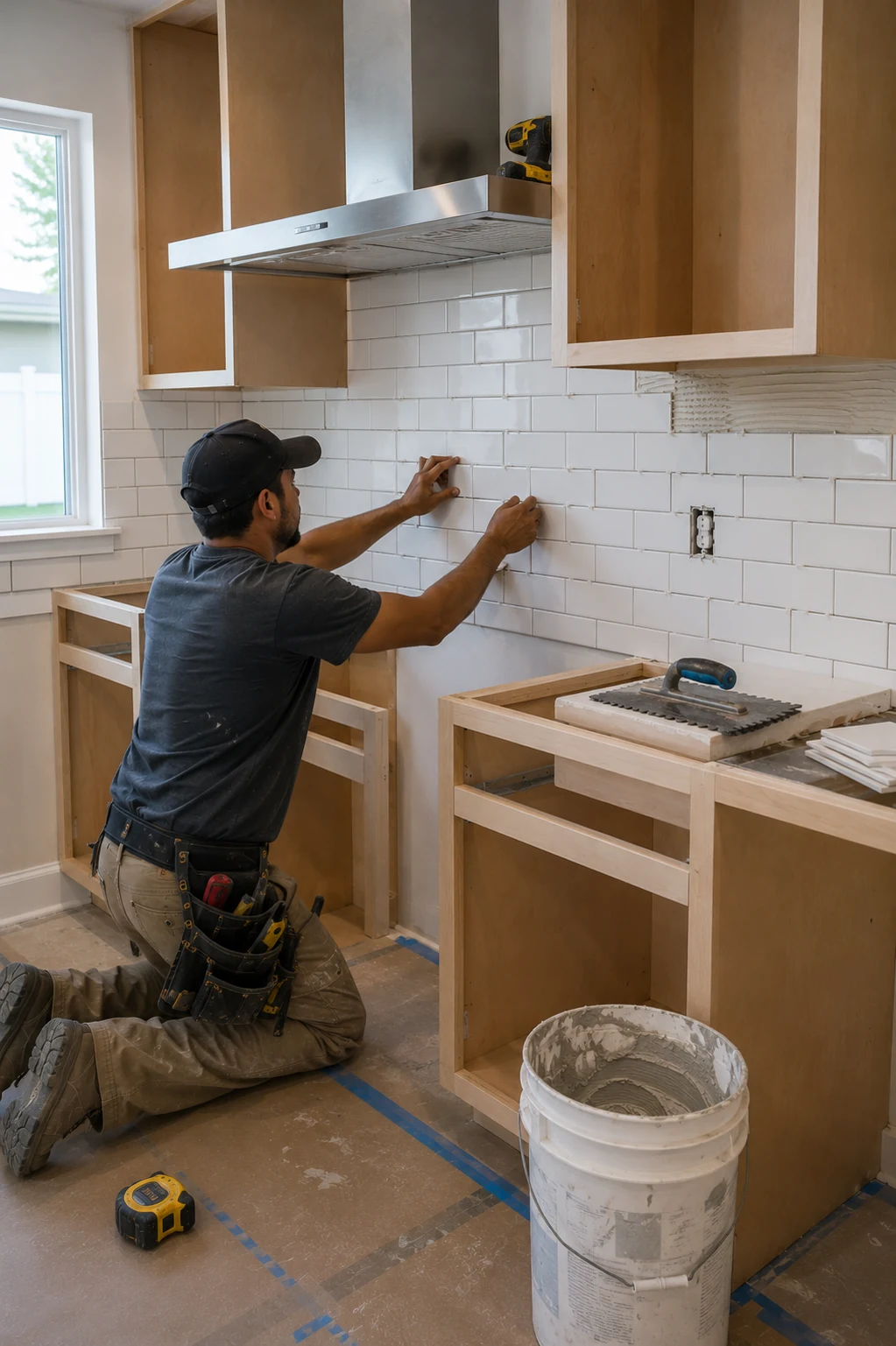
Most of what improves a house is genuinely DIY-able: painting, flooring in dry areas, trim, hardware, fixture swaps, shelving, landscaping and assembly work. These are visible, reversible and forgiving, and a careful amateur gets a good result on all of them.
Three categories are not: electrical, plumbing and anything structural. They are not on the list because they are difficult — some are simple. They are on it because the consequence of an error is physical, delayed, and in Florida usually also a licensing matter, since electrical and plumbing work is licensed separately from general construction.
The real cost of a DIY mistake is rarely the material. It is opening finished work to reach it, the trades needed to correct it, and the finishes that have to be replaced on the way out — which is why the cheapest projects to buy are often the ones that hide behind a wall.
Key takeaways
- Sort projects by what a mistake costs, not by how hard they look.
- Visible and reversible work is the DIY zone. Hidden and delayed-failure work is not.
- Electrical, plumbing and structural work carry consequences that are physical and legal, not just financial.
- Permitted work has to be permitted regardless of who performs it.
- The cost of correcting bad work is dominated by access, not by the repair itself.
- Hybrid projects — you take the visible layer — are usually the best value in any room.
When to Tackle DIY Home Projects
The question people ask is whether they are capable. The better question is what a mistake costs, because that sorts projects far more reliably than difficulty does.
The test
Is the work visible when it is finished? Visible mistakes get noticed and corrected. Hidden ones do not.
Is it reversible? Paint can be repainted. A membrane behind tile cannot be revisited without removing the tile.
Does failure appear immediately or later? Immediate failure is cheap. Delayed failure is what turns a small mistake into a large repair.
Is it permitted work? If it is, that is a signal in itself about the consequence of getting it wrong.
Projects that are visible, reversible, immediately assessable and unpermitted are the DIY zone. That describes most of what improves a house.
The list
Interior painting. The best return on a weekend in the whole house, and the one task where a careful amateur genuinely matches a professional finish — provided the preparation is not skipped. The full argument for where painting stops being DIY is in our comparison of DIY painting versus hiring a professional.
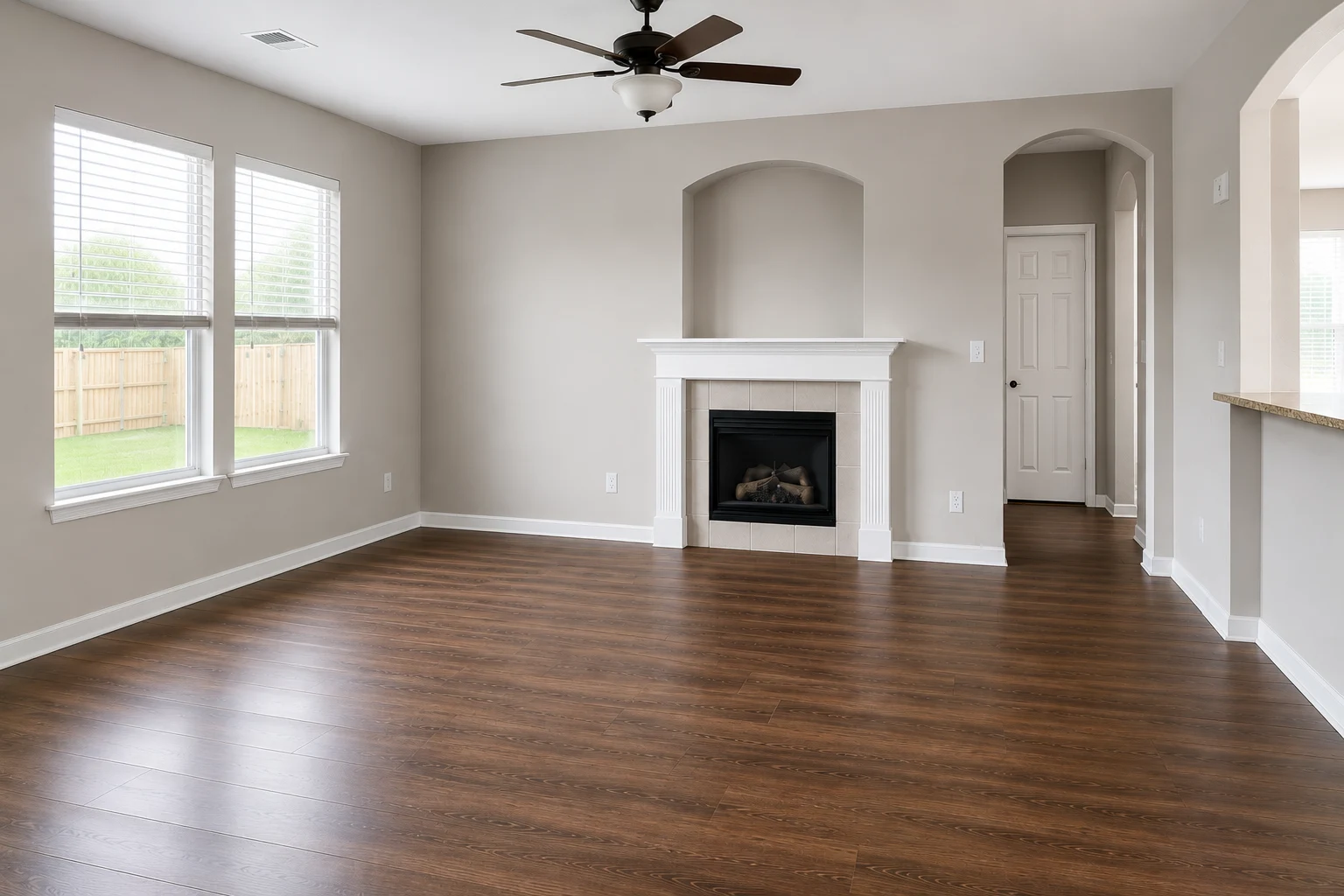
Flooring in dry areas. Floating floors in bedrooms and living areas are within reach for a patient first-timer. Wet areas are a different job.
Trim, doors and hardware. Slow to learn, forgiving to correct.
Fixture swaps in place. Light fixtures with the circuit off, faucets, a toilet like-for-like.
Demolition, cleanup and preparation. Labour-heavy and skill-light, which is exactly what makes it worth doing yourself.
Landscaping, assembly, shelving, storage. All visible, all reversible.
What makes DIY go wrong even here
Skipping preparation, underestimating time, and starting a second project before finishing the first. A house with three unfinished DIY projects is worth less and lives worse than a house with none — and half-finished work is discounted heavily at a sale, because a buyer cannot tell why it stopped.
Projects You Should Never DIY (Electrical, Plumbing, Structural)
These three are not on the list because they are hard. Some of them are simple. They are on it because of what happens when they are wrong.
Electrical
An error here does not announce itself. A circuit that is overloaded, a connection that is loose, a ground that is missing — all of them work, right up until they do not, and the failure mode is fire or shock rather than inconvenience.
Florida licenses electrical work separately from general construction, and new circuits and relocated wiring are permitted work. This article deliberately does not explain how to do any of it: the point is that you should not, not that you should do it better.
Plumbing
Two distinct risks. Supply-side errors flood a house, sometimes while nobody is home. Drain-side errors are quieter — incorrect fall or missing venting produces slow drainage, gurgling and sewer gas, and in a slab-on-grade house correcting it means opening concrete.
Plumbing is also separately licensed in Florida, which is why a plumbing permit is normally pulled by a licensed plumber rather than by a general contractor.
Structural
Removing or altering a wall, cutting a joist or truss for a duct or a pipe, or enlarging an opening changes how loads travel through the building. The consequences are slow and expensive: doors that stop closing, cracks that reopen after every repair, floors that develop a slope.
An engineered truss in particular must not be cut or modified — it is designed as a single system, and altering one member changes the behaviour of all of them.
The pattern
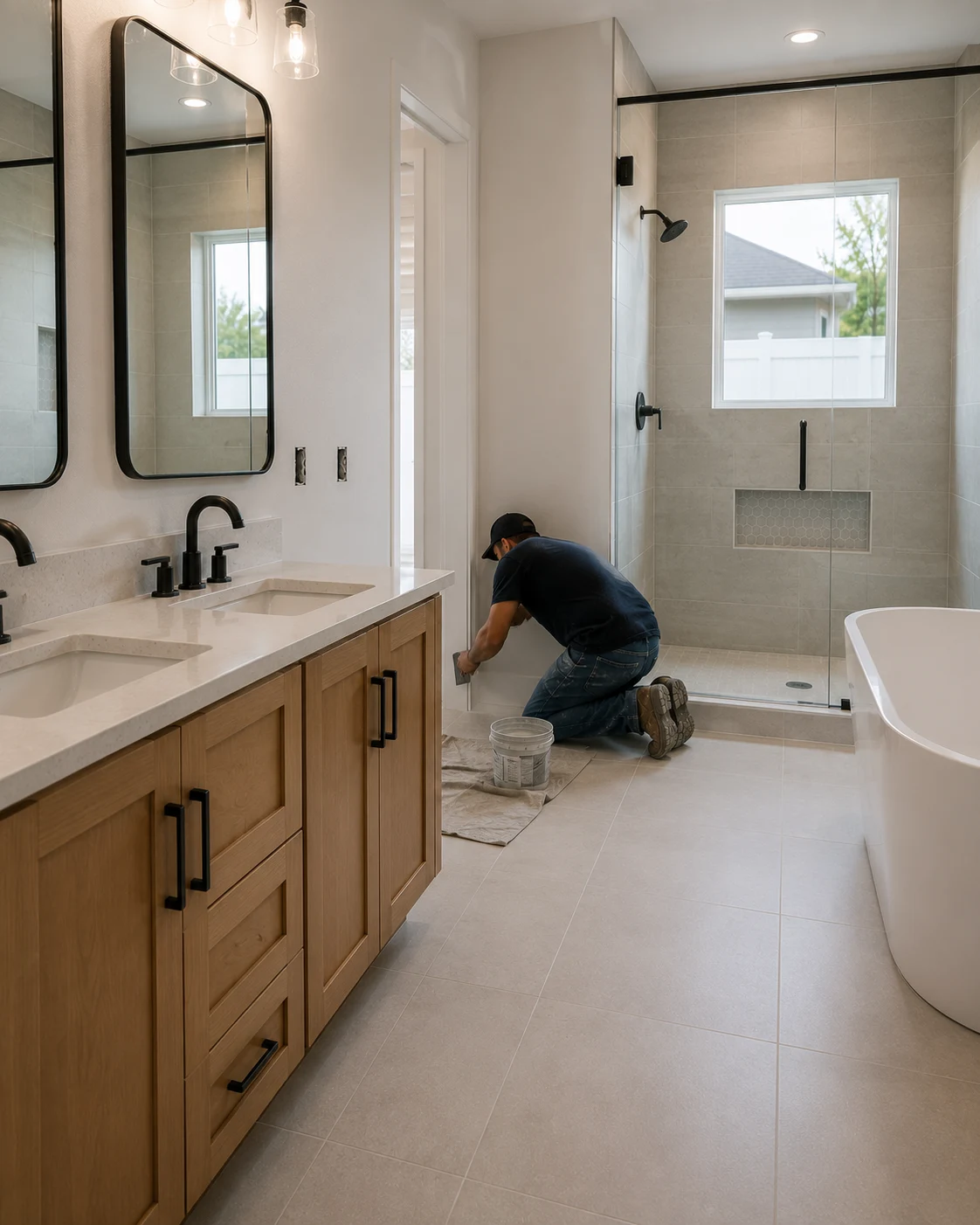
All three share the property that makes them different: the mistake is invisible, delayed, and reaches beyond the room it happened in. That is also true of shower waterproofing, which is why the bathroom is the room where DIY is most expensive — a case worked through in detail in our comparison of DIY bathroom remodeling versus hiring a professional.
What to do instead
Buy these three and keep the rest. That split usually costs far less than a full professional project, and it removes essentially all of the risk that matters. If you are unsure which category a specific task falls into, the building department will tell you whether it needs a permit — and the answer to that question is a reliable proxy for the answer to this one.
The True Cost of DIY Mistakes
The cost of a mistake is rarely the material. It is almost always the access.
Why correction costs more than construction
To fix something behind a finished surface, the surface has to come off. Correcting a leak inside a wall means opening drywall, repairing the plumbing, closing the wall, finishing and repainting — and the repair itself is often the smallest line in that list.
The same logic applies to a failed shower, where the correction is not the tile but the substrate behind it, and to a wiring error inside a closed wall.
The costs that never make the comparison
Tools you buy for one job. Sometimes justified, often not.
Material wasted learning. A first attempt uses more than an estimate assumes.
Time. A professional project is measured in days or weeks; the same project done in evenings is measured in months, and the room is out of service throughout.
Rework. The largest hidden cost and the one nobody budgets, because everyone assumes it applies to someone else.
Sale consequences. Visible amateur work is discounted aggressively, because buyers generalise from it to everything they cannot see. Unpermitted work is a disclosure item and is commonly excluded from recorded finished area.
The same arithmetic applies to bad professional work
This is not a DIY-specific problem. Work done badly by someone who was paid for it costs exactly the same to correct, and the corrective project is usually more complicated than the original because it starts with removal.
The defence is the same in both directions: agree the scope in writing, confirm licence and insurance, permit what needs permitting, and do not pay ahead of progress. Those criteria are set out in our guide to hiring a home remodeling contractor.
The honest comparison
Not the material bill against the quote. The material bill, plus tools, plus your time valued at something, plus the probability of one correction — against the quote.
Run that arithmetic and most households land in the same place: do the visible layer, buy the hidden layer. The kitchen version of that split, where the boundary falls in a different place again, is covered in our comparison of hiring a kitchen contractor versus doing it yourself.
Across the established neighbourhoods around Ocoee and the newer communities to the south, the housing stock differs but the line does not move: what you can see is yours, and what hides behind a wall is worth buying.
Where a project has grown past that boundary, a scoping conversation about a whole home remodel will cost less than discovering the boundary halfway through.
Share this article