The short answer
On a whole-house project you are not primarily hiring construction skill. You are hiring the capacity to sequence several trades over several months, to keep a schedule when one of them cancels, and to communicate while you are living in or out of the house. Most whole-home projects that go wrong do not fail on workmanship. They fail on coordination.
Judge capacity by evidence rather than by conversation: completed projects of comparable scale and duration, a permit history in your jurisdiction, a named single point of contact, and a written schedule that shows the dependencies rather than just the end date.
The clearest warning signs are about how the business is run, not how the work is done — pressure to decide immediately, a deposit that is large relative to what has been ordered, reluctance to put the scope in writing, and any suggestion that you pull the permit yourself.
Key takeaways
- Ask for references from projects of similar length, not similar style. A contractor who does excellent single rooms may never have run a six-month job.
- One named point of contact who is on site regularly is worth more than any credential. Without it, coordination becomes your job by default.
- A schedule that shows what each stage waits on is a real schedule. A start date and an end date is a hope.
- Tie payments to milestones you can observe, never to dates on a calendar, and keep the final payment meaningful enough to matter at punch-list stage.
- Unsolicited door-to-door offers after a storm deserve particular caution, especially any request to sign paperwork on the spot.
- A contract that names the scope, the exclusions, the change-order process and what happens on discovery of hidden conditions protects both sides, which is why a good contractor wants one too.
Finding Reliable Home Improvement Contractors
A whole-house remodel is a different hiring decision from a single-room one, and the difference is not size. It is duration.
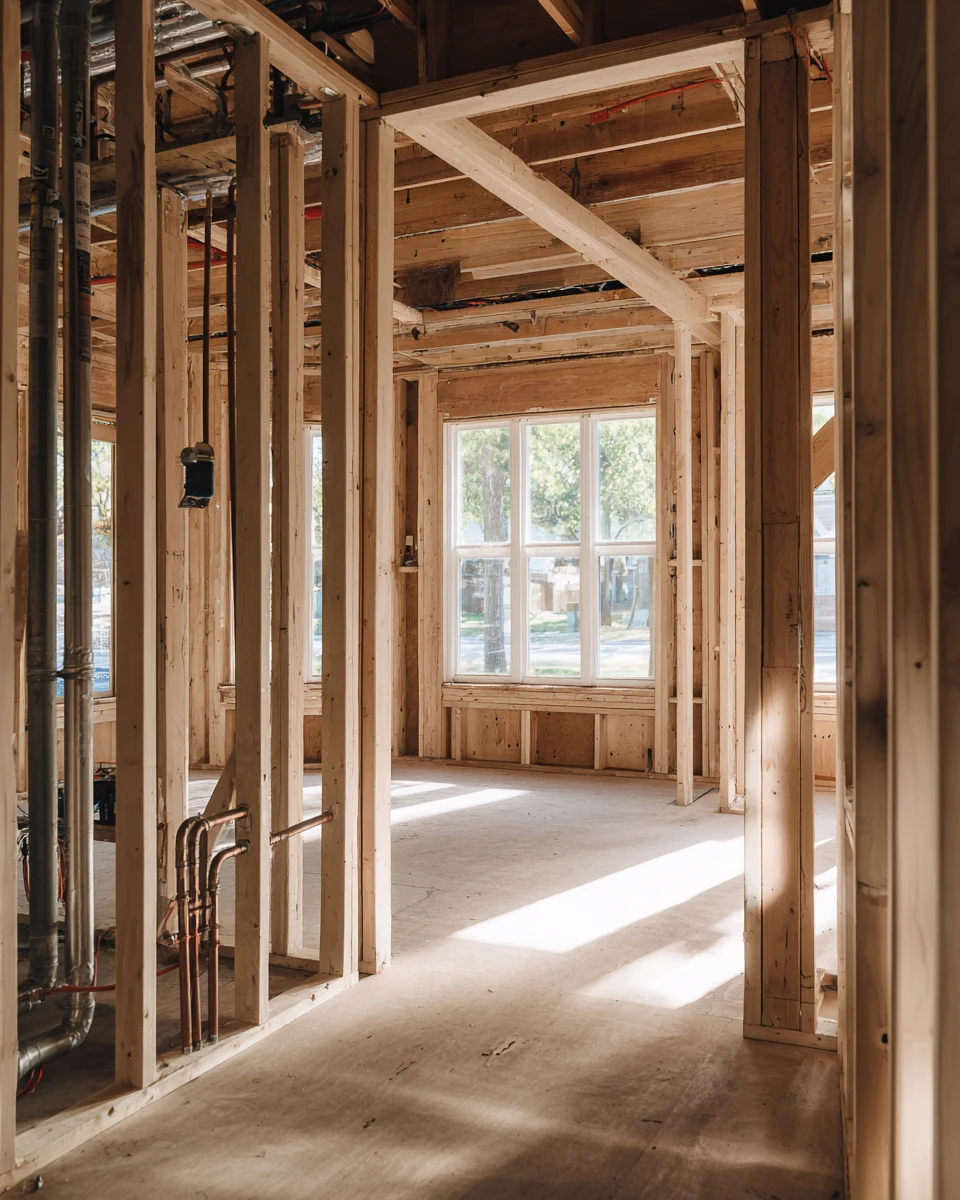
A bathroom is a few weeks of concentrated work by a small number of trades. A whole house is months of overlapping work in which the same crew never does the same thing twice, materials arrive continuously, inspections punctuate the schedule, and somebody has to hold all of it together while you live in the middle of it or pay to live somewhere else. That is the job you are actually hiring for.
You are hiring coordination, not craft
Almost every established remodeling company can build well. Far fewer can run a six-month project without the schedule drifting, and that gap is where whole-house projects go wrong.
The practical consequence is that the things worth checking are not the things people usually check. A beautiful portfolio proves the trades are good. It does not prove the company can order fifteen categories of material on time, keep an electrician and a tile setter from arriving on the same morning, or tell you three weeks in advance that a window is going to be late.
Where the names come from
The best sources are the ones with something at stake and nothing to sell.
Building department records are public and underused. Permits can usually be searched by address or by contractor, which shows who works in your jurisdiction, how often, and whether their inspections pass. For a project that will run for months, a long clean permit history locally is worth more than any advertisement.
Neighbours who have completed a comparable project are the second source, and the question to ask them is not whether they were happy. It is what went wrong and how it was handled, because something always goes wrong on a long job and the answer tells you how the company behaves under pressure.
Suppliers are the third. Trade counters at cabinet, tile and lumber suppliers know who pays on time and who returns to fix things.
Judge capacity, not enthusiasm
Four pieces of evidence separate a company that can carry a whole-house project from one that would like to.
Completed projects of comparable duration. Ask specifically for references from jobs that ran three months or longer, and ask those references how communication held up in month four rather than in week one.
A named point of contact who is on site. One person who owns the schedule, whose name you have, who walks the job regularly. Where this does not exist, coordination silently becomes your responsibility.
A written schedule with dependencies. Not a start date and an end date, but a sequence showing what each stage waits on — the same logic that makes a kitchen take the time it takes, as set out in our guide to the kitchen remodeling timeline.
Capacity honesty. A direct answer to how many projects the company runs at once and how many crews it can field. Companies that overcommit rarely admit it, but they will usually answer the question if it is asked plainly.
The verification that comes before all of this
Licence status, insurance and permit history are checkable without asking the contractor for anything, and they should be confirmed before a shortlist rather than after you like someone. The mechanics are the same for any remodeling trade in Florida and are set out step by step in our guide to hiring a bathroom remodeling contractor — verify the licence at state level, get the insurance certificate from the agent rather than the contractor, and check that the coverage dates span your project.
One addition applies specifically to whole-house work. Because the project touches several licensed trades, ask who holds which licence: the general contractor is not necessarily licensed to perform plumbing, electrical or mechanical work themselves, and those trades are usually subcontracted to separately licensed companies. That is normal. What matters is that it is stated, not assumed.
This is worth more attention when the owner is not local. Around Davenport and Four Corners, a significant share of property is owned by people who cannot visit weekly, and remote ownership removes the single most effective oversight there is — turning up. If that is your situation, the point of contact, the reporting rhythm and the photographic record matter considerably more than they otherwise would.
Questions to Ask Before Hiring a General Contractor
The purpose of these questions is not the answer. It is whether the answer is specific, and whether the person giving it has clearly been asked before.
The questions that reveal how a long project is run
Who is my point of contact, and how often will they be on site? A name and a frequency. Vagueness here predicts vagueness for six months.
How many projects will you be running while mine is under way? There is no wrong number. There is a wrong reaction to the question.
What is the sequence, and where are the waiting periods? A contractor who can describe the dependency chain — what waits on inspection, what waits on delivery, what waits on cure time — is managing a schedule rather than reacting to one.
How will I know what is happening each week? A stated rhythm, however simple, beats an open-door promise.
What happens when a subcontractor cancels? The honest answer involves a bench of alternatives and an acknowledgement that it will happen.
How do you handle discoveries behind the walls? Whole-house projects open more walls than any other kind of remodel, and the process for pricing and deciding on what is found is the single clause most worth understanding before signing.
Who applies for the permits, and which office issues them? The answer should be immediate, and it should be the contractor. The offices and the 2026 small-project exemption are explained in remodel permits by jurisdiction.
What does the closeout look like? Final inspection, punch list, warranty documents, lien releases, manuals.
What separates a strong answer from a rehearsed one
Strong answers contain specifics that would be awkward to invent: a named supplier, a real duration, a description of something that went wrong on another job and what it cost to fix.
Weak answers are fluent and general. “We take care of everything” is not a process. “It depends” without a follow-up is not an answer. And a contractor who agrees with every preference you express, including the contradictory ones, is telling you they intend to sort it out later.
Comparing the three routes honestly
| General contractor | Design-build firm | Owner-managed trades | |
|---|---|---|---|
| Who holds the schedule | The contractor | The firm, from design onward | You |
| Single point of responsibility | Yes, for construction | Yes, for design and construction | No |
| Where design comes from | You or a separate designer | In house | You |
| Your weekly time commitment | Low to moderate | Low | High, on weekdays |
| Cost position | Middle | Highest visible, fewest surprises | Lowest on paper |
| Where the risk sits | Coordination quality | Fit of the firm to your taste | Gaps between trades, all on you |
| Best suited to | A defined scope with drawings ready | A complex or undecided scope | Small scopes and available owners |
Reading it by scenario: a general contractor suits a project where the design decisions are already made and what you need is execution. A design-build firm suits a project where the scope is still moving, because the same organisation absorbs the changes rather than passing them across a boundary. Owner-managed trades suit a short, simple scope and an owner with weekday availability — and almost never suit a whole house.
The financing route interacts with this choice more than people expect. Renovation mortgage programmes fix the scope at approval and release funds against inspected work, which suits a general contractor and makes owner management considerably harder, as described in our guide to remodeling costs and financing.
Red Flags to Watch Out For
Most contractors in Central Florida are legitimate businesses doing careful work, and this section is not an argument for suspicion. It is a short list of patterns that experienced homeowners recognise, offered so that recognising them is not something you have to learn the expensive way.
Patterns that should slow a conversation down
Pressure to decide today. A discount that expires this afternoon is a sales technique, not a price. Legitimate contractors are scheduling weeks out and are not harmed by you taking a week.
A deposit that is large relative to what has been ordered. Deposits are normal and necessary — materials have to be bought. A deposit that far exceeds what could plausibly have been ordered at that stage is a different thing, and Florida law places specific obligations on contractors who take substantial deposits, including deadlines for applying for the permit and starting work. Ask what the deposit buys and when work begins.
Reluctance to put scope in writing. If a company will not write down what is and is not included, the disagreement has simply been postponed.
Any suggestion that you pull the permit. The permit names who is responsible for the work and for the inspections. A contractor asking you to take that on is asking you to carry their liability, and it usually indicates they are not licensed or registered for the scope.
Cash-only pricing, or payment to an individual rather than the business. It removes your record of payment and often your recourse.
No physical address, or an address that does not check out. For a months-long project this matters more than for a small repair.
Post-storm solicitation deserves particular care
Central Florida sees a predictable pattern after major weather: a surge of repair work, a surge of legitimate out-of-area contractors who come to help meet it, and a smaller number of operators who follow the same route for other reasons.
The caution is narrow and specific. Be careful with unsolicited door-to-door offers, with anyone urging you to sign paperwork on the spot, and with any request to sign over your insurance benefits or to let someone else handle the claim on your behalf. None of those are illegal on their face and none of them mean the person in front of you is dishonest — but all of them shift control away from you at the moment you have least time to think, and all of them can be declined without cost.
The protection is unglamorous: verify before signing, sign nothing at the door, and get a second quote even when the first one seems reasonable.
What a good contractor does that a bad one cannot fake
Turns up to the estimate appointment on time, and if they cannot, tells you before rather than after.
Measures. An estimate produced without measuring is an estimate produced without looking.
Says no to something. A contractor who declines a request, explains why, and proposes an alternative is demonstrating exactly the judgement you are paying for.
Puts the awkward parts in writing — the exclusions, the assumptions, the conditions that would change the price.
Has an opinion about sequence. Somebody who has run whole-house projects will tell you what should happen first and why, and will often push back on the order you assumed.
The last check before signing
Read the contract once for what it includes and once for what it does not. The exclusions list is the most informative page in the document, and the discovery clause is the one that will matter most on a house that has been standing for thirty years.
Then confirm three practical things: that the payment schedule is tied to observable milestones, that no additional work proceeds without written and priced authorisation, and that closeout includes the final inspection being passed and the permit finalised.
Everything after that is ordinary project life — the small repairs that surface along the way and get collected onto a home services list, the decisions that arrive faster than expected, and the fortnight in month three when nothing appears to be happening because the schedule is waiting on an inspection. A contractor worth hiring will have told you about that fortnight before it arrives.
Share this article