The short answer
The improvements that return the most reliably are the ones that remove a buyer objection rather than add a feature: fixing what is visibly failing, replacing what is visibly dated, improving the first impression from the street, and eliminating deferred maintenance. None of them are exciting, and they are consistently the strongest position before a sale.
Kitchens and bathrooms do influence sales more than any other room, but not for the reason the phrase implies. They do not add a premium in proportion to what they cost. What they do is decide whether a house feels move-in ready or feels like a project, and buyers price projects generously in their own favour.
The renovations that lose money are the ones that make the house more specific: highly personal finishes, features that replace something buyers expect, and improvements that push the property above what the street supports. Value is lost by becoming the exception, not by building badly.
Key takeaways
- Condition beats upgrade. A sound, maintained house outperforms a partly upgraded one with visible problems.
- Curb appeal is the cheapest lever on the list, because it sets the frame through which everything else is judged.
- Kitchens and bathrooms decide whether a house reads as move-in ready — that is their real function at resale.
- Nothing recovers a specification that exceeds what comparable houses on the street support.
- Removing something buyers expect — a bedroom, a garage, a bathtub in a one-bathroom house — reliably costs more than the replacement adds.
- If the sale is less than a year away, prioritise repair, paint and presentation over any full remodel.
High ROI Home Improvements Before Selling
The improvements that return the most are consistently the least interesting ones. That is not an accident: return comes from removing reasons to pay less, and reasons to pay less are usually mundane.
Condition first, always
Before any upgrade, the house has to be sound. A roof at the end of its life, an air conditioning system nobody trusts, active moisture, a soft floor, an electrical panel that raises questions — each of these is priced by buyers at more than the repair costs, and each can affect financing or inspection outcomes as well. When the panel is one of those questions, what a panel upgrade involves helps size the repair.
Money spent here is not glamorous and does not photograph. It is also the only category on this list where skipping it can end a transaction rather than just reduce it.
The first impression from the street
Curb appeal is the cheapest lever available, because it establishes the frame through which the rest of the house is judged. A buyer forms an impression before opening the door, and everything after that is read as confirmation.
Exterior paint or pressure washing, a clean and sealed driveway, tidy landscaping, a front door and its hardware that look deliberate, and working exterior lighting — the whole list is inexpensive relative to any interior work, and it changes how the same house photographs. How long an exterior finish lasts here is covered in exterior painting in Florida.
Paint, light, and the removal of dated surfaces
Inside, fresh neutral paint does more per dollar than anything else. After that, lighting: dated fixtures make good finishes look worse, and replacing them is one of the few upgrades that costs little and reads immediately.
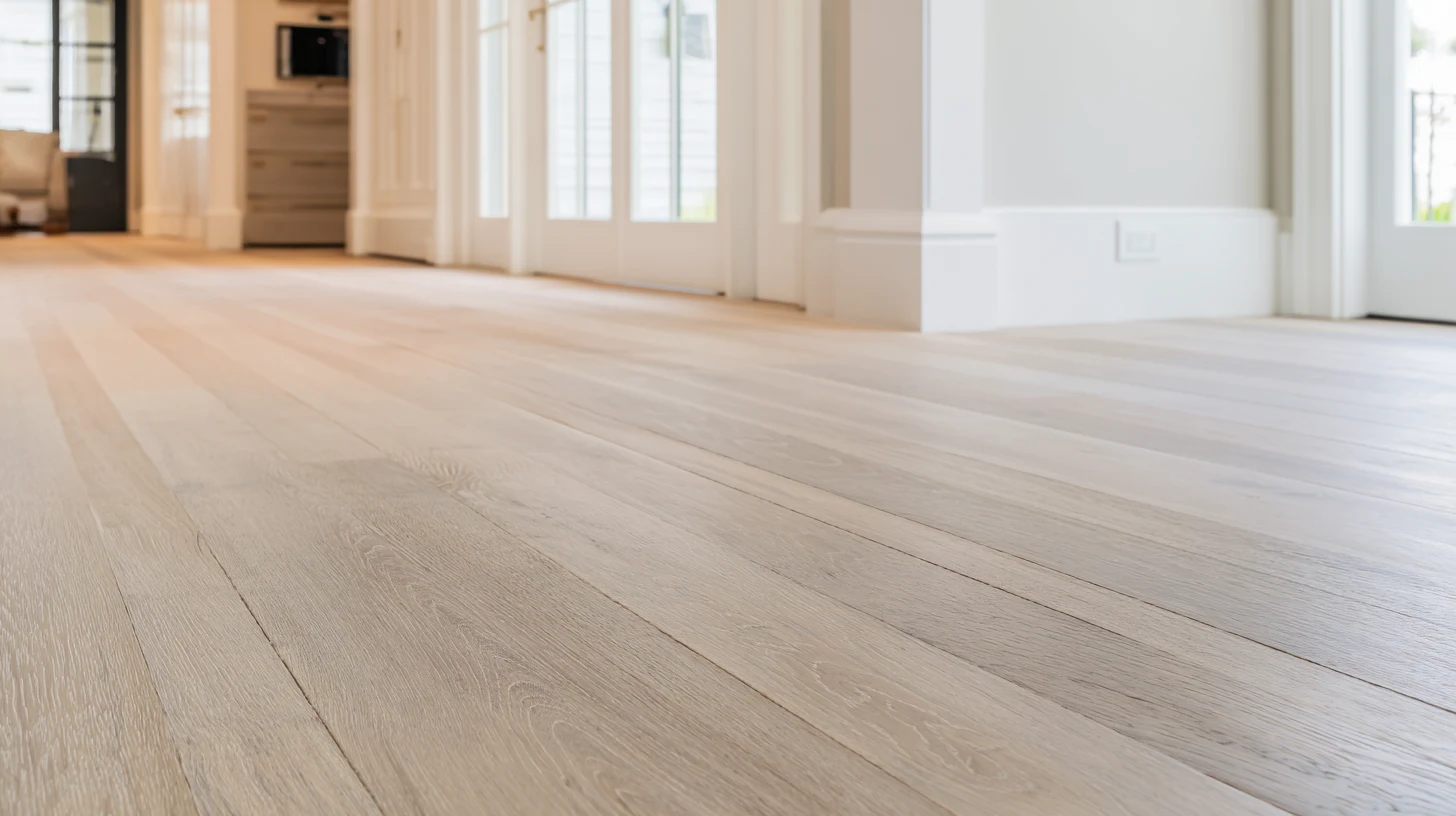
Flooring is the third lever, and it matters most where the house currently has three or four different materials meeting at doorways. A single consistent floor across the main living areas makes a house feel larger and more coherent than any individual room upgrade achieves.
Finishing what is unfinished
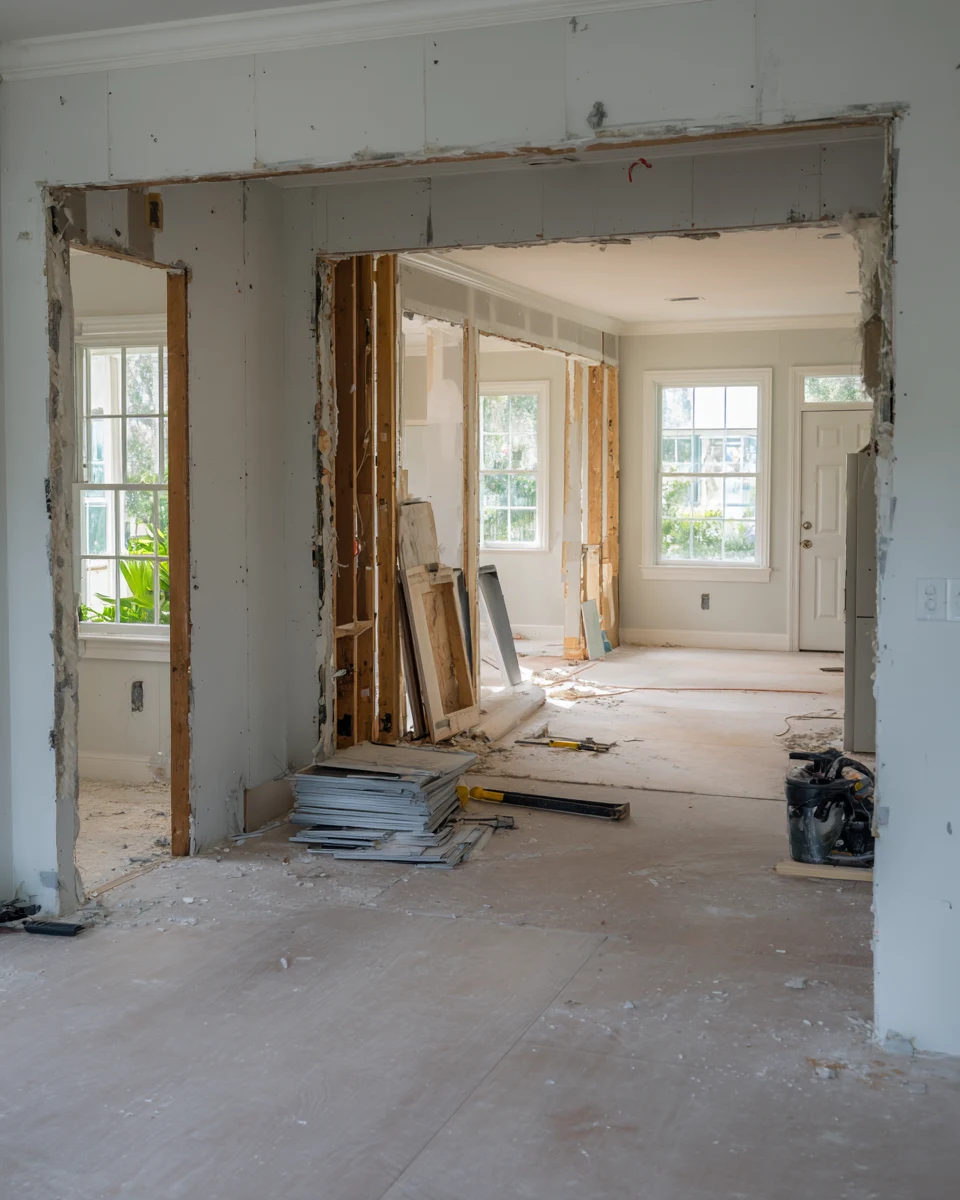
Half-done work is discounted heavily and disproportionately, because buyers cannot tell whether it stopped for a small reason or a large one. An unfinished bathroom, a permit never closed, an unpermitted conversion, a room mid-project — all of these are cheaper to resolve than to leave.
Where the work is larger than presentation, the funding question arrives quickly, and the categories available are set out in our guide to home remodeling costs and financing.
Do Kitchens and Bathrooms Really Sell Houses?
They do influence sales more than any other rooms. But the common phrasing hides what is actually happening, and the misunderstanding costs homeowners real money.
What these two rooms actually do
Kitchens and bathrooms do not add a premium proportional to what they cost. What they do is decide which category the house falls into: move-in ready, or a project.
That classification happens fast and it applies to the whole property. A buyer who concludes “this needs work” from the kitchen carries that conclusion into every other room, and prices the house accordingly — usually for far more than the kitchen would have cost to update. A buyer who concludes “this is done” stops mentally deducting.
That is why the two rooms matter. Not because they are worth more, but because they are where the verdict is formed.
Reading them as two lines in a whole-house comparison
Set against everything else you could do to the house, these two rooms rank high but not first, and the ranking depends on their current state.
A kitchen that is genuinely failing — non-functional layout, water-damaged cabinets, appliances at end of life — outranks nearly everything, because it is a condition problem rather than a style problem. A kitchen that is merely dated ranks below roof, air conditioning, curb appeal and paint, all of which cost less and affect the impression of the entire house.
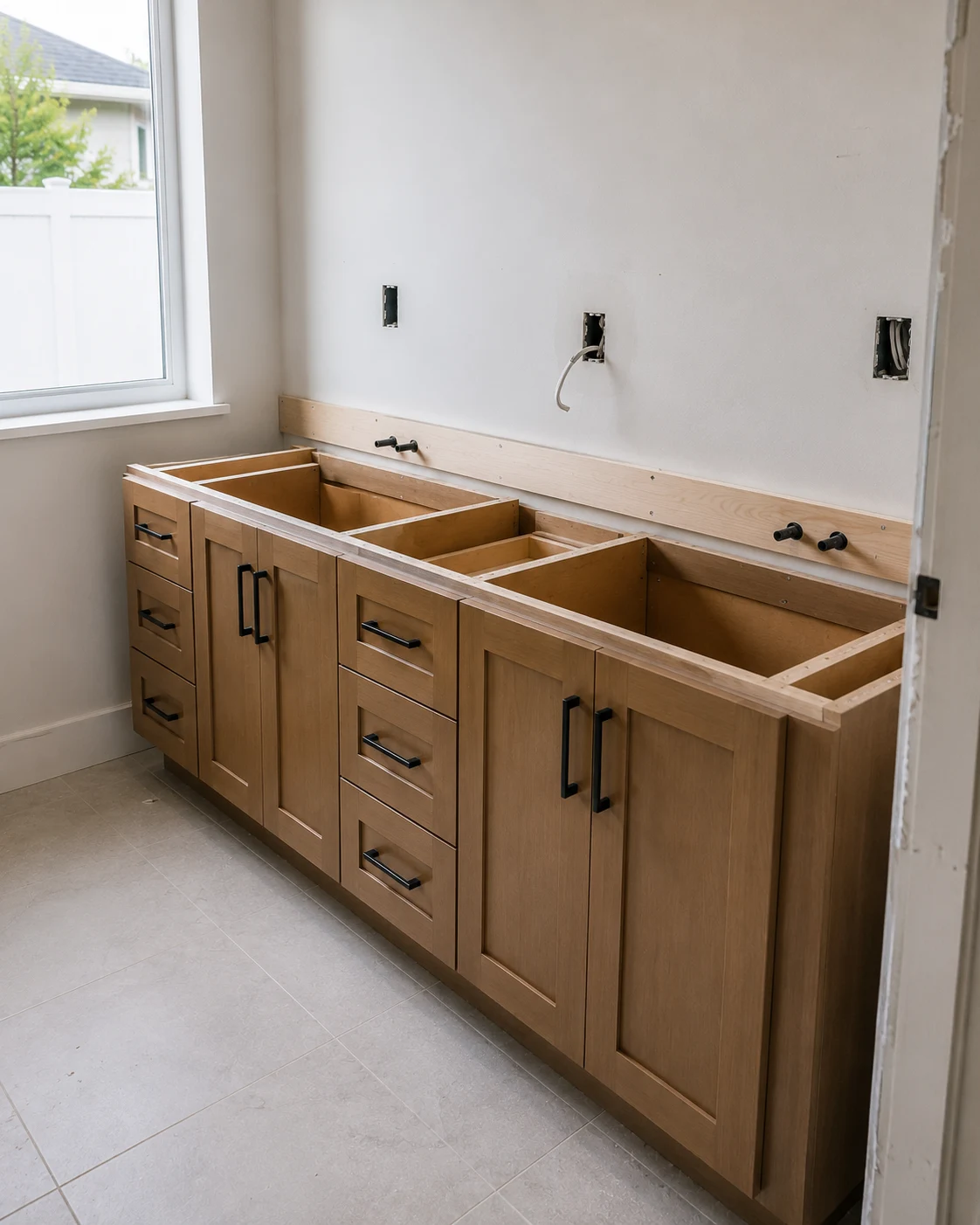
Bathrooms behave the same way with one difference: they are smaller, so the lighter interventions go further. Renewed grout and sealant, updated lighting and mirror, current hardware, and a clean, well-presented shower change a bathroom’s reading at a fraction of a remodel. The full argument for when a bathroom pays and when it does not is developed in our guide to bathroom remodel value and resale.
Full remodel or light refresh, by timing
If you are selling within a year, the light version nearly always wins. You pay today’s prices for a full remodel and sell at whatever the market allows, and the schedule risk is real.
If you will live with the house for several more years, the calculation changes entirely, because daily use is a legitimate return that never appears in a resale table.
| Selling within a year | Selling in three to five years | Staying long term | |
|---|---|---|---|
| First priority | Repair what is failing | Repair, then systems | Whatever you dislike daily |
| Kitchen approach | Refresh, not remodel | Remodel if dated | Remodel to suit you |
| Bathroom approach | Grout, sealant, lighting, paint | Remodel the worst one | Remodel to suit you |
| Curb appeal | Essential | Worthwhile | Optional |
| Additions | Avoid — timeline risk | Viable if permitted | Viable |
| Personal finishes | Avoid entirely | Keep restrained | Do what you want |
Read by scenario: the closer the sale, the more the correct answer moves away from renovation and towards repair, paint and presentation. The further away it is, the more your own use should drive the decision — a distinction that also determines whether you are renovating or remodelling in the first place, as covered in our comparison of remodeling versus renovation.
Renovations to Avoid If You Plan to Sell
Almost nobody writes this section, which is why it is the most useful one. The pattern behind every item is the same: value is lost by making the house more specific, not by building it badly.
Removing something buyers expect
This is the most reliable way to lose money on good work.
Converting a bedroom into a closet, an office or a studio reduces the bedroom count, which is one of the first filters a buyer applies. Removing the only bathtub in a house with a single full bathroom narrows the buyer pool for a benefit only the current household values. Converting the only garage trades a feature most Central Florida buyers screen for against space the record may not even count if the work was unpermitted.
In each case the replacement may genuinely be better for you. It is still worth less at resale than what it displaced.
Highly personal finishes
Bold tile, strong colour, dramatic wallpaper, themed rooms, and distinctive fixtures all narrow the audience. They can be wonderful to live with, and the cost is that a smaller share of buyers will pay for them.
The practical rule is not to avoid character but to keep it in the reversible layer — paint, textiles, and fittings that change cheaply — rather than in tile, cabinetry and stone that a buyer would have to demolish.
Over-improving beyond the street
Nothing recovers a specification that exceeds what comparable properties support. A luxury kitchen in a modest neighbourhood is valued against its neighbours, not against its invoice.
This is most visible in the uniform master-planned communities that dominate parts of the region, where the comparable houses are on the same street and their ceiling is easy to see. In more varied older areas around Orlando, the ceiling is higher and harder to identify, which is a reason to check rather than a reason to assume.
Unpermitted work
An unpermitted addition or conversion carries the worst arithmetic available: the money is spent, the area is commonly excluded from the finished square footage, and the problem surfaces during disclosure, appraisal or lender review — at the moment in a transaction when problems cost the most leverage.
DIY that shows
Buyers are unforgiving about visible workmanship, and they generalise from it aggressively. Uneven tile, wavy drywall seams, doors that do not close, and obviously amateur electrical work all suggest that what cannot be seen was done the same way.
Improvements that only pay for the current owner
Pools, elaborate landscaping, specialised media rooms, workshops, and sunrooms all fall in the same category: they can be excellent decisions and they are lifestyle decisions. Build them because you want them, enjoy them for years, and treat any resale effect as a bonus rather than a justification.
The one question that prevents most of these mistakes
Before committing to anything, ask whether the decision makes the house more like the houses that sell well nearby, or less like them. Both answers can be correct — but only one of them is an investment argument, and the other should be made honestly as a lifestyle choice.
Around Clermont and the newer communities across Central Florida, that comparison is unusually easy to make, because the comparable houses are visible from the driveway. Where the plan is genuinely about living in the house rather than selling it, the scope conversation belongs to a whole home remodel rather than to a resale table, and the finishes that carry the most personality — starting with interior painting — are exactly the ones that cost least to change your mind about later.
Share this article