The short answer
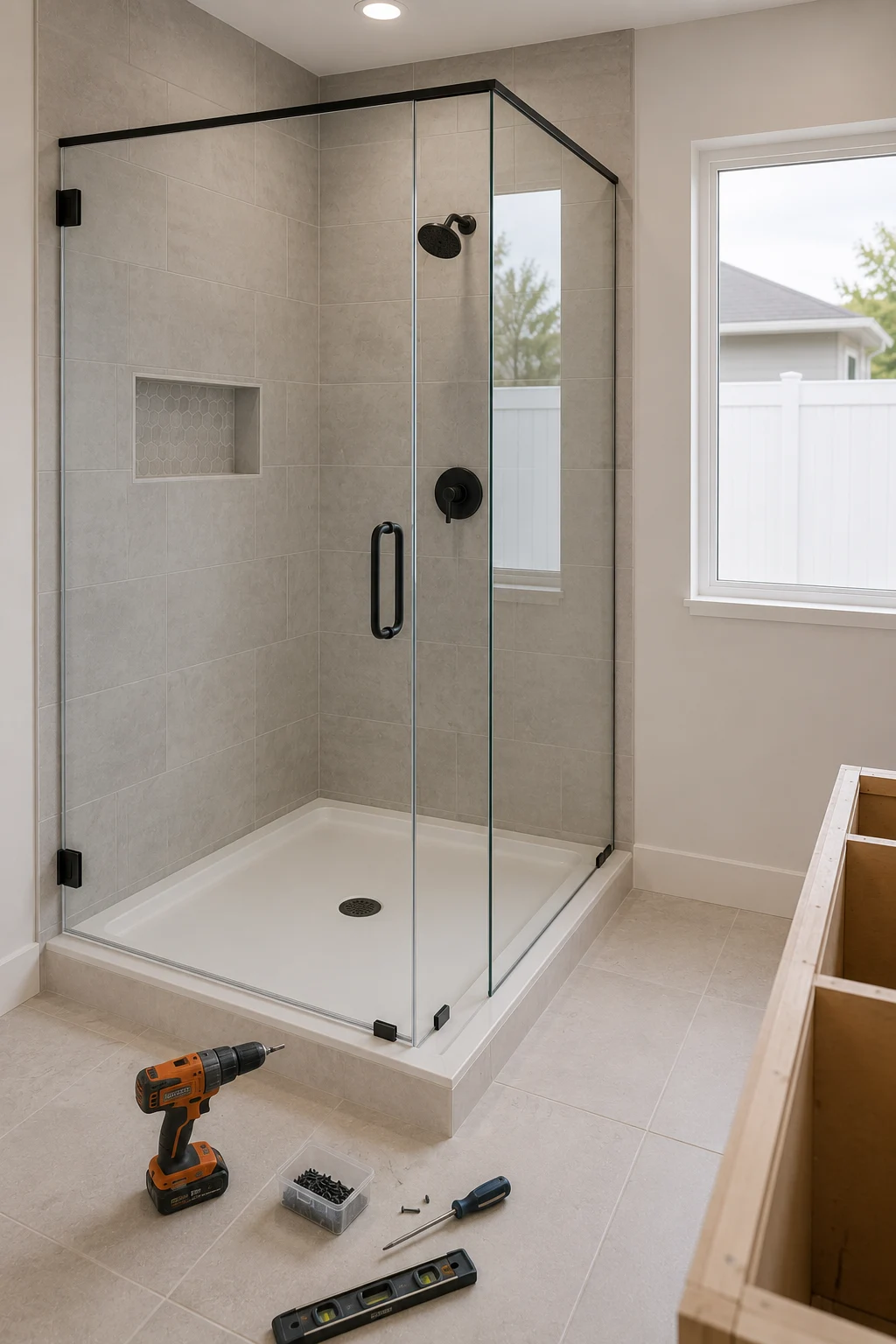
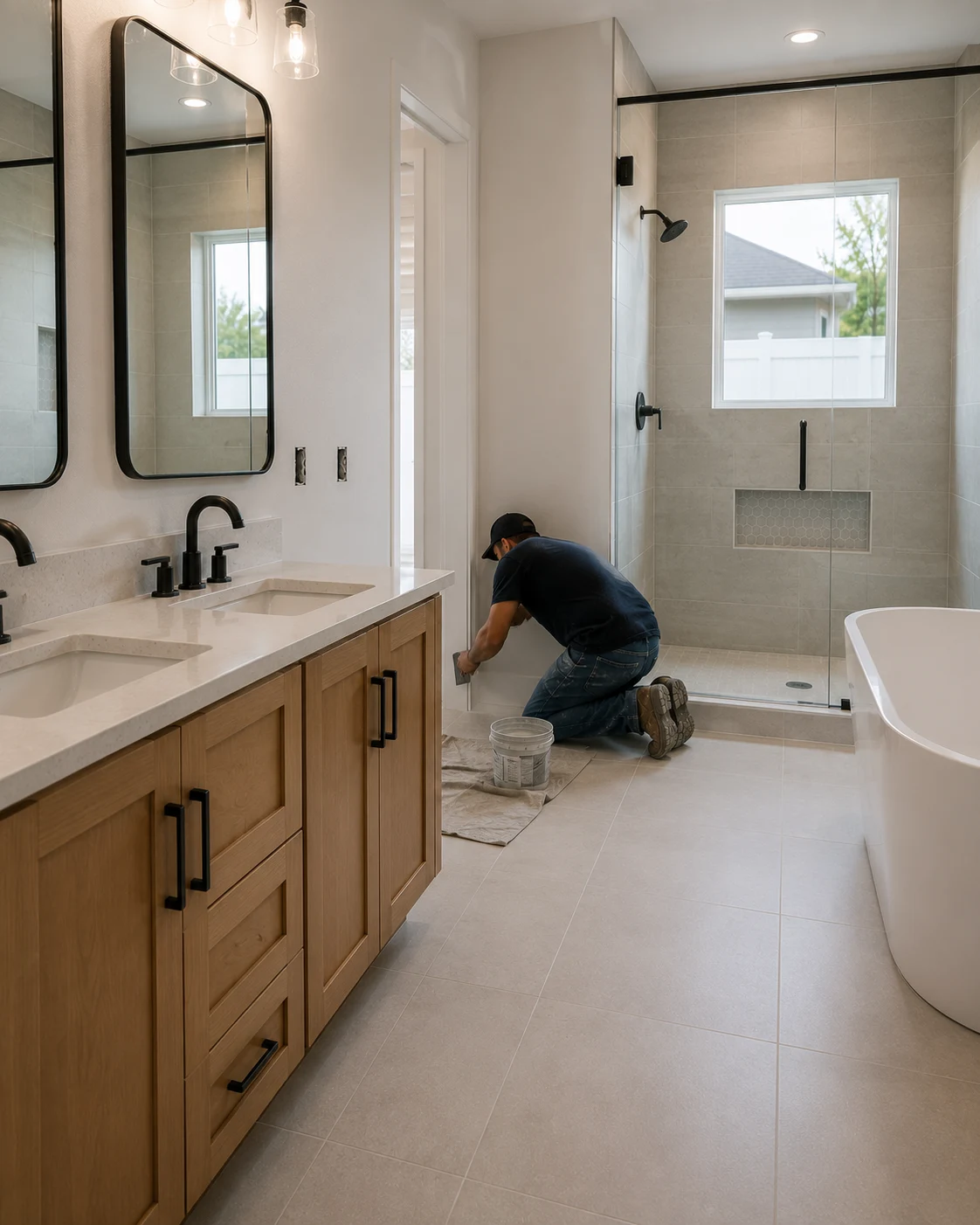
You can realistically do demolition, painting, vanity and mirror replacement, lighting swaps in an existing box, accessories, and a straightforward like-for-like toilet replacement. These are visible, forgiving, and correctable — if you get them wrong, you can see it and fix it.
Four things belong to professionals in almost every case: shower waterproofing, the slope of a shower pan, ventilation, and any plumbing that moves rather than reconnects. These share one property that makes them different from everything else — the failure is invisible for months and takes structure with it when it appears.
The honest cost comparison is not the material bill against the quote. It is the material bill, plus tools, plus your time, plus the probability of the one mistake that has to be opened up and redone. In a bathroom that probability is concentrated in a small number of steps, which is exactly why hybrid projects — you do the visible layer, a professional does the wet layer — are usually the best value.
Key takeaways
- Tile is not waterproof, and neither is grout. The waterproofing is the layer behind them.
- A shower floor has to fall correctly toward the drain across its whole area — that is set before any tile goes down.
- A fan has to exhaust outside the building, not into the attic, which is a common and expensive shortcut in this climate.
- Reconnecting a fixture in place is a different job from moving a drain, which on a slab means opening concrete.
- Waterproofing failures surface months later and take framing, drywall and flooring with them.
- A hybrid split — DIY the visible layer, hire the wet layer — is usually the best value in a bathroom.
Can You Renovate a Bathroom Yourself?
Partly, and the useful answer is a list rather than a verdict. A bathroom is not one job — it is roughly ten, and they differ enormously in how much a mistake costs.
What is genuinely DIY-able
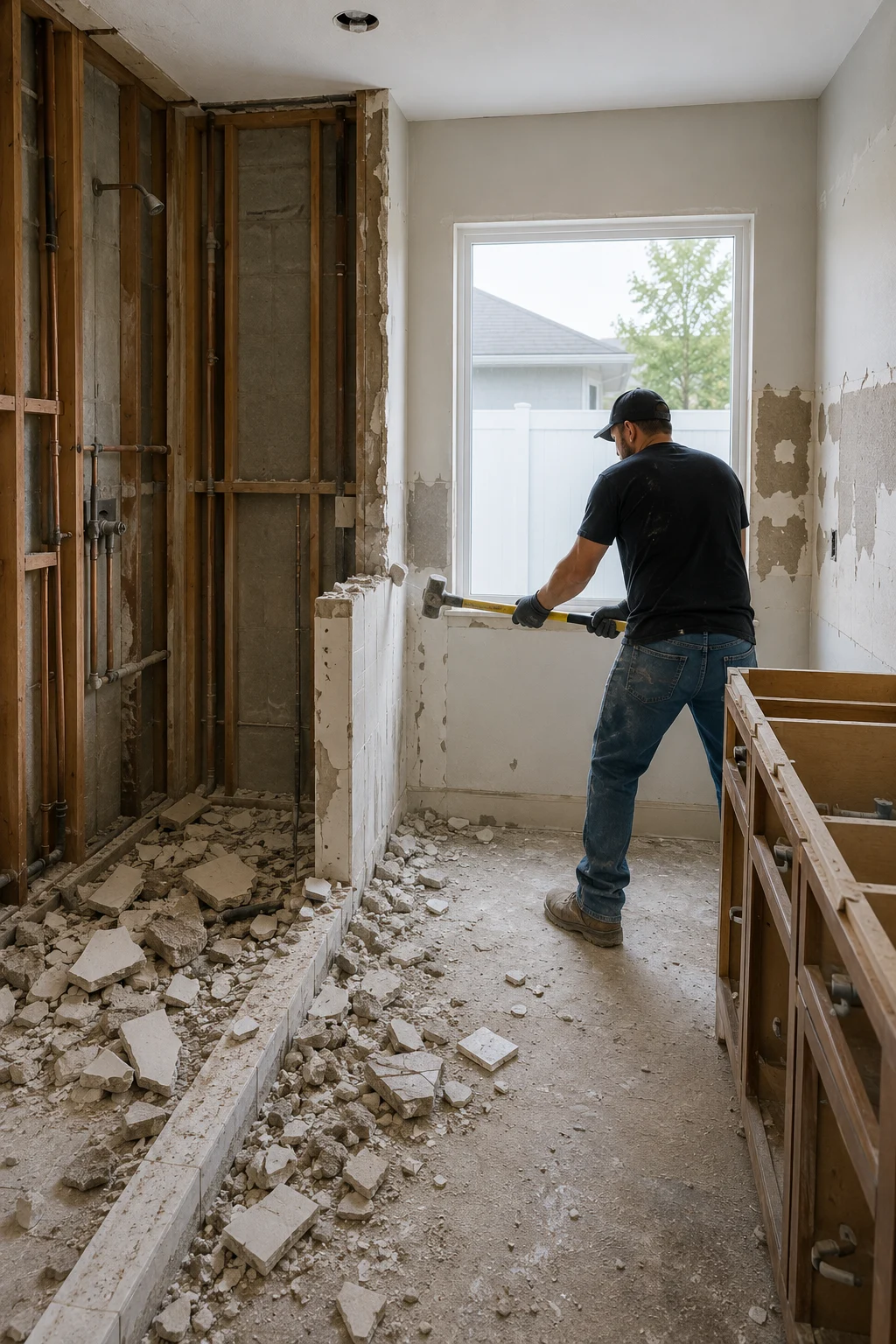
Demolition, with care. Turn the water off at the fixture stops, know where the shut-off for the house is, and go slowly near anything you have not identified.
Painting. The most forgiving task in the room, and one where a careful amateur produces a result close to professional. Bathrooms need a finish that tolerates moisture and repeated cleaning, and the ceiling takes more abuse here than anywhere else in the house — the same product discipline that applies to any interior painting work.
Vanity and mirror replacement, provided the new vanity uses the existing plumbing positions.
Light fixtures, swapped in an existing box, with the circuit off at the panel.
Toilet replacement like-for-like, which is a genuinely manageable job: shut off, drain, unbolt, replace the wax seal or gasket, reseat, reconnect.
Accessories, hardware, shelving. Small, visible, correctable.
The common thread is that all of these are visible. If you get one wrong, you can see it, and fixing it costs an afternoon.
The four things that are different
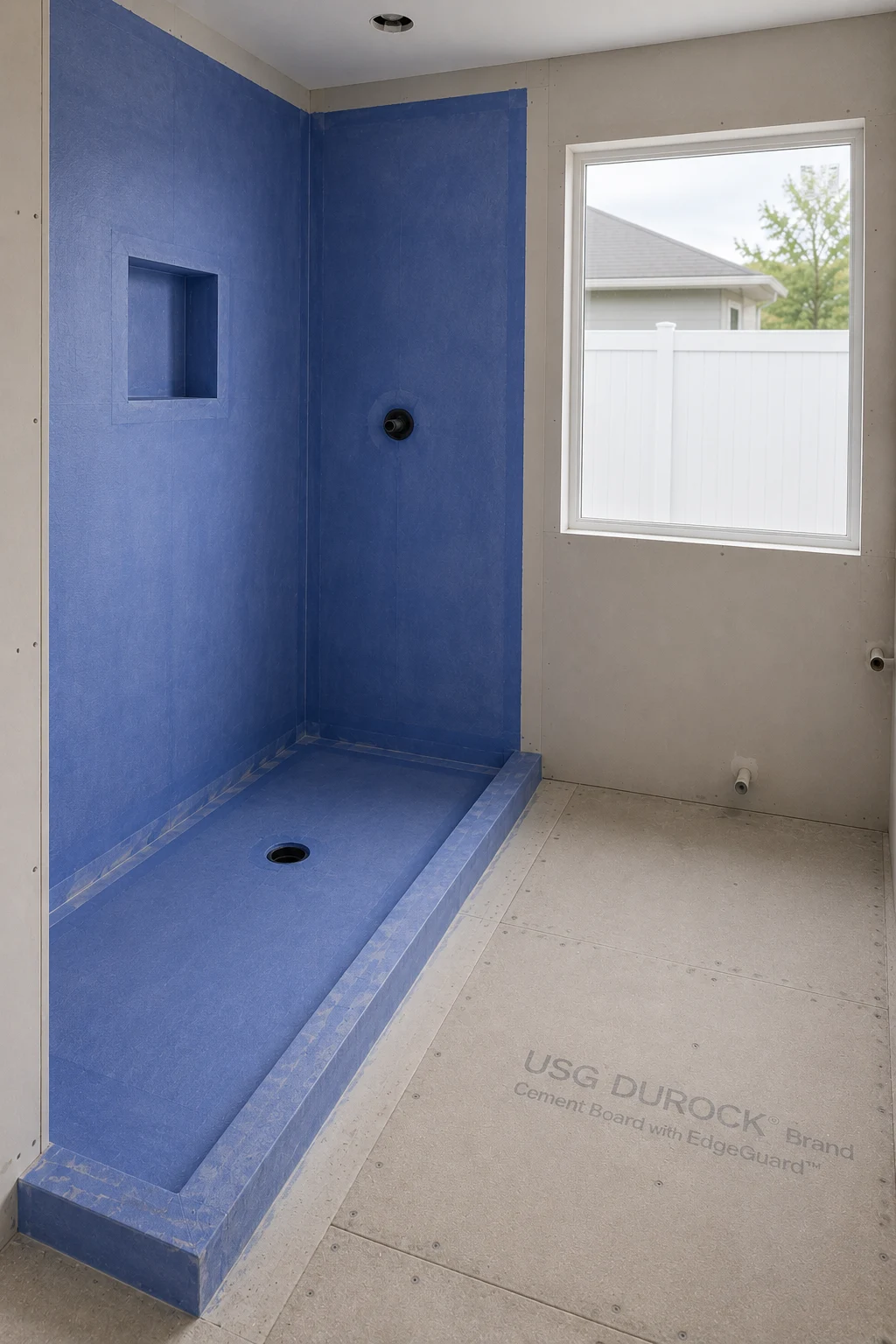
Shower waterproofing. The barrier behind the tile, and the single most consequential detail in the room.
The shower pan and its slope. The floor of the shower has to fall correctly toward the drain across its entire area, and that is established in the substrate before any tile is set.
Ventilation. The fan has to be sized for the room and ducted to the exterior of the building.
Plumbing that moves. Reconnecting a fixture in its existing position is one job. Relocating a drain is another, and in the slab-on-grade construction that dominates Central Florida it means cutting concrete.
These four share a property that nothing else in the room has: the failure is invisible at the time and expensive later. That is the whole argument, and it does not need exaggerating.
The sequence, so you can judge for yourself
A bathroom runs in this order, whoever does it:
- Plan and order everything, because a bathroom stalls waiting for one item.
- Shut off water; protect the route from the bathroom to the door.
- Demolition, down to substrate where tile is being replaced.
- Plumbing rough-in — any relocation happens here, not later.
- Electrical rough-in — circuits, fan, lighting.
- Inspections where the work requires a permit.
- Substrate and waterproofing, including the pan and its slope.
- Tile, starting with the shower.
- Vanity, counter, toilet, glass.
- Paint, trim, fixtures, accessories, sealant.
Steps 7 and 8 are where the room is won or lost, which is why they appear in the middle of a list nobody photographs. How long each stage realistically takes, and why cure times cannot be compressed, is covered in our guide to the bathroom remodel timeline.
When to Hire a Professional Plumber or Tile Setter
This section is specific rather than general, because “hire a professional” is advice nobody can act on.
Plumbing: the line is movement
Reconnecting in place — a new faucet, a new toilet, a vanity that uses the existing supply and drain positions — is a homeowner task that goes wrong in recoverable ways.
Moving anything is a different job. A relocated drain has to maintain the correct fall and be properly vented, or the fixture drains slowly, gurgles, or lets sewer gas into the room. On a slab, moving a drain means cutting and repairing concrete.
Florida licenses plumbing separately from general construction, which is why a plumbing permit is normally pulled by a licensed plumber rather than by a general contractor — a distinction covered in our guide to hiring a bathroom remodeling contractor.
Tile: the line is the water
Setting tile on a flat, dry wall is a learnable skill, and a patient first-timer gets a decent result.
A shower is not that job. It requires a substrate suitable for wet areas, a continuous waterproofing layer, correct treatment at every corner and change of plane, a drain assembly properly integrated with that layer, and a pan that falls correctly toward the drain across its whole surface. Each of those is a detail rather than a skill, and each is invisible afterwards.
Ventilation: small item, large consequence
An extractor fan has to be sized for the room and, critically, ducted to the exterior of the building — not terminated in the attic. Venting a bathroom into an attic in this climate deposits warm moist air into an enclosed space repeatedly, every day, and the consequences arrive as staining, degraded insulation and eventually as a much larger repair.
It is a cheap item to get right and an expensive one to get wrong, which makes it the most under-considered line in most bathroom projects.
Electrical: the requirement is not optional
Bathrooms require GFCI protection at receptacles, and any new circuit or relocated wiring is permitted work. This is one where the code exists for a specific reason — water and electricity in the same small room — and where “it works” is not the same as “it is safe”.
| Comfortably DIY | DIY with care | Hire a professional | |
|---|---|---|---|
| Typical tasks | Paint, accessories, mirror | Demolition, vanity, toilet swap, fixture swap | Waterproofing, pan, moved plumbing, ventilation |
| Failure visible when? | Immediately | Within days | Months later |
| Cost of getting it wrong | An afternoon | A weekend and some material | Opening finished work |
| Permit usually needed | No | No, if like-for-like | Yes, for relocation and circuits |
| Where the labour value is | Low | Low to moderate | High |
| Reasonable to split? | Yes — take these | Yes — take these if confident | Buy these |
Read as a strategy: take the visible layer, buy the wet layer. That split usually costs less than a full professional project and carries a small fraction of the risk of a full DIY one.
The Hidden Costs of DIY Bathroom Mistakes
The bathroom is the room where a DIY mistake is most expensive, and the reason is timing rather than difficulty.
Why the bill arrives late
Everywhere else in a house, a mistake announces itself. A crooked shelf is crooked on day one. A bad paint job is visible immediately.
A waterproofing failure is invisible on day one, and on day one hundred. Water moves behind the tile into the substrate, then into framing and insulation, and the first symptom is often a loose tile, a musty smell that will not clear, a soft spot in the floor outside the shower, or a stain on a ceiling below.
By then the repair is not the tile. It is the tile, the substrate, whatever the water reached, and the finished surfaces that have to be opened to get to it — often in rooms that were not part of the original project.
The four expensive mistakes, named
No waterproofing, or discontinuous waterproofing. Including the version where a membrane exists on the walls but stops at the corners, the curb or the drain. Water finds the discontinuity.
A shower floor that does not fall correctly. Standing water in a pan works at the assembly continuously, and the fix is to remove the pan and rebuild it.
A fan vented into the attic, or no fan at all. In Central Florida this is a slow, repeated deposit of moisture into an enclosed space, and it is a common shortcut precisely because nobody sees the termination.
A drain moved without correct fall or venting. Produces slow drainage, gurgling, or sewer gas, and cannot be corrected without reopening the floor.
The costs that never appear in the comparison
Tools you do not own. A tile saw, a mixer, a level long enough to matter, a shop vacuum.
Material you waste learning. Tile is bought with waste built in; a first-timer needs more of it.
Time. A professional bathroom is measured in weeks; the same bathroom done in evenings and weekends is measured in months, during which the household is short one bathroom.
Rework. The single largest hidden cost, and the one nobody budgets, because everybody assumes it applies to somebody else.
The comparison, done honestly
The right comparison is not the material bill against the quote. It is the material bill, plus tools, plus your time valued at something, plus the probability of one failure that has to be opened and redone — against the quote.
In most bathrooms that arithmetic favours a hybrid. It is the same logic that applies to a kitchen, where the split falls in a different place, as worked through in our comparison of hiring a kitchen contractor versus doing it yourself.
If you are going to do it yourself
Buy the plumbing, the waterproofing and the ventilation. Do the demolition, the vanity, the paint and the accessories. Agree the boundary in writing, including who is responsible if something fails.
And spend the money you saved on the parts you cannot see: a proper waterproofing system, a correctly built pan, an adequately sized fan ducted outside. Those three are also what make the design choices in our guide to bathroom ideas and trends survive a decade instead of three years.
Where the scope has already grown past a weekend — a shower being rebuilt, a layout being changed, plumbing being moved — a scoping conversation about the bathroom remodel itself will produce a more useful comparison than a materials list will. What that scope typically costs, and which line items move it, is set out in our bathroom remodel cost guide.
Across the older housing stock around Orlando and the newer communities to the west, the rule holds in both directions: the layer you cannot see is the one worth buying.
Share this article