The short answer
Homes built before 1978 may contain lead-based paint, and the likelihood rises with the age of the house. Under the EPA's Renovation, Repair and Painting Rule, contractors paid to disturb painted surfaces in those homes must be certified firms using certified renovators, give the household the Renovate Right pamphlet, contain the work area, avoid prohibited practices and verify cleanup, unless the paint has been tested and found not to be lead-based.
Small jobs below set thresholds are exempt, though window replacement and demolition are always covered. Lead-safe renovation is not the same as lead abatement, which permanently removes or encloses lead hazards and requires separate certification. Homeowners doing work on their own home are not covered by the rule but face the same health risks from lead dust.
Key takeaways
- The 1978 date marks the federal ban on lead paint for residential use. Older homes are not guaranteed to have lead paint, but the rule applies until testing says otherwise.
- The rule applies to paid work: contractors, painters, property managers and landlords, not owners working on their own homes.
- Disturbing more than about 6 square feet of painted surface per room inside, or 20 outside, triggers the rule. Window replacement always does.
- Open-flame burning, power sanding without HEPA dust collection and very hot heat guns are prohibited on lead paint.
- Ask for the firm's EPA certification number and the certified renovator's name before work starts.
Which Central Florida Homes Are Affected
The federal government banned lead-based paint for residential use in 1978, so the rules that follow apply to housing built before that year. Housing built after 1977 falls outside them.
Being older than 1978 does not mean a house has lead paint. It means the possibility exists, and the likelihood rises with age. The Department of Housing and Urban Development’s 2019 American Healthy Homes Survey estimated that about 29 percent of US housing units still contain lead-based paint somewhere, and earlier national surveys consistently found it far more common in homes built before 1940 than in those built in the 1960s and 1970s. Older layers are often buried under newer paint, on walls, trim, windows, doors and exterior surfaces.
Much of Central Florida’s housing was built after 1978, so the rules apply to a smaller share of homes here than in older parts of the country. Pre-1978 homes are concentrated in established neighborhoods and historic districts. The relevant question for any specific house is its construction date and, if older than 1978, what testing shows.
Winter Park and College Park Homes
Neighborhoods such as College Park in Orlando and the older parts of Winter Park include homes from the 1920s through the 1960s, alongside newer rebuilds. Homes of that era are the ones most likely to have lead-based paint somewhere in their layers, often on original windows, doors, trim and exterior wood. Renovating or repainting them usually involves the lead-safe rules unless the specific surfaces have tested negative.
EPA RRP Rule in Plain Language
Florida does not run its own renovation program; the EPA administers the rule here directly, and the Florida Department of Health refers contractors and owners to it. The EPA’s Renovation, Repair and Painting Rule applies to renovation, repair and painting work performed for compensation in housing built before 1978 and in child-occupied facilities, such as child care centers, built before 1978. It covers painters, general contractors, electricians, plumbers, window installers, property managers and landlords doing work themselves.
Its core requirements are:
- Certified firms. The company doing the work must be certified by the EPA, or by a state with an EPA-authorized program.
- Certified renovators. At least one certified renovator, trained through an accredited course, is assigned to each job and is responsible for lead-safe practices, training other workers on site and keeping records.
- Pre-renovation education. The household receives the EPA’s Renovate Right pamphlet before work starts.
- Lead-safe work practices. Containment, specific cleaning and a ban on certain high-dust methods.
- Cleaning verification after the work.
- Recordkeeping showing compliance.
The rule applies when work disturbs more than about 6 square feet of painted surface per room inside, or more than about 20 square feet on the exterior. Below those amounts, the work is treated as minor repair and maintenance, but window replacement and demolition of painted surfaces are covered regardless of size, and prohibited practices remain prohibited.
It does not apply to homeowners working on their own home. The health risks from lead dust are the same, though, and EPA publishes lead-safe guidance for do-it-yourself work.
Renovate Right Pamphlet
Before a covered job starts, the firm must give the owner, and in rental housing the occupants, a copy of the EPA’s Renovate Right pamphlet and obtain written acknowledgment that it was received, or document the delivery. The pamphlet explains lead hazards, what the firm is required to do and how households can protect themselves. Receiving it is normal; not receiving it before work in a pre-1978 home is a sign the contractor may not be following the rule.
Testing Before Disturbing Paint
Testing determines whether the rule applies to specific surfaces. There are three main routes:
- A lead inspection by a certified inspector or risk assessor, often using an X-ray fluorescence analyzer that reads lead content through paint layers without damaging them. Paint below the federal threshold of 1.0 milligram per square centimeter, or 0.5 percent by weight, is not lead-based paint under the rule, and an inspection can clear specific components or a whole house.
- Paint chip sampling analyzed by an accredited laboratory, collected by a certified professional.
- EPA-recognized test kits used by a certified renovator on each component to be disturbed. The EPA currently recognizes a small number of kits for specific surfaces such as wood, metal and drywall. They are reliable for negative results: a negative result on a component allows it to be treated as not lead-based for that job, while a positive result is treated as lead unless further testing shows otherwise.
A risk assessment goes further than an inspection, identifying lead hazards such as deteriorated paint, dust and soil, and is useful when children live in the home or before buying an older property.
Homeowners should not sand, scrape or cut paint to collect samples themselves. Testing is best done before the scope is final, since results can change how the work is priced and scheduled.
Containment and Safe Work Practices
Lead-safe work is about controlling dust. In practice, it includes:
- Posting warning signs and keeping occupants and pets out of the work area.
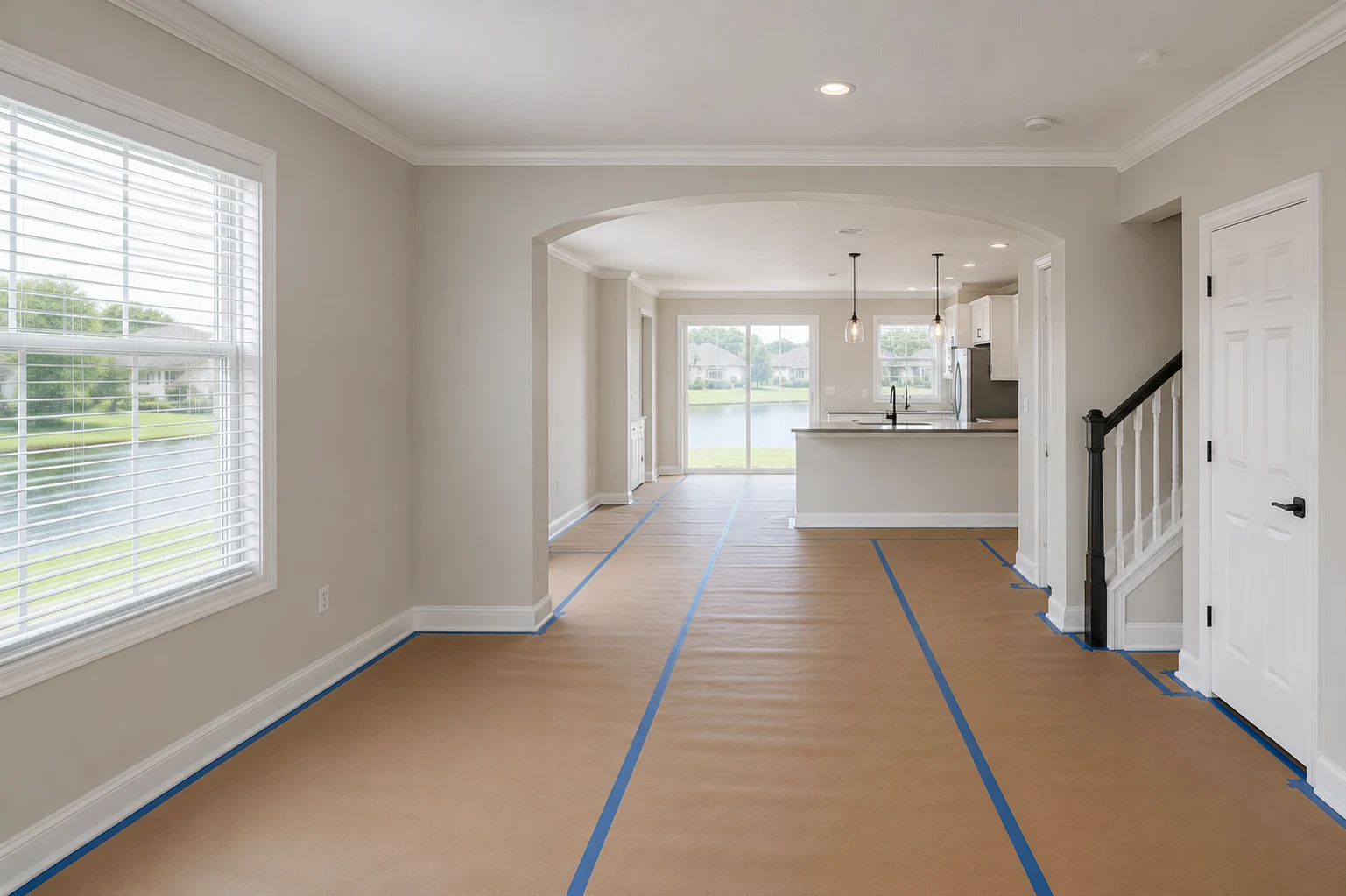
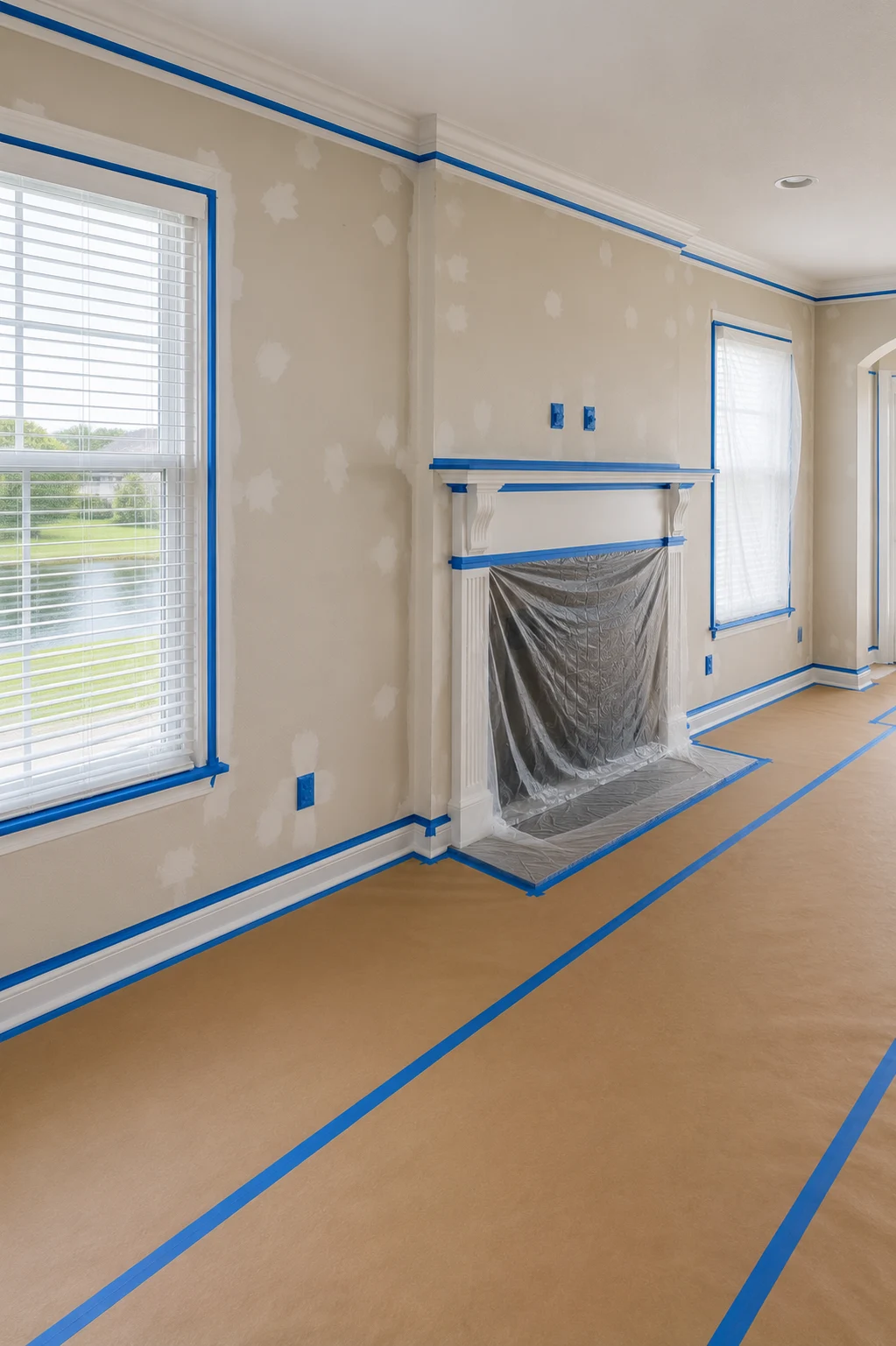
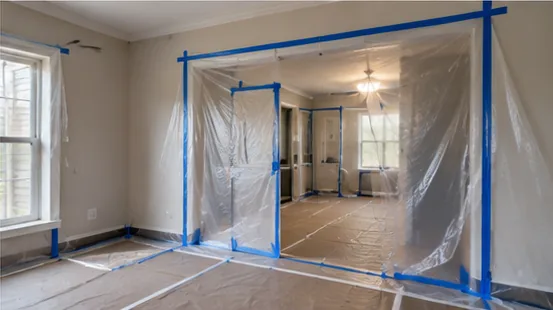
- Containing the area with plastic sheeting on floors and around the work, closing and covering doors, and sealing HVAC vents in the room.
- Using methods that create less dust, such as wet scraping and sanding, and tools with HEPA dust collection.
- Avoiding prohibited practices: open-flame burning or torching of paint, power sanding, grinding, planing or blasting without HEPA exhaust controls, and heat guns operated above 1100°F.
- Cleaning daily and at the end, using HEPA vacuums and wet wiping, and bagging waste securely.
On exteriors, containment extends to the ground below the work and nearby areas, since chips and dust can contaminate soil where children play.
Cleaning Verification
After cleaning, a certified renovator performs cleaning verification. Surfaces such as floors, windowsills and countertops in the work area are wiped with disposable cleaning cloths, and each cloth is compared with an EPA verification card. If a cloth is darker than the card, the area is cleaned again and retested. Exterior work areas are checked visually for dust, debris and chips. This is a visual check of cleanup, not a laboratory dust test; when an owner wants laboratory confirmation that dust levels are below hazard standards, a clearance examination by a certified inspector, risk assessor or dust sampling technician can be arranged separately.
Why an Uncertified Painter Is a Liability
Hiring a contractor who is not certified for a covered job in a pre-1978 home creates several problems. The household may be exposed to lead dust without anyone controlling it, children and pregnant people being most at risk. Dust can settle in carpets, ducts and soil, where it is hard and expensive to remove. The contractor may face federal penalties, which can reach tens of thousands of dollars per violation, and the owner may inherit a contamination problem, along with difficult questions when selling or renting the home.
Checking certification is simple: ask for the firm’s certification number and the certified renovator’s name, and look the firm up on the EPA’s list of certified firms.
Lead-Safe Renovation vs Lead Abatement
The two are different activities under different rules. Lead-safe renovation is ordinary remodeling or painting done in a way that minimizes lead dust. Its purpose is the renovation; lead safety is how it is done. Lead abatement is work designed specifically to permanently eliminate lead-based paint hazards, by removing, enclosing or encapsulating lead paint, and it is performed by certified abatement workers and supervisors under separate requirements. Abatement is often ordered after a child is found to have high blood lead levels, or when an owner wants lead hazards permanently addressed.
A painting contractor certified under the renovation rule is not thereby certified to perform abatement, and the two should not be confused when reading a quote.
Cost Impact of Lead-Safe Work
Lead-safe practices add time and materials: testing, plastic sheeting and containment, HEPA equipment, extra cleaning and verification, waste handling and recordkeeping. The added cost varies with the size of the job, the number of rooms and the containment needed, and it is proportionally larger on small jobs, where setup is a bigger share of the total.
Testing first can reduce cost when it shows specific surfaces are free of lead-based paint, since those surfaces can then be worked on without the rule’s requirements. When results are positive, planning the whole scope together, such as doing windows, trim and walls in one contained phase, avoids repeating containment later.
Documentation You Should Receive
For a covered job, expect:
- The Renovate Right pamphlet and a record of its delivery before work starts.
- The firm’s certification number and the certified renovator’s name.
- Test results for any surfaces tested, and which method was used.
- A record of the lead-safe work practices followed and of cleaning verification, which certified firms must keep for three years.
Keep copies with the house records. They help when selling, when planning future work and when answering questions from tenants or buyers.
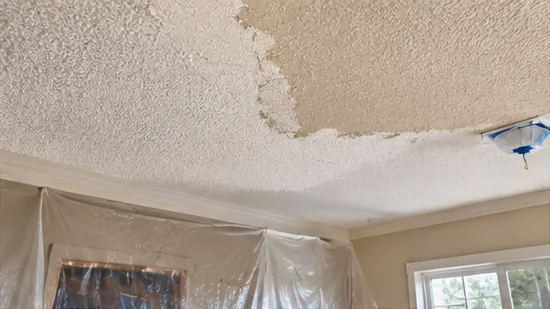
Older homes often combine lead questions with others. Textured ceilings from the same era may contain asbestos, so taking down a popcorn ceiling involves a separate lab test of its own.
Families who stay in the house during the work face dust from every trade, not only the painter, and the practical side of that is covered in living at home through a remodel.
Before accepting any quote for painting an older home, ask how lead will be handled and who on the job holds the certification.
The same question applies to every trade in renovating a pre-1978 house, since electricians, plumbers and window installers disturb paint too.
Share this article