The short answer
A painting quote is mostly a preparation quote. Two crews using the same product on the same wall will produce results that diverge within two years, and the difference is almost entirely in what happened before the first coat: washing, scraping, patching, caulking, sanding and priming. That work is invisible twenty-four hours later, which is exactly why it is the first thing cut from a cheap price.
Painting is also not licensed at state level in Florida the way plumbing and electrical are, so the barrier to entering the trade is low and verification works differently. Insurance, local registration where it applies, and evidence of finished work in your area matter more here than a licence number does.
The most useful thing you can do is make preparation explicit. Ask for it to be written into the quote as named steps rather than as the word "prep", and ask to see the surfaces after preparation and before the first coat.
Key takeaways
- Preparation is the product. The paint is the part everyone discusses and the smallest variable in whether the finish lasts.
- Painting is not a state-licensed construction trade in Florida in the way plumbing and electrical are, so check insurance and local requirements rather than assuming a state licence exists.
- Insist on a certificate of insurance sent by the agent, covering general liability and workers compensation, with dates that span your project.
- A quote that says "prep as needed" has priced nothing. Named steps — wash, scrape, patch, caulk, sand, prime — are what make two quotes comparable.
- Ask to inspect after preparation and before painting. It is the only moment the work you are paying for is visible.
- On an exterior, stucco repair and caulking are the two items most often excluded and most often needed, so confirm which of them is inside the price.
What to Look for in a Professional Painting Company
Painting is unusual among remodeling trades in one specific way, and it explains almost everything about how to hire for it. A day after the crew leaves, the work that determines whether the finish lasts five years or fifteen is completely invisible.
You cannot inspect a wall and see whether it was washed. You cannot see whether chalking was removed, whether patches were sanded flush, whether bare areas were primed, or whether caulk was tooled properly or simply run into a gap. All of it is under the finish coat by the time you look.
That single fact should shape how you choose.
Verification works differently in this trade
Plumbing and electrical work are licensed at state level in Florida, which gives homeowners a straightforward check: look up the licence. Painting is not in that group. There is generally no state painting licence to verify, some local jurisdictions require a business licence or registration and others do not, and the barrier to describing yourself as a painting contractor is low.
This is not an argument that painters are less professional. It is an argument that the verification you would do for a licensed trade does not transfer, and something has to replace it.
Three things do the work instead.
Insurance, verified at source. Ask for a certificate of insurance sent directly by the insurance agent rather than forwarded by the contractor, covering general liability and workers compensation, with policy dates that span your project. On exterior work involving ladders and two-storey elevations this is not paperwork — it is the difference between an accident being the contractor’s problem and being yours.
Local registration. Confirm with your municipality what it requires, because it varies across the region and takes one phone call.
Evidence in your area. Completed exteriors you can drive past, ideally two or three years old rather than two months old. A painting job looks excellent the week it is finished. The interesting question is how it looks after three summers.
What separates a professional operation
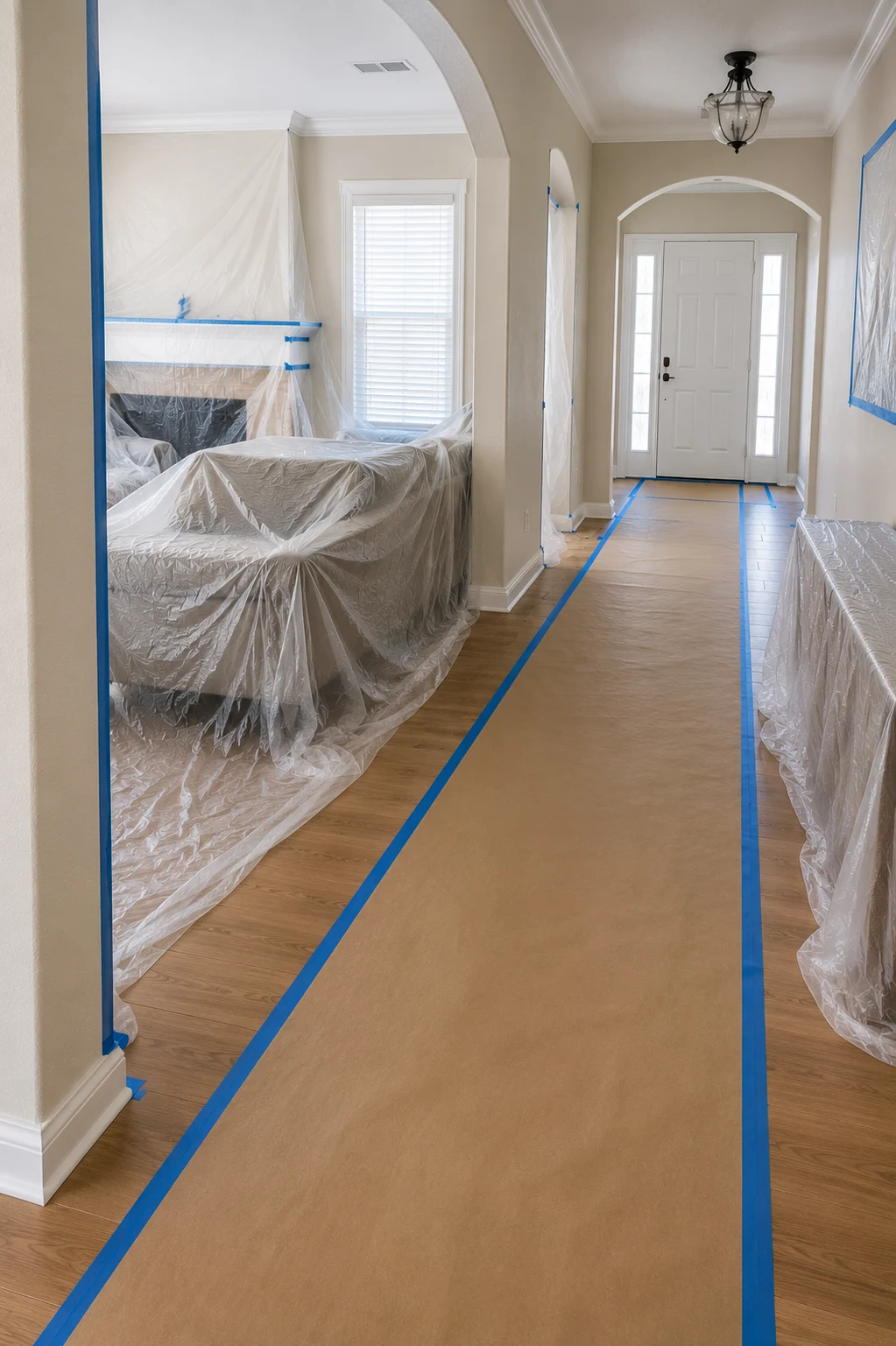
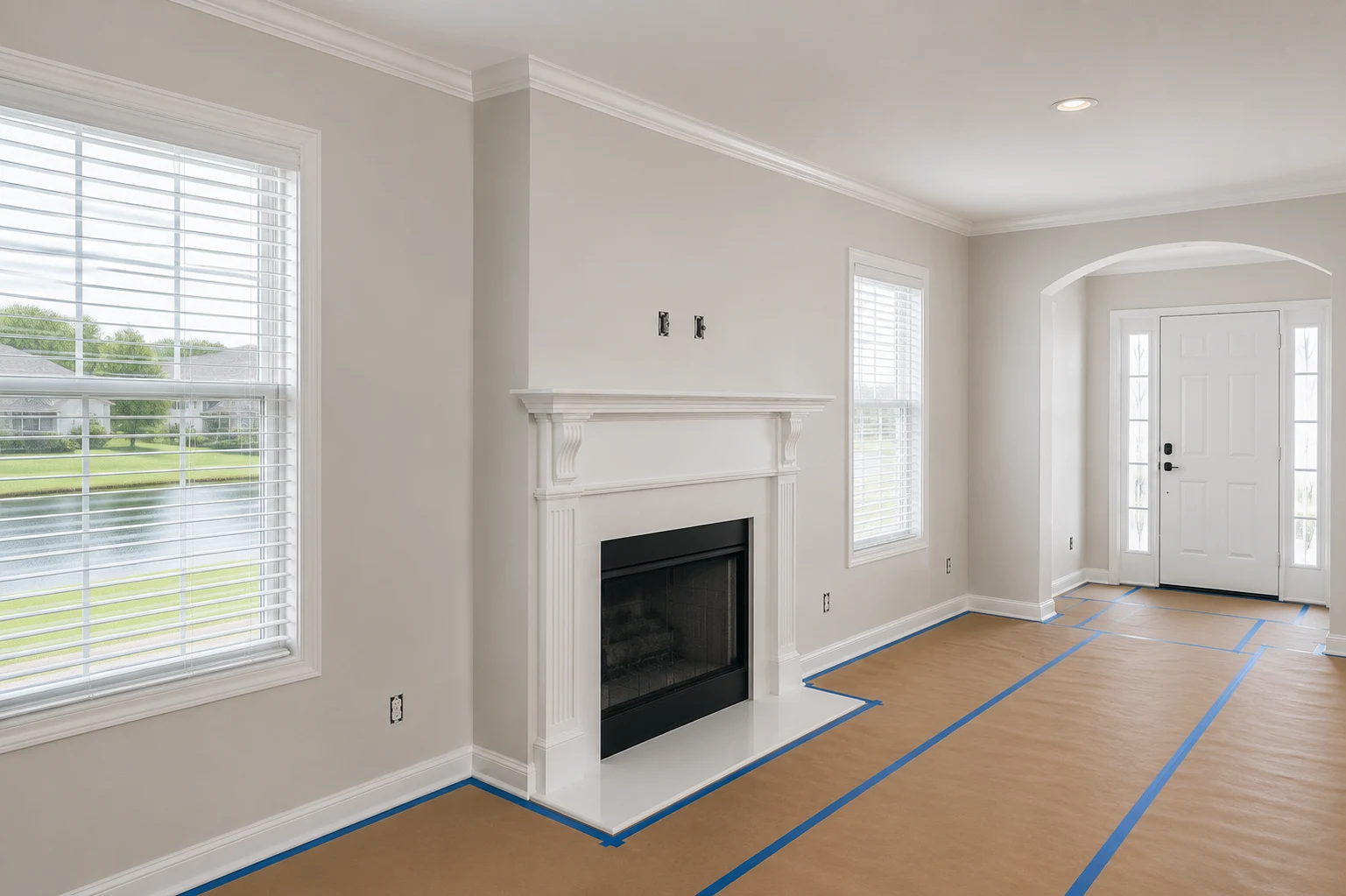
A written scope that names preparation steps rather than using the word “prep”. A crew that is the company’s own or consistently the same subcontracted team, rather than whoever is available that week. Protection that arrives with the crew — drop cloths, masking, plastic — rather than being improvised. And a stated approach to weather, which in Central Florida means an honest position on humidity, afternoon storms and recoat windows.
Where the names come from
Neighbours who had exterior work done a few years ago are the best source, because the result is now old enough to judge and they are easy to find in a neighbourhood where the same house types repeat.
Paint suppliers are the second. Trade counters know who buys quality product, who returns for warranty issues and who pays.
Other contractors are the third and the most overlooked. A remodeling company, a flooring installer or a roofer works alongside painters constantly and forms accurate opinions about which ones show up and clean up. If you are already working with a whole home remodeling team, ask them before searching anywhere else.
This is worth more effort in older neighbourhoods. Around Ocoee and the established parts of west Orange County, much of the housing stock is old enough that stucco repair, previous coating failures and substrate condition are the real job, and the difference between contractors is wider than it is on a five-year-old house.
Questions to Ask Your Painter Before They Start
These questions are about the parts of the job you will not be able to check afterwards. A company that has thought about them answers immediately.
The questions that reveal the method
What preparation is included, step by step? The answer should be a list, not a word. Washing, scraping, sanding, patching, caulking, priming — with an indication of which surfaces get which.
How will you handle what you find? Failed caulk, hairline stucco cracks, wood rot at a fascia, a previous coating that is chalking or peeling. These are discovered rather than quoted, and the process for pricing them matters more than the estimate.
What is being primed, and with what? Bare substrate, patched areas and any drastic colour change need primer. A company that primes nothing is planning to solve coverage with extra finish coats, which is not the same thing.
How many coats, and how is that verified? The answer should include how they handle a wall that is not covered after the stated number.
What is the recoat window in this weather? In Central Florida humidity, recoat and cure times run longer than the label suggests on a summer afternoon. A painter who has an opinion about this works here.
Who is on site, and is it the same crew throughout?
What is excluded? On an exterior this is the most informative question in the list, because stucco repair, carpentry repair and caulking are the three items most often left out and most often needed.
How is the site protected and left each day?
The one question the market gets wrong
There is a widespread instinct to compare painters on price per square foot, and it is close to useless here. A price per square foot describes the area to be covered; it says nothing about the condition of that area, which is the entire variable.
The way to make quotes comparable is to fix the scope instead — the same rooms or elevations, the same number of coats, the same named preparation steps, the same treatment of trim and doors — and then compare. Do that before you have a favourite, because it is much harder to apply a standard once you have decided who you want to win.
Comparing the three routes
| Established painting company | Independent painter | Doing it yourself | |
|---|---|---|---|
| Insurance and liability | Carried by the business | Varies; must be verified | Yours entirely |
| Preparation depth | Specified and repeatable | Depends on the individual | Depends on your patience |
| Crew size and duration | Several painters, days | One or two, longer | Weekends, indefinitely |
| Two-storey exterior work | Equipped for it | Sometimes | Not advisable |
| Recourse if it fails | Written guarantee and a business to contact | Depends on the relationship | None |
| Best suited to | Whole-house interiors and any exterior | Single rooms, defined scopes | One room, ground floor, no repairs needed |
Reading it by scenario: an established company earns its position on exteriors and on whole-house interiors, where access equipment, crew size and insurance genuinely matter. A good independent painter is often the better value on a defined interior scope and can be excellent. Doing it yourself is realistic for a single ground-floor room with sound walls, and stops being realistic the moment ladders, stucco or two storeys are involved — which is the honest line between a satisfying weekend and an expensive one.
Access is the practical reason this line falls where it does. On the larger two-storey homes common around Windermere, the exterior job is as much a staging and equipment problem as a painting one, and it is not a scope to improvise.
The Importance of Proper Surface Preparation
This is the section that decides whether the rest of the article mattered, because preparation is where every cheap quote finds its savings and where every premature failure begins.
Why paint fails, and it is almost never the paint
Coatings fail by losing adhesion, not by wearing out. Paint applied over a chalky, dirty, glossy or damp surface is bonded to that layer rather than to the substrate, and it takes that layer with it when it goes. The failure appears as peeling, blistering or sheets lifting at an edge, and the cause is always upstream of the finish coat.
In Central Florida three conditions make this worse than average. Ultraviolet exposure degrades old coatings into a chalky surface that new paint cannot grip. Humidity keeps substrates damp longer than the calendar suggests. And stucco is everywhere, which means hairline cracking and previous patch repairs are part of nearly every exterior job, handled as described in stucco repair before painting.
None of that is exotic. All of it is handled by preparation, and none of it is visible afterwards.
What good preparation actually consists of
The steps differ by surface, but the logic is constant: get to a sound, clean, dull, dry surface, and seal anything that is not uniform.
On an exterior that normally means washing to remove chalk and biological growth, scraping and removing anything loose, repairing stucco cracks and any rotten wood, replacing failed caulk at joints and around openings, and priming bare and repaired areas.
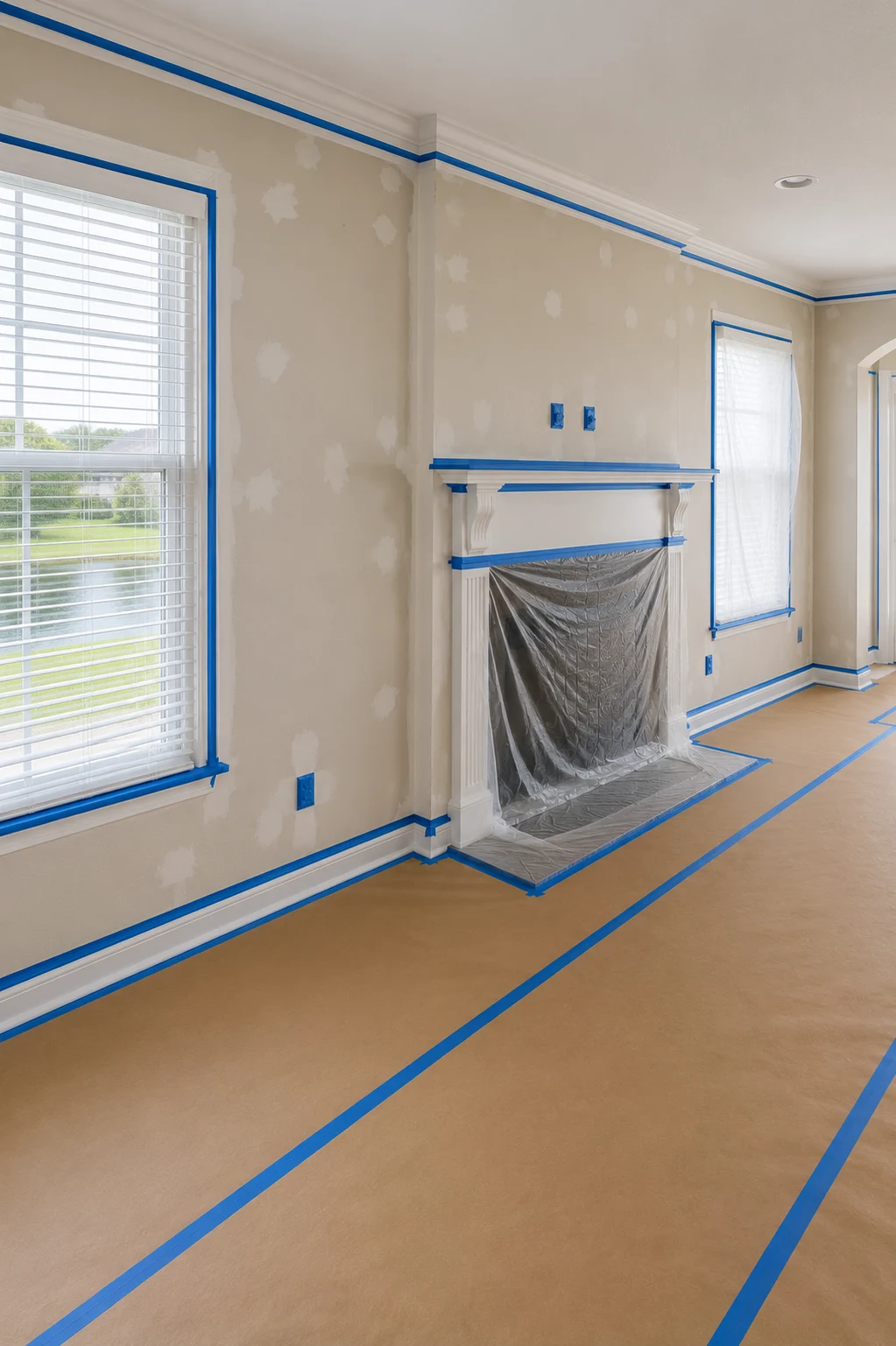
On an interior it means cleaning where needed, filling and sanding flush, caulking gaps at trim, sanding glossy surfaces so the new coat can grip, and priming patches and stains so they do not flash through.
The details are covered in the preparation section of our guide to house painting costs, and the point here is different: preparation is not just a cost driver. It is the criterion for choosing between contractors.
How to verify work you cannot see
Three practical mechanisms, all of which cost nothing.
Get the steps in the quote. Named, per surface. This alone eliminates most of the risk, because a company that will not write it down has told you something.
Inspect between preparation and paint. Ask, when you accept the quote, that you be given the chance to walk the surfaces after preparation and before the first coat. Feel the patches rather than looking at them. Check the caulk lines. On an exterior, look for primer on the repaired areas.
Ask what happens if it fails. A workmanship guarantee is only meaningful if it names a duration and covers labour rather than only material. Product warranties come from the manufacturer and cover the tin; the part you actually need covered is the application.
The last thing to settle before the crew arrives
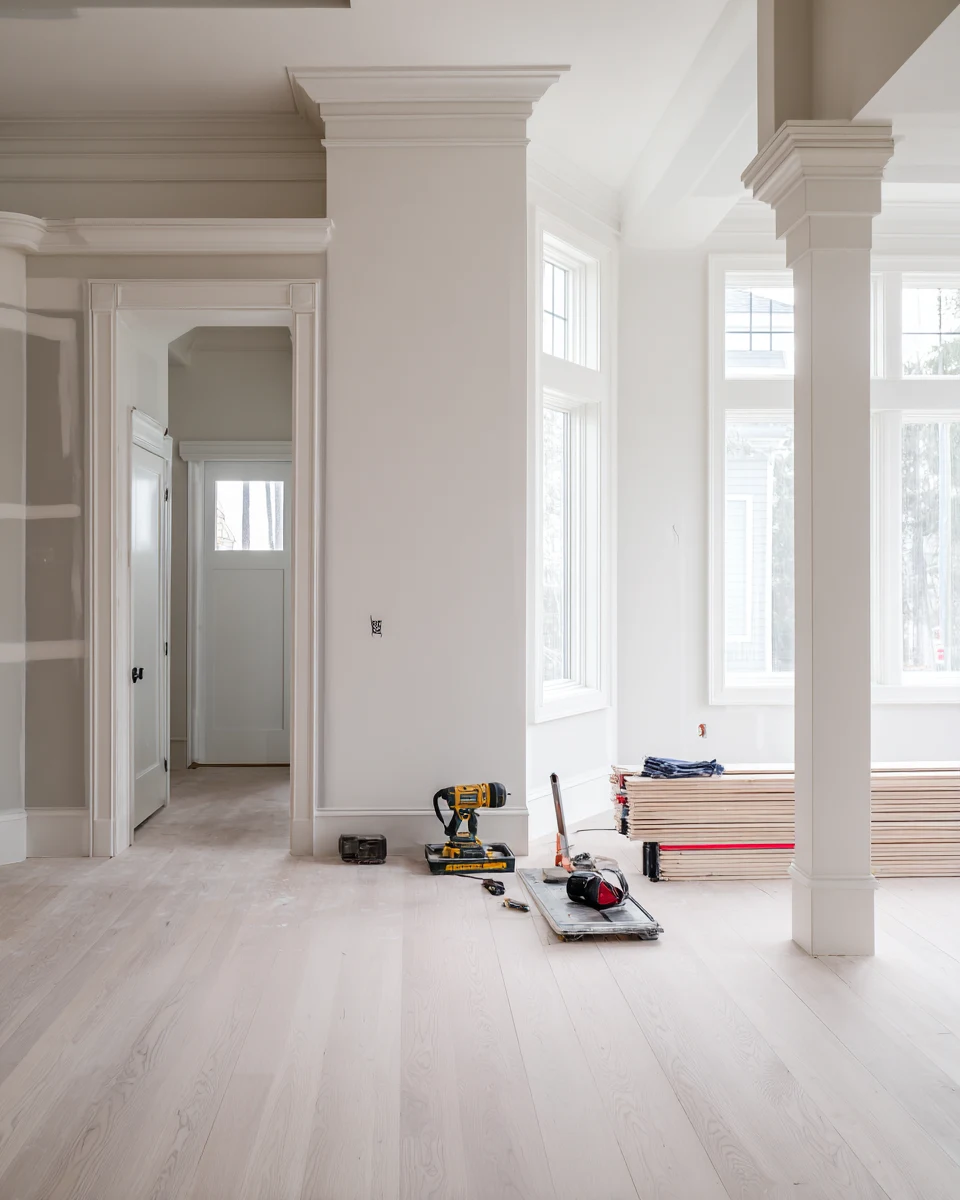
Agree the sequence with everything else happening in the house. Painting comes before new flooring and after drywall repair, and the baseboard is the handover point where responsibility for damage most often gets disputed.
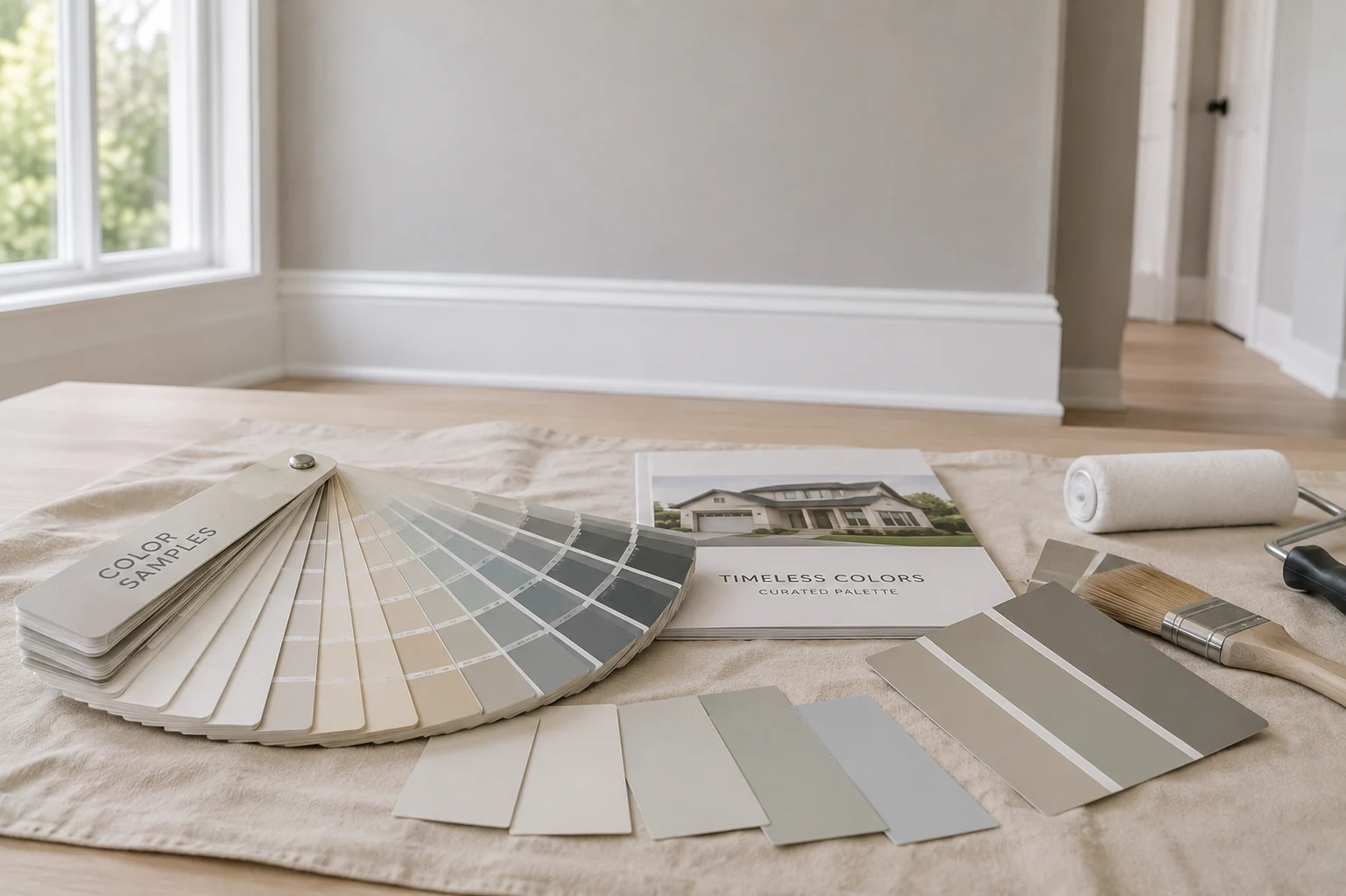
Agree the colour before the crew is booked rather than during the first morning, using a method that survives the room’s own light — the testing approach in our guide to choosing house painting colours exists precisely to stop that conversation happening on a ladder.
And collect the small unrelated repairs onto one list rather than asking the painting crew to absorb them. A sticking door, a failed caulk line at a tub, a loose handrail: those are a home services visit, and keeping them separate keeps the painting scope clean and the painting quote honest.
The broader principles of hiring — verifying insurance, reading a contract, tying payment to completed work — apply here as they do to any trade, and are set out in our guide to hiring a home remodeling contractor. What is specific to painting is only this: the thing you are buying will be invisible tomorrow, so insist on seeing it today.
Share this article