The short answer
Most stucco cracks on Central Florida homes are shrinkage and movement cracks: thin, stable and cosmetic. They are repaired with a compatible filler or elastomeric patch, textured to blend, primed and painted. Cracks that are wide, growing, offset, stair-stepping through block, or paired with sticking doors and windows point to movement in the structure and deserve evaluation before any cosmetic repair.
Stucco that sounds hollow when tapped has separated from the wall and has to be cut out and rebuilt, not painted. Efflorescence and rust stains signal water inside the wall, and the source has to be found first. After repair, most stucco does well with a quality exterior acrylic; elastomeric coatings fit walls with many fine cracks, with trade-offs.
Key takeaways
- Stucco over block is typically applied in two coats; over wood-framed walls it goes on metal lath in three. The two crack differently.
- A crack that is moving comes back through a rigid patch. Moving cracks are opened and filled with a flexible sealant.
- Hollow-sounding stucco is delaminated. Paint cannot hold it on.
- White salt deposits and rust streaks mean water is getting in. Treat the cause before the stain.
- Texture matching is a skill. Patches that stand out after painting usually failed at the texture, not the color.
Why So Many Homes Here Are Stucco
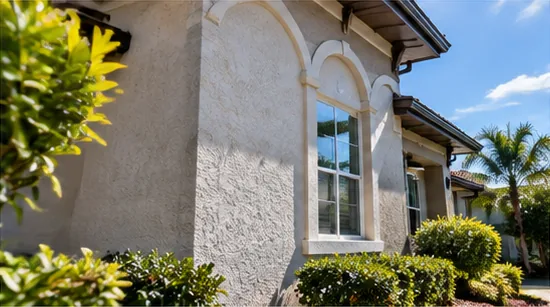
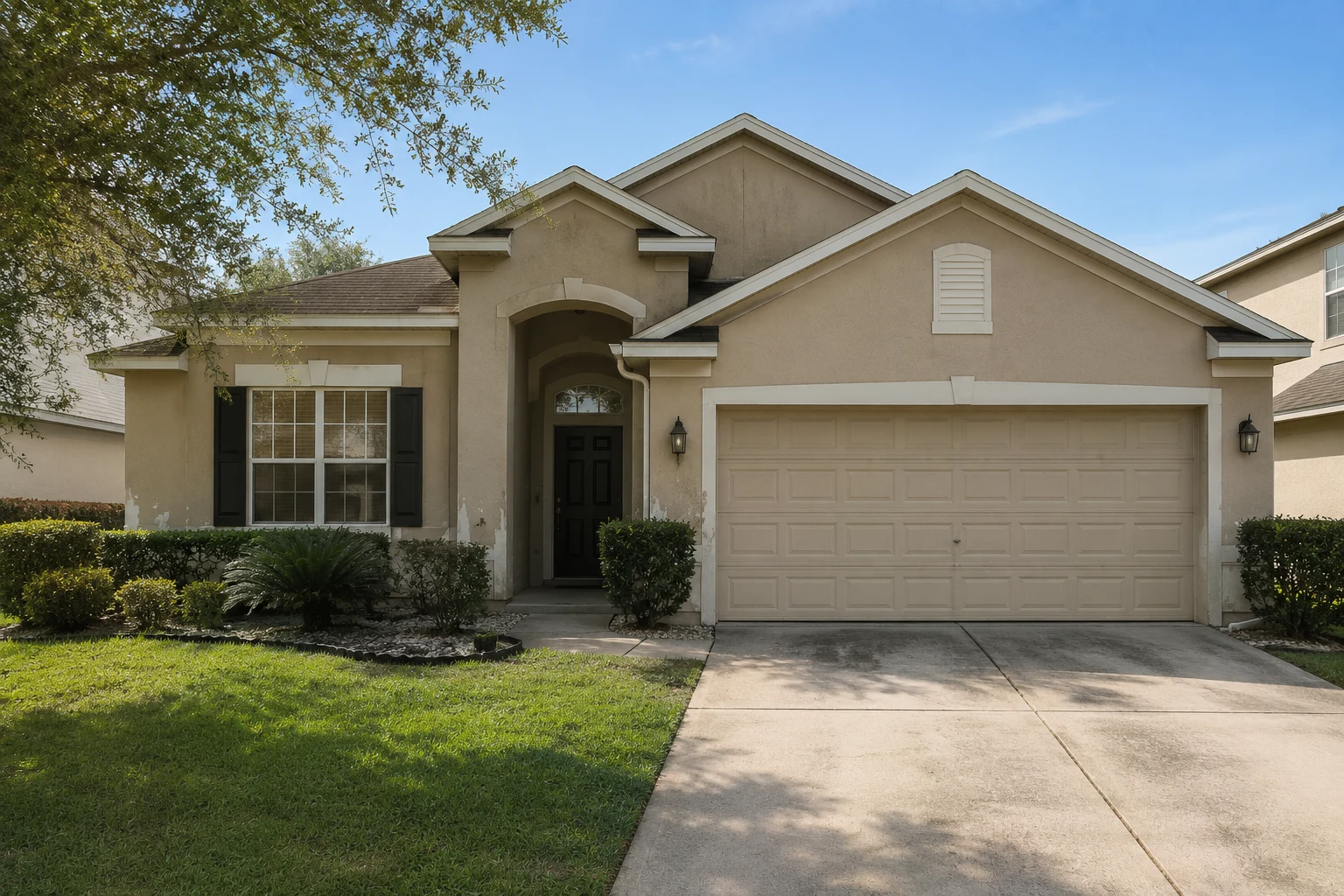
Walk through most Central Florida subdivisions and the walls are stucco: a cement plaster finish over concrete block on many homes, and over metal lath on wood-framed walls such as second stories, gables and additions. Stucco resists rot and termites, stands up to sun and rain better than many sidings, and suits the look of Florida homes.
The Florida Building Code sets how it goes on. Over masonry or concrete, cement plaster is applied in at least two coats, with a minimum thickness of about half an inch. Over lath, it takes at least three coats, typically totaling around seven-eighths of an inch. That difference matters when cracks appear. Stucco bonded directly to block moves with the block. Stucco on lath over a frame wall moves with the framing, and the joints between block and frame sections are a classic place for cracks to start.
Stucco is also hard and brittle. It shrinks as it cures, moves with heat and moisture, and responds to any movement in the structure behind it. Some cracking is expected on nearly any stucco house. The goal is not a crack-free wall but cracks that are repaired correctly before the paint goes on.
Hairline vs Structural Stucco Cracks
The Portland Cement Association attributes most stucco cracking to shrinkage or to external loads such as ground settlement or a flexible backing, often aggravated by poorly placed control joints, lath problems or inadequate curing. Sorting cracks before repairing them avoids spending money on the wrong fix:
Usually cosmetic: fine cracks that have not changed over time, map-like crazing, short cracks radiating from the corners of windows and doors.
Worth watching or investigating: cracks you can fit a fingernail into, cracks that have grown since last year, cracks with one side offset from the other, and long diagonal cracks.
Reasons to get the structure evaluated: stair-step cracks following the block joints, cracks paired with doors or windows that stick, gaps opening at corners or between walls and slab, or bulging sections of wall.
A simple way to know whether a crack is moving is to mark its ends and width with a pencil and date, photograph it, and check it through a wet and dry season. Stable cracks are cosmetic repairs. Moving cracks need the cause addressed first, and cracks in the last group call for a qualified contractor or structural engineer to look at them. An article cannot diagnose a wall from a description; the point is to recognize when painting is not the next step.
Spider Cracking
Spider or map cracking is a network of fine, shallow cracks across the surface, often from the finish coat drying too fast or from shrinkage during curing. It is usually cosmetic and does not indicate structural movement. A primer and a coating with some flexibility, or an elastomeric system on walls with a lot of it, can hide and bridge it. Where map cracking is extensive, a thin skim coat of new finish can even out the surface before painting.
Delaminated Stucco
Delamination is stucco that has separated from the wall behind it. It often sounds hollow when tapped, may bulge, and sometimes shows cracks around the edges of the loose area. Water getting behind the stucco, rusting lath and fasteners, and poor original bonding are common causes.
Paint and patching compound cannot hold delaminated stucco on. The loose area has to be cut back to sound material, the cause of the water or bonding failure corrected, the lath repaired or replaced where it is corroded, and new stucco applied in coats to match. On larger areas, this is stucco contracting work that comes before painting.
Window and Door Perimeters
Cracks radiating diagonally from the corners of windows and doors are among the most common on any stucco house, because openings concentrate stress. Separate from those, the joint where stucco meets the window or door frame is a frequent leak point. That joint should be sealed with a flexible sealant compatible with both materials, not filled with rigid patch. When a crack at a window corner is paired with water stains inside or a window that sticks, the opening’s flashing and sill need attention, not only the stucco. Replacing windows in stucco walls brings its own patching work, discussed in the guide to impact window replacement.
The Base of the Wall and the Weep Screed
At the bottom of stucco walls, a metal or plastic strip called a weep screed lets water that gets behind the stucco drain out. The Florida Building Code requires it to be corrosion-resistant and set a minimum distance above soil or paving, about four inches above earth and two inches above paved surfaces. Mulch, soil or pavers built up against the wall over the years can bury it, keeping the base of the wall wet and causing staining, efflorescence and peeling paint along the bottom.
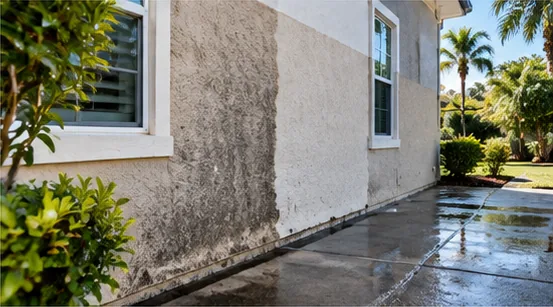
When repainting, the weep screed should stay open: not caulked shut, not buried and not painted over in a way that seals its drainage. Stains and peeling concentrated along the base of a wall are often a grading or landscaping problem as much as a paint problem.
Stucco Over Frame Walls
Second stories, gables, bump-outs and additions on many block homes are wood-framed and finished with stucco over lath. Those areas behave differently from stucco on block. They depend on a water-resistive barrier, flashing and the lath behind the stucco to manage water, and when those fail, the damage is inside the wall. Cracks along the line where a frame wall meets block below, bulging, soft spots or stains below windows on frame walls warrant a closer look before painting, because repainting can hide a developing moisture problem.
Patching, Skim Coat and Texture Matching
How a crack is repaired depends on its width and whether it moves. Coating manufacturers set their own limits in their product instructions: typically, the finest cracks can be bridged by primer and coating, somewhat wider cracks are filled with an elastomeric patching compound, and wider cracks are opened up and filled or sealed before coating. Cracks that are still moving are routed out and filled with a flexible sealant, because a rigid filler in a moving crack cracks again.
Patching uses a compatible stucco repair mix or an acrylic or elastomeric patch, applied, allowed to cure, and textured to match.
Skim coating applies a thin layer of finish over a larger area to even out repairs, map cracking or mismatched textures. It is useful where patches would otherwise form a patchwork.
Texture matching is where repairs succeed or fail visually. Central Florida homes use a range of finishes, including sand finish, knockdown, lace and smooth. A patch with the right color but the wrong texture stands out as soon as sunlight rakes across the wall. Matching usually takes practice on the actual wall, and sometimes feathering texture beyond the patch so the edge disappears.
Elastomeric Coating: Where It Fits on Stucco
Elastomeric wall coatings are thick, flexible acrylic films applied at several times the thickness of ordinary paint. Their appeal on stucco is crack bridging: the film stretches over fine cracks that would show through standard paint.
They are not a cure for cracking. They work best on sound stucco with many fine cracks, and they come with trade-offs in cost, application rate and how they handle moisture inside the wall. Building-science research notes that elastomerics give up some vapor permeability to gain that flexibility, and that they have been known to blister when water gets into the stucco behind them. When they are right, and when they are a poor choice, is laid out in detail in the guide to elastomeric coatings.
Breathable Acrylic Alternatives
For most stucco, a high-quality exterior acrylic latex paint is the standard choice. The Building Science Corporation’s guidance on painting stucco recommends exterior acrylic latex paints for almost all stucco applications and favors more vapor-permeable coatings, so that moisture that gets into the wall can dry outward.
Masonry-specific acrylics add alkali resistance, better adhesion to cementitious surfaces and, in some products, resistance to dirt pickup and mildew. Applied over a sound, well-repaired surface, with fine cracks filled first, an acrylic system is usually the more forgiving choice on stucco that is not heavily cracked. Its limit is that it will not hide cracks that open after painting.
Efflorescence and Rust Stains
Efflorescence is the white, powdery or crystalline deposit that appears on stucco and masonry. It forms when water moving through the wall dissolves salts in the cement and leaves them on the surface as it evaporates. It is a sign of moisture, not a paint problem.
Coating manufacturers advise removing it with a brush or low-pressure washing, correcting the moisture source, such as roof runoff, gutters, sprinklers or cracks, and delaying painting if it keeps coming back. Paint applied over active efflorescence tends to lose adhesion and blister.
Rust stains on stucco come from corroding metal inside or on the wall: lath and fasteners behind the stucco, corner beads, weep screeds at the base of the wall, or metal fixtures. Water getting behind the stucco is the usual cause of lath corrosion, and the Portland Cement Association notes that rusted lath is a common companion of delamination. Irrigation water with high iron content can also stain walls from outside.
A rust stain that keeps returning after cleaning and painting points to corrosion inside the wall, which calls for opening and repairing the area rather than a stain-blocking primer.
Prep Sequence That Prevents Callbacks
The order of work matters as much as the materials:
- Inspect and map cracks, hollow areas, stains and failed sealant, so the scope is clear before work starts.
- Clean the walls to remove dirt, chalk and mildew, as described in the guide to washing before painting, and let them dry thoroughly.
- Repair structure first: delaminated stucco, corroded lath and moving cracks, with the causes corrected.
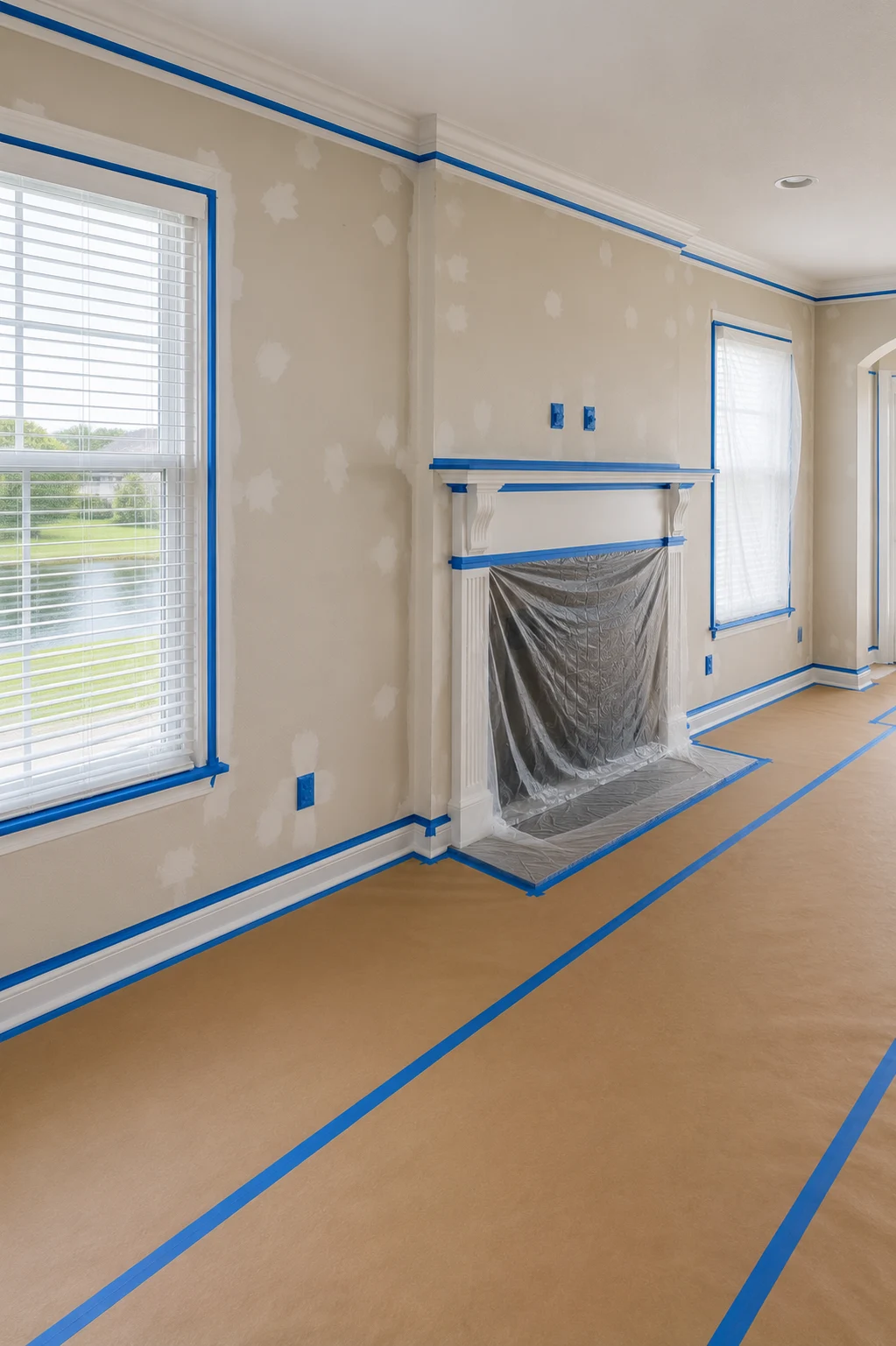
- Patch and texture cracks and holes, and allow repairs to cure for the time the product requires.
- Seal joints at windows, doors, penetrations and dissimilar materials with a flexible sealant.
- Prime repairs and bare stucco with a masonry primer; new stucco needs to cure or a primer rated for its alkalinity.
- Apply finish coats at the thickness the product specifies, in suitable weather.
Skipping or rushing the cure time for patches, or painting over damp walls, is one of the most common reasons repairs show through or paint fails early.
Cost of Stucco Repair Plus Paint
HomeGuide’s cost data puts stucco repair at roughly $8 to $50 per square foot of repaired area, with small crack and hole repairs often around $200 to $800 and repairs involving water damage in the range of $1,000 to $4,000 or more. Painting a stucco house runs roughly $1 to $5.50 per square foot of wall area in the same source. Those are national figures, not local quotes.
What moves the total:
- The amount of repair, especially delamination, water damage or lath replacement.
- Coating system, since elastomerics use much more material per square foot than standard acrylics.
- Height and access, including two-story walls and gables.
- Texture matching across large or highly visible areas.
- Sealant work at windows, doors and penetrations.
Because stucco repair is discovered as much as it is planned, a clear written scope that says how additional damage found during preparation will be handled prevents disagreements later. How the repair work fits into the wider exterior job, from repaint timing to primer and weather, is part of planning an exterior repaint in Florida.
Minor stucco and crack repair ahead of painting is part of the preparation in exterior painting; larger stucco replacement and structural repairs are specialist work that comes before it.
Share this article