The short answer
Fixing standing water starts with diagnosis: where the water comes from (roof, neighbors, irrigation, a rising water table or a low spot), where it naturally wants to go, and where you are allowed to send it. Only then does a solution make sense, whether regrading and swales, gutters and downspout extensions, surface drains and catch basins, a French drain, or a dry well where the soil and water table allow it.
Many Central Florida subdivisions drain through side-yard swales designed into an approved lot grading plan, so changing grades can create problems for you or your neighbors. Under Florida's reasonable use rule, a landowner can be liable for unreasonably altering how surface water flows onto another property.
Key takeaways
- Watch the yard during and after a heavy storm before hiring anyone. Where the water enters and where it stops tells you more than any sketch.
- Sandy soil drains fast until the water table rises. In the wet season, even sand can hold standing water for days.
- A French drain needs somewhere lower to discharge. On a flat lot, that is often the hardest part.
- Do not fill or block a side-yard swale. It is often part of the subdivision's drainage design, not just a low spot in your lawn.
- Irrigation causes more soggy yards than owners expect. Check the controller before building drains.
Why Flat Lots and Sandy Soil Still Flood
Central Florida’s sandy soil drains quickly under normal conditions, which surprises people when their yard floods. The explanation is that sand can only absorb water if there is room below it.
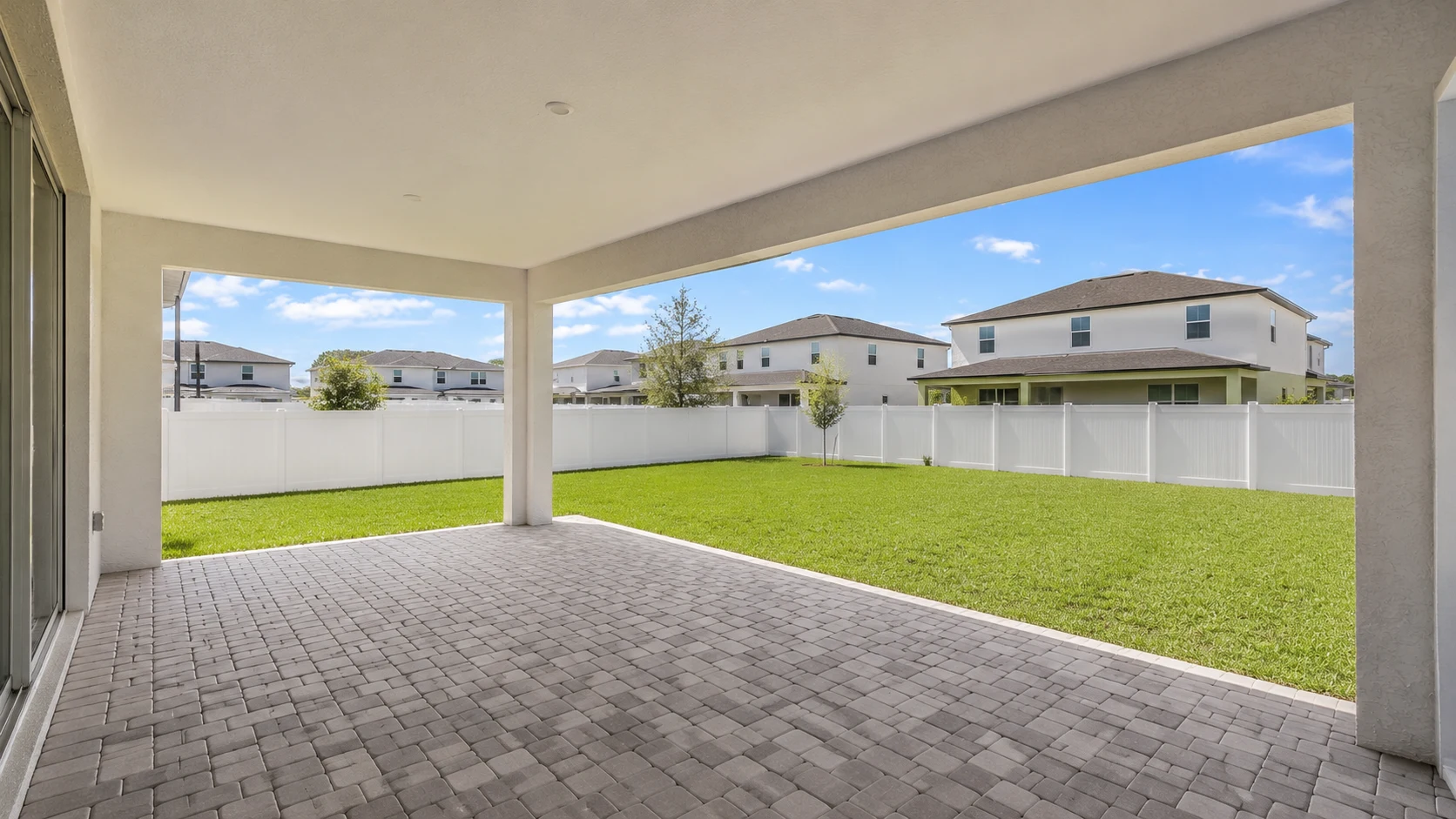
Three conditions take that room away. The water table rises during the wet season, sometimes close to the surface, so rain has nowhere to soak into. Construction compacts soil and brings in fill that drains poorly, so newer lots often behave differently from the sandy ground nearby. And many lots are very flat, with only small, deliberate slopes toward swales and streets; a few inches of settling or a patio built slightly too high is enough to trap water.
Wet Season Volume
The National Weather Service places the region’s rainy season roughly between late May and mid-October, when afternoon thunderstorms can drop a lot of rain in a short time. A drainage fix has to handle that kind of storm on ground that is already wet, not a light shower on dry soil. Water that disappears in March may stand for days in August.
Diagnosing Where Water Actually Comes From
Most drainage mistakes come from solving the wrong problem. Before choosing any solution, go outside during and after a heavy rain and watch.
| Where you see water | Likely source | What to check next |
|---|---|---|
| Along the house, below the roof edge | Roof runoff | Gutters, downspout outlets, missing gutters |
| Entering from a side or rear lot line | Neighboring property or common area | Swales, fence lines, recent grading next door |
| In the same low spot every time | Grade | Whether the spot has any outlet |
| Soggy areas even without rain | Irrigation or a leak | Controller schedule, broken heads, pool plumbing |
| Everywhere, lasting days, in summer | High water table | Seasonal pattern; drains may have limited effect |
The table is a starting point. The pattern of when the water appears, how fast it arrives and how long it stays is what separates a gutter problem from a grading problem from a water table that no drain will fully overcome.
Irrigation Overwatering
Irrigation is behind more soggy yards than owners expect, especially zones that run after rain or heads broken and pouring into one area. Florida’s water management districts limit landscape irrigation to set days of the week, and state law requires automatic irrigation systems installed since 1991 to have a device that shuts them off after sufficient rain. Check the controller schedule and the heads before investing in drains.
French Drains and Catch Basins
A French drain is a trench with a perforated pipe in gravel, usually wrapped in filter fabric, that collects water from saturated soil and carries it away. It works when there is somewhere lower for that pipe to discharge, with enough fall to keep water moving. On many flat Central Florida lots, finding that outlet is the difficult part.
A catch basin, or surface drain, collects water from the surface at a low spot and sends it through solid pipe to an outlet. It suits places where water collects in a defined area, such as a patio corner or a planting bed next to the house.
Both need maintenance. Surface grates clog with leaves and mulch, and fabric around French drains can silt up over years in fine soils.
Dry Wells and Retention
A dry well is an underground chamber or gravel pit that receives water and lets it soak into the surrounding soil slowly. It can work in sandy ground, but only where the bottom of the well sits comfortably above the seasonal high water table. In much of Central Florida, that condition limits how deep and how effective a dry well can be in the wet season, which is exactly when you need it.
Larger retention, such as the ponds serving subdivisions, is designed as part of the community’s permitted stormwater system. Individual lots usually drain toward it through swales and pipes rather than managing all their water on site.
Regrading and Swales
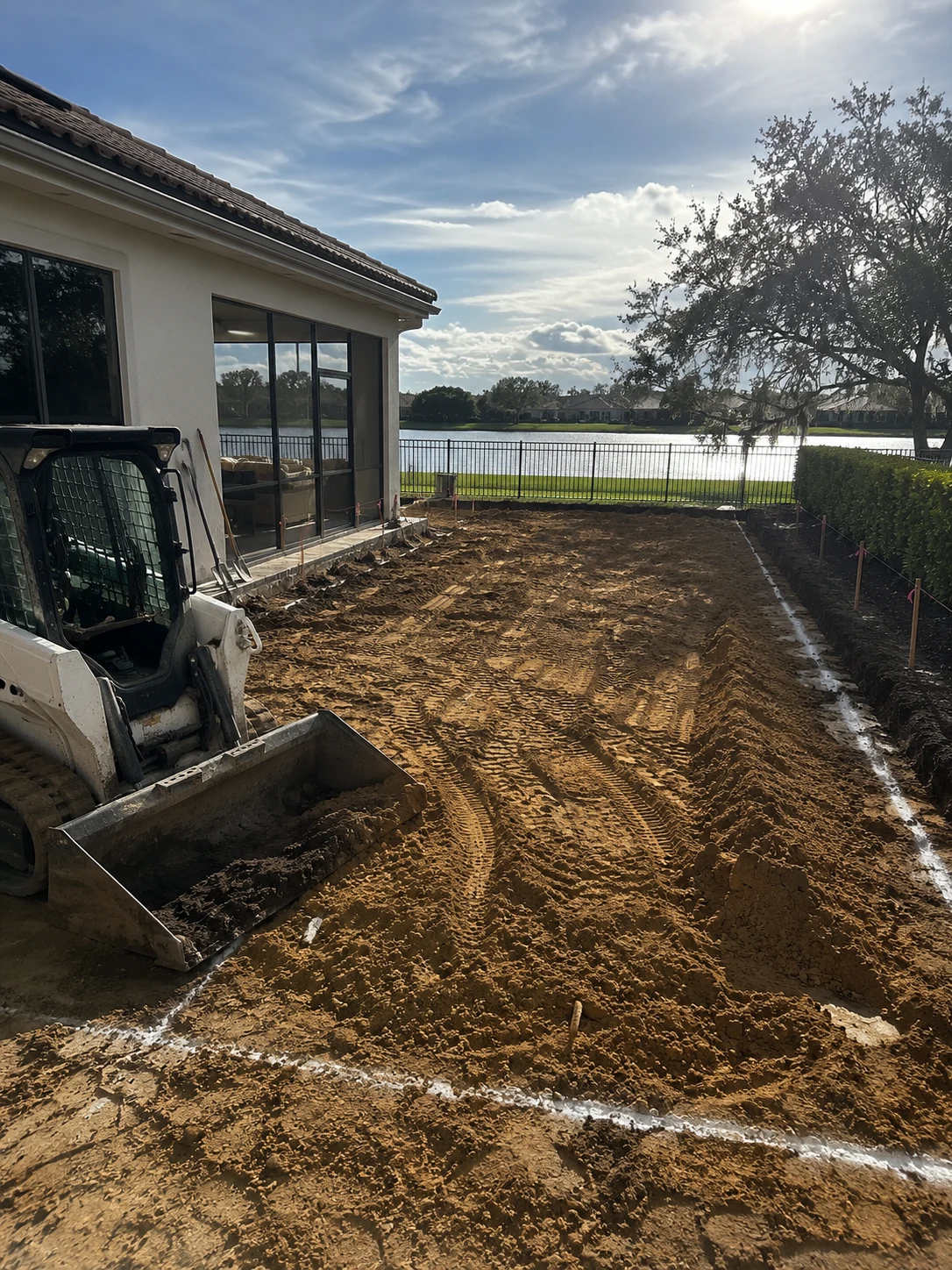
Regrading reshapes the ground so water flows where it should, away from the house and toward a swale, drain or street. A swale is a shallow, grassed channel that carries water along a lot, and many subdivisions have side-yard swales designed as part of an approved lot grading plan.
Swales are easy to damage without noticing: a fence installed across one, a planting bed raised in it, a patio that extends into it, or sod that gradually builds up the bottom. Restoring a blocked swale’s intended shape is often the simplest and cheapest fix available.
Downspout Extensions and Gutter Capacity
A roof collects a large volume of water, and without gutters it drops along the drip line, often right beside the foundation or onto a patio. Where gutters exist, downspouts that discharge at the corner of the house can create soggy spots and erosion.
Extensions, splash blocks, pop-up emitters or buried solid pipe can move that water to a better location. Gutters also need to be sized for Florida downpours and kept clear; overflowing gutters in a summer storm act much like no gutters at all.
Drainage Around Pool Decks and Patios
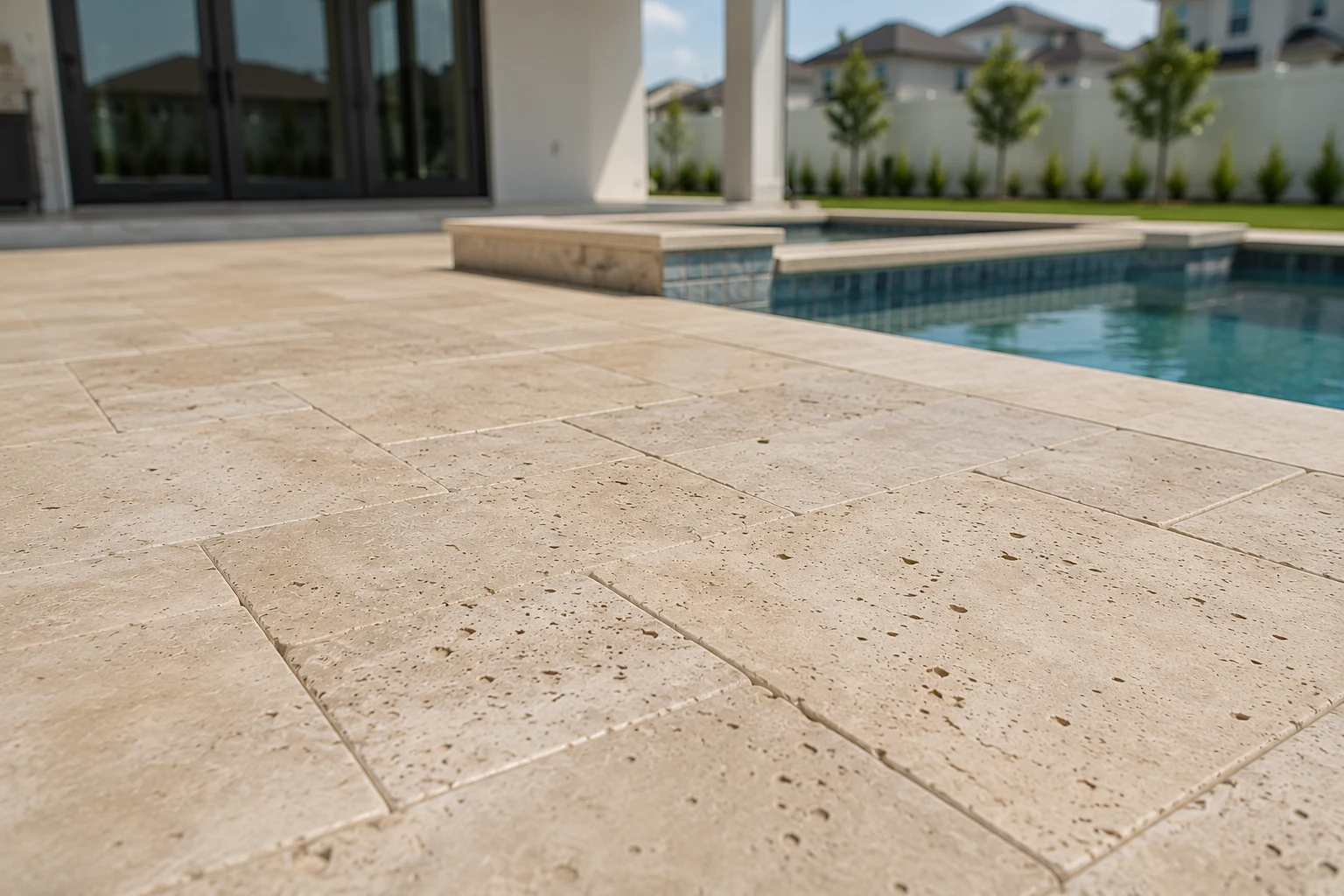
Hard surfaces change drainage. Every deck and patio needs a planned destination for its runoff, through deck drains, a perimeter drain or grading to a lawn area or swale. When a deck is overlaid or resurfaced, its height and slope change too; which is worth knowing before changing the surface of a pool deck in any way.
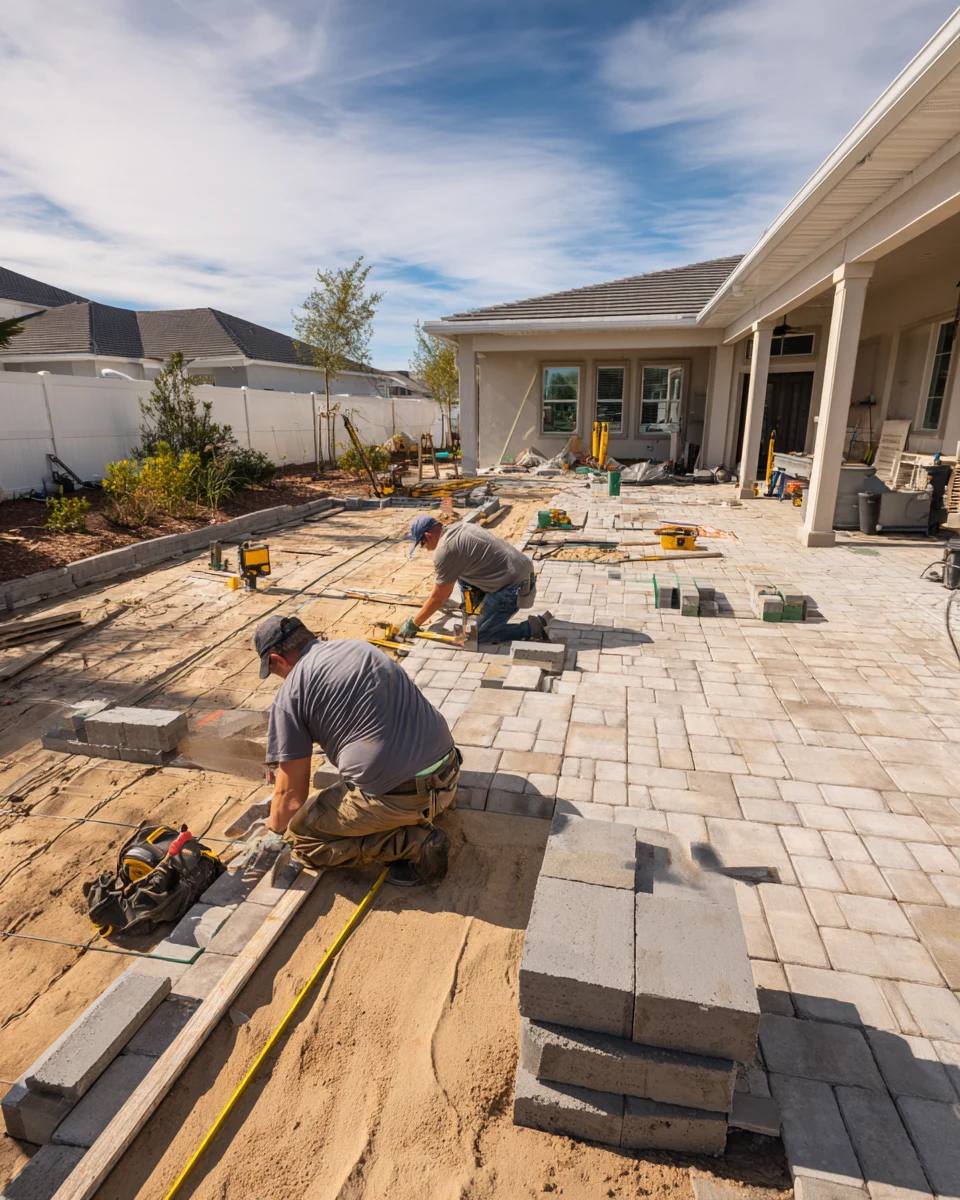
New paving is the moment to get this right, because base and slope are set before the surface goes down. How a paver patio is built to shed water, and when permeable pavers are worth considering, is covered in paver patios in Central Florida.
County Stormwater Rules
Stormwater is regulated at several levels. Subdivisions are built under permitted stormwater systems, individual lots often have an approved grading plan, cities and counties set rules on what you can connect to streets and drains, and HOAs may restrict work in common areas and easements. Larger projects that change drainage significantly can need their own permits.
These rules vary by jurisdiction, so check with your city or county before redirecting water toward a street, an easement or a common area. One point is consistent: stormwater should never be connected to the sanitary sewer.
Neighbor Runoff Disputes
Florida follows the reasonable use rule for surface water, set out by the Florida Supreme Court in Westland Skating Center v. Gus Machado Buick (1989). A landowner may alter how water flows across their property, but can be liable if the alteration is unreasonable and harms a neighbor. Compliance with the building code is evidence of reasonableness, not a guarantee of it.
In practice, that means a drainage solution should not simply move your water onto the lot next door. If water is arriving from a neighbor, document it with photos and dates, talk to them and, in a planned community, involve the HOA before it becomes a dispute.
Cost by Solution
HomeGuide’s 2026 cost guides give these national ranges:
| Solution | Published cost range (2026) |
|---|---|
| French drain | About $10 to $35 per linear foot, or $500 to $8,800 total |
| Yard drainage system | About $1,000 to $4,000 on average |
| Drainage swale | About $5 to $15 per linear foot |
| Dry well | About $1,200 to $5,200 |
The table shows approximate national ranges from published cost guides. Soil, slope, the length of the run and where the water can legally discharge decide what a specific yard needs and costs, which can be more or less than these figures.
The solution that fits your yard is more important than the cheapest line in the table. A restored swale or a redirected downspout can solve a problem that a costly French drain would not, and vice versa.
Drainage problems sometimes point back to the house itself, such as missing gutters, grading that slopes toward the foundation or water entering doors and slabs; those belong with remodeling work on the house itself rather than the yard.
For drainage tied to a patio, a pool deck or a backyard project, our outdoor living team begins with a site assessment of grade and water flow, because the right fix comes from the diagnosis, not the product.
Share this article