The short answer
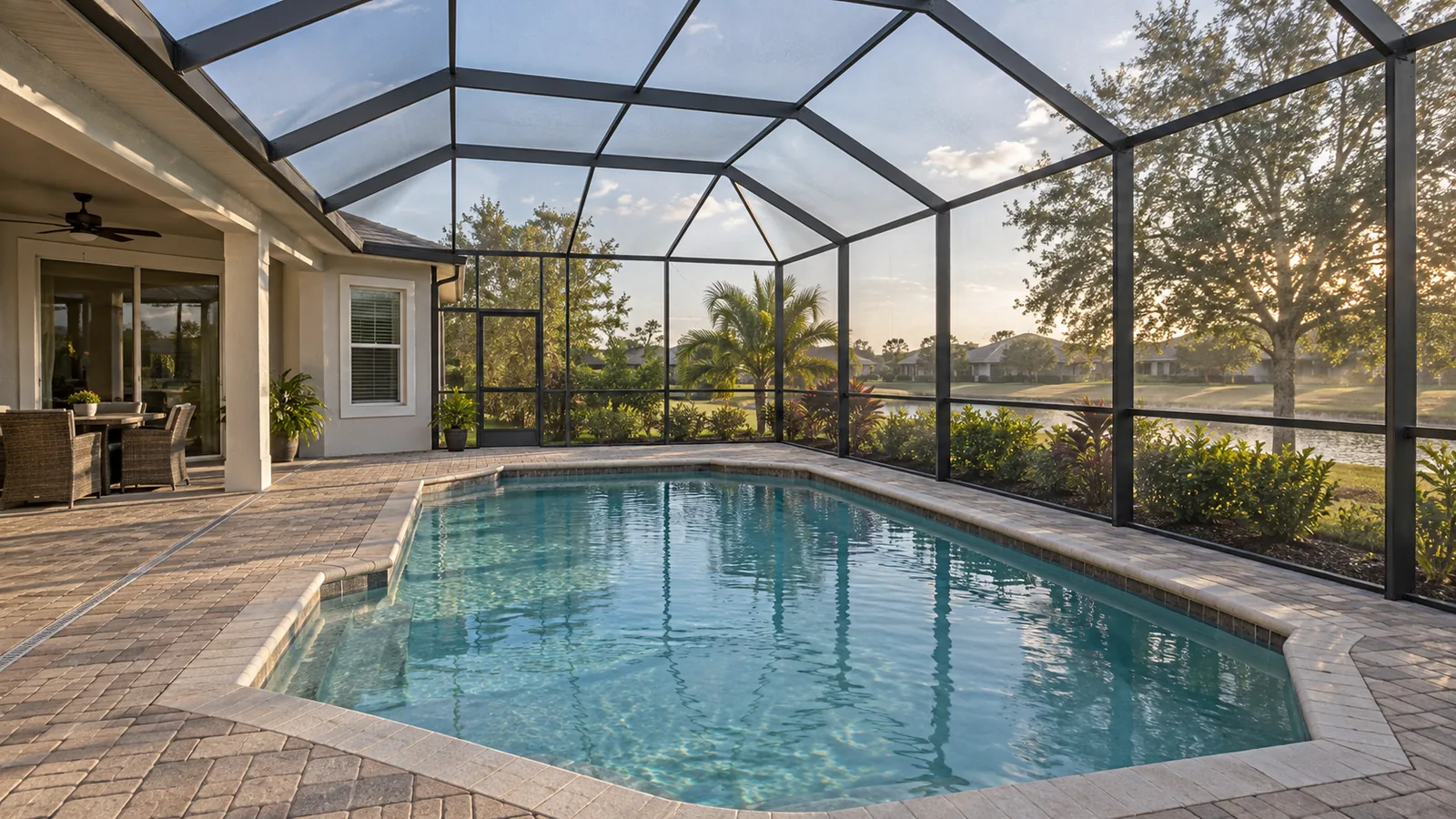
If the concrete deck is structurally sound and drains correctly, resurfacing with a textured cementitious or acrylic coating, the family that includes the trademarked Kool Deck, is usually the least disruptive option. If you want a different look or the surface is badly worn, pavers or travertine can often be installed as an overlay on the existing slab. If the slab is heaving, sinking or holding water, it needs repair or replacement before any new surface goes on.
For comfort in Florida sun, color and material matter more than brand: lighter surfaces and travertine are generally more comfortable barefoot than dark pavers or plain concrete. For safety, choose a texture that stays slip-resistant when wet and keep it that way with the right sealer.
Key takeaways
- Resurface only a slab that is sound. A new surface over a moving or ponding slab fails with it.
- Overlays raise the deck. Check door thresholds, coping height and drainage before choosing pavers or travertine over concrete.
- Color decides heat more than most owners expect. Dark pavers can become uncomfortable in afternoon sun.
- Expansion joints are part of the design. Covering them with a rigid finish invites cracks right where they were.
- Sealer affects both slip resistance and appearance. A glossy wet-look sealer on a pool deck is a trade-off, not an upgrade.
Signs Your Pool Deck Needs Work
Some deck problems are cosmetic and some are structural, and that difference decides which resurfacing options are even available.
Cosmetic signs: a faded, chalky or stained surface, texture worn smooth in traffic paths, small hairline cracks, and coating peeling in patches. These can usually be handled by resurfacing.
Structural signs: sections that have sunk or lifted, cracks that are widening or offset so one side is higher than the other, water that stands on the deck for hours after rain, and gaps opening at the coping. These point to what is under the surface, often the base or drainage, and have to be solved first.
A simple test: after an afternoon storm, walk the deck an hour later. Where water is still standing, the problem is not the surface.
Fixing the Slab Before the Surface
Structural problems have structural fixes. Sunken sections can sometimes be raised by injecting material beneath them, which is less disruptive than replacement when the slab itself is intact. Sections that are broken, badly heaved by roots or sloped toward the house usually have to be cut out and poured again. Voids under the slab, often from water washing out the sand beneath, have to be filled, and the source of that water, such as a missing gutter, a leaking return line or poor grading, has to be found.
Only once the slab is stable and draining does the surface choice below matter. A contractor who offers to coat over a sinking section is selling a finish that will crack along the same line.
Kool Deck and Cool Deck Coatings
Kool Deck is a trademarked concrete topping made by Mortex, introduced in 1962 and still common on older Florida pool decks. “Cool deck” has since become the generic name for textured cementitious and acrylic coatings applied over concrete to make it more comfortable underfoot and more slip-resistant.
Resurfacing with this kind of system typically means cleaning and repairing the existing concrete, filling cracks, then applying a new textured topping and a finish coat. It keeps the deck height essentially the same, works around enclosure posts and is less disruptive than replacing the surface.
It is the right choice when the slab is sound and you like the look. It is not a structural repair; a coating over a moving crack will crack again. Once it is down, keeping it sound is a matter of cleaning, spot repairs and periodic recoats, which the guide to maintaining and recoating a pool deck coating walks through.
Paver Overlay
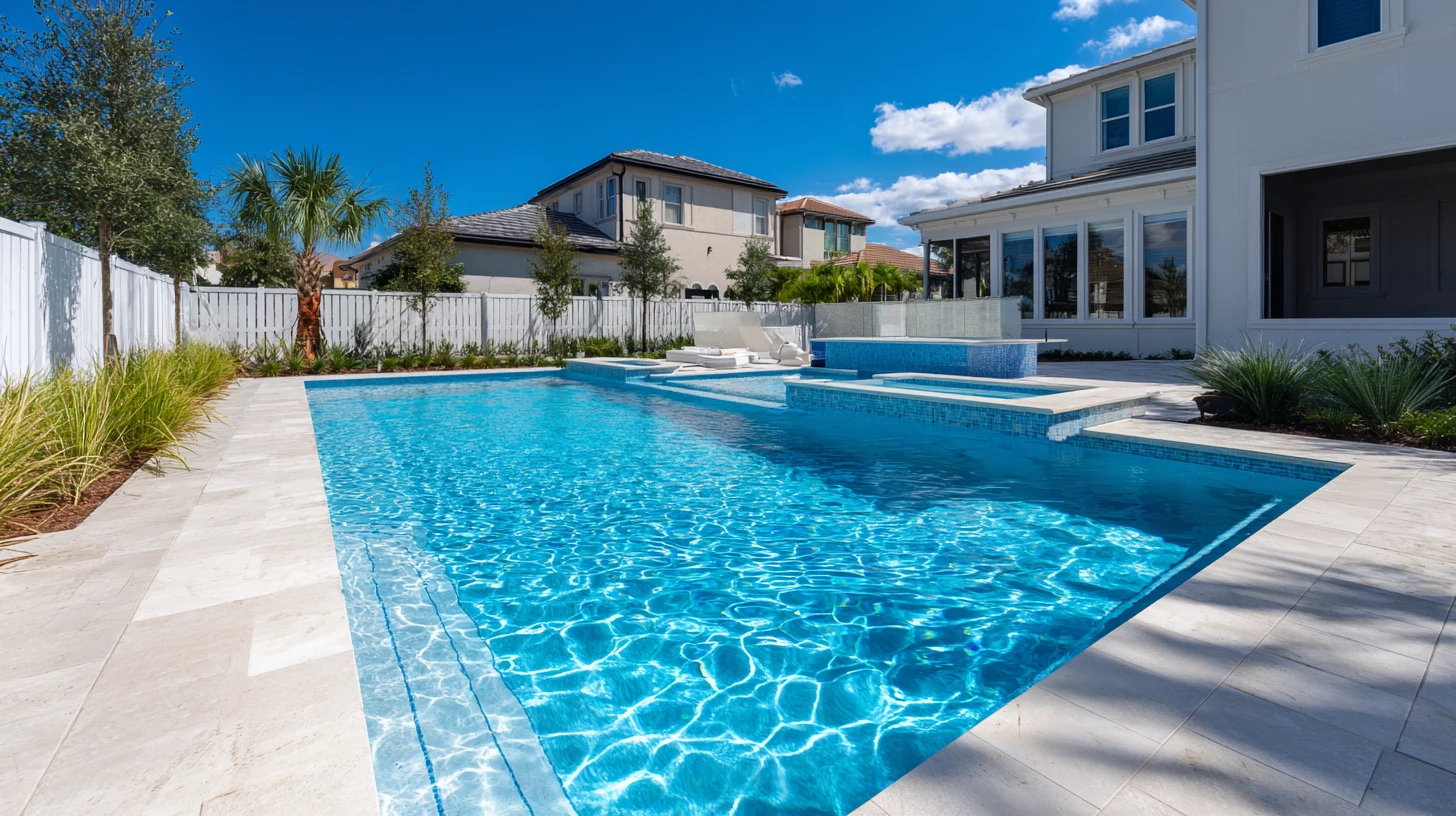
Thin overlay pavers can be installed directly over a sound concrete deck, bonded or set on a thin bed, rather than on the deep compacted base used for pavers on soil. The result looks like a new paver deck without demolishing the old slab.
The trade-off is height. Even thin pavers raise the surface, which affects the step down from sliding doors, the relationship to the coping and the flow of water toward drains. Those details are the difference between a clean overlay and a trip hazard at the lanai door.
When the old slab is too damaged to serve as a base, the alternative is full-thickness pavers on a compacted base, after the concrete is removed. It costs more and takes longer, but it removes the old slab’s problems instead of inheriting them.
Drainage and Pitch
A pool deck should shed water away from the pool and the house and toward drains or the yard. An overlay copies the slope of the slab under it, good or bad. If the old deck ponds, fix the pitch or add drainage before overlaying.
Travertine Coping and Deck
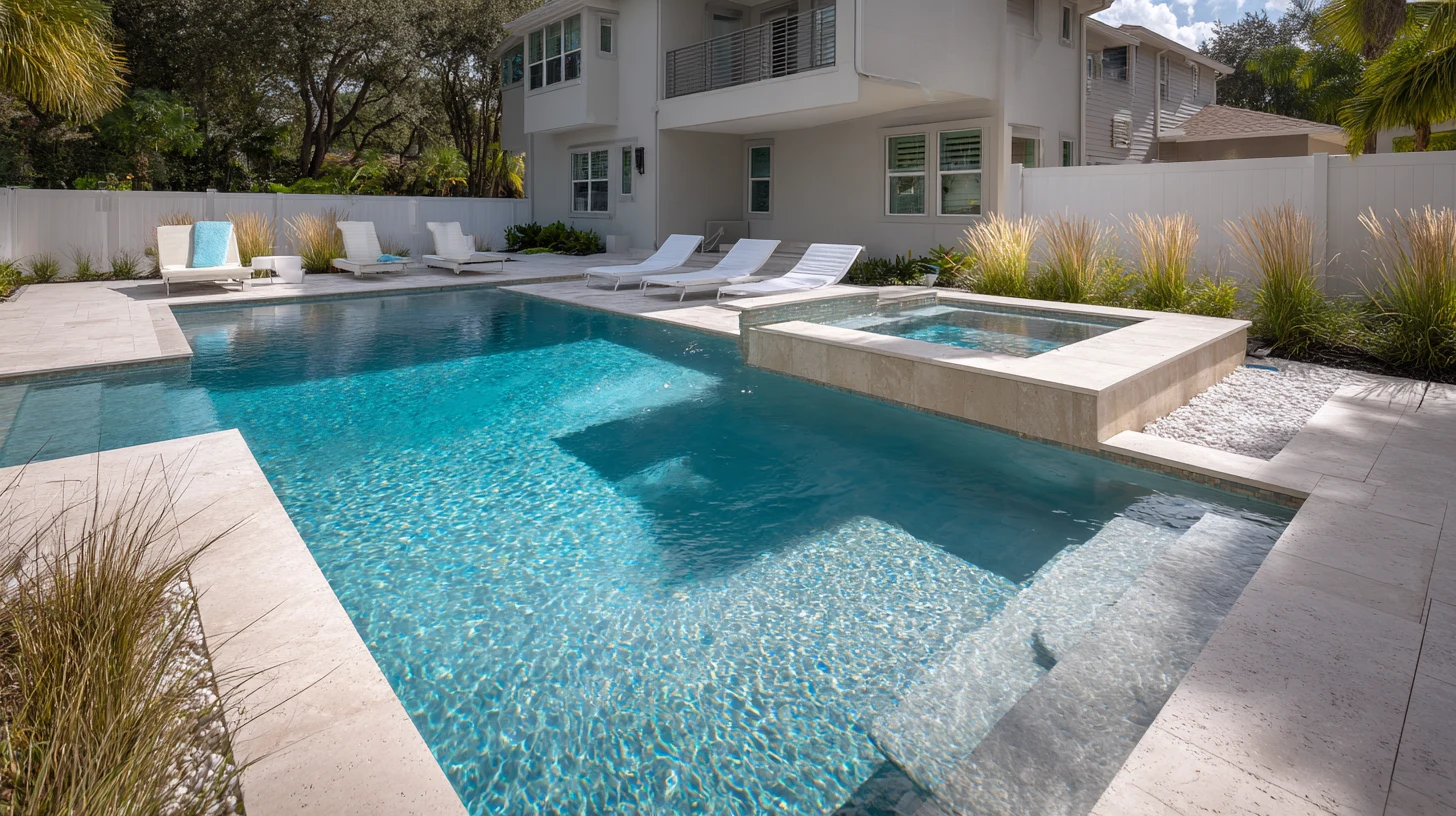
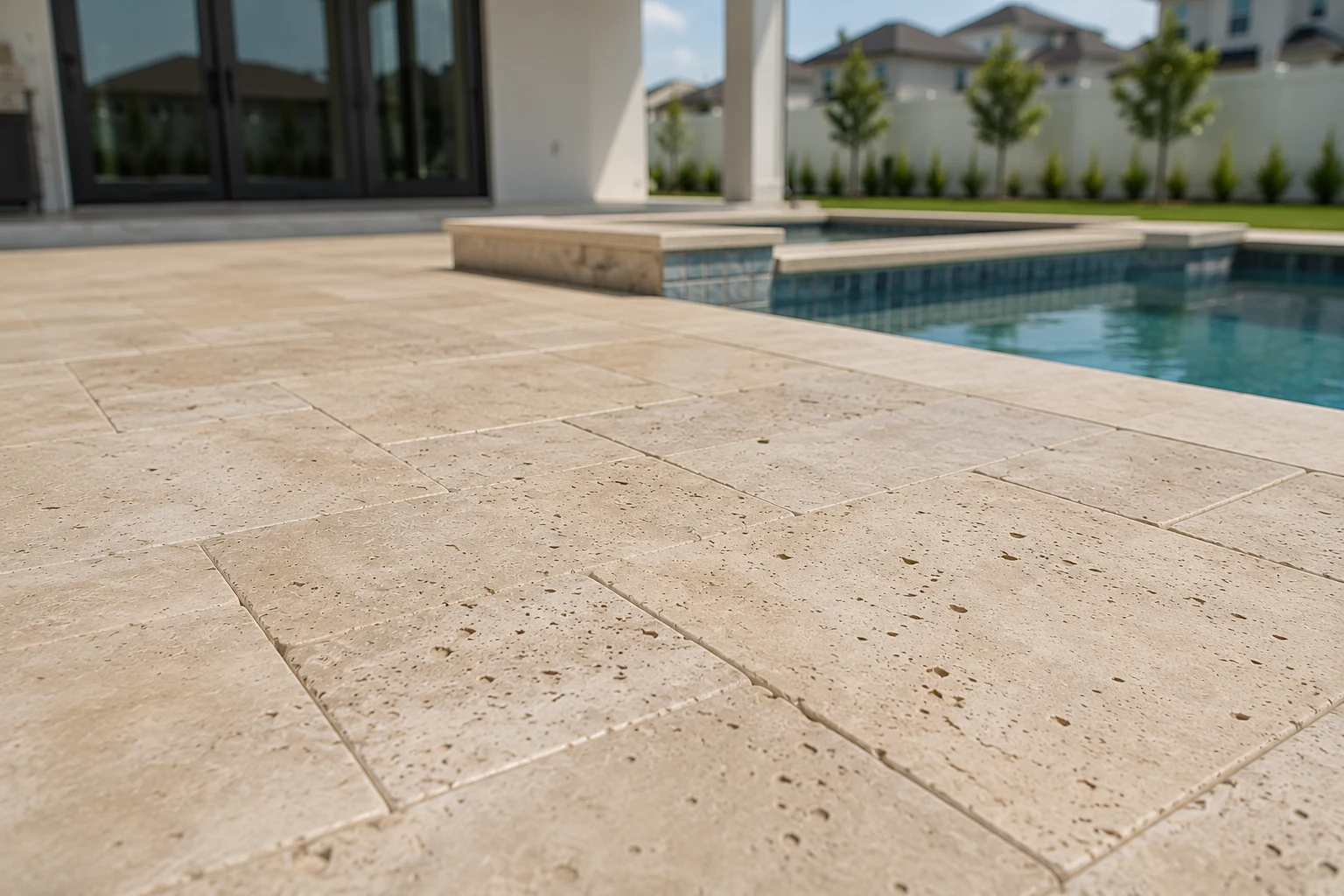
Travertine is a natural stone widely used around Florida pools because it is light in color, has a textured surface and is generally comfortable underfoot. It can be installed as coping only, as coping plus deck, or as an overlay on existing concrete.
It needs more care than concrete coatings. Travertine is porous, so it is usually sealed to resist stains, and salt and pool chemistry can affect natural stone over time if it is not maintained. Filled and unfilled, tumbled and honed versions look and feel different, and that choice is worth making with samples in hand. Grades, coping profiles, sealing and salt exposure are covered in depth in the guide to travertine pool decks.
Stamped and Spray-Texture Concrete
Stamped concrete imprints a pattern into new concrete while it is wet, so it is part of a new or replaced slab rather than a resurfacing. Spray-texture or knockdown finishes are applied over existing concrete, which puts them in the same family as cool deck coatings.
Stamped finishes can look like stone or pavers at a lower cost, but they tend to be slicker unless textured and sealed for traction, and repairs are harder to blend than replacing a paver.
Heat Underfoot: What Actually Stays Cool
Heat is the complaint Florida owners mention most, and the answer is more about color and material than marketing.
| Cool deck coating | Paver overlay | Travertine | Stamped concrete | |
|---|---|---|---|---|
| Comfort barefoot in sun | Good in light colors | Depends heavily on color | Generally among the most comfortable | Depends on color and sealer |
| Traction when wet | Textured by design | Good, varies with sealer | Good when textured or tumbled | Needs texture and grit in sealer |
| Relative cost to install | Lowest | Moderate to higher | Highest | Moderate, requires new slab |
| Repairs | Patch and recoat | Replace individual units | Replace individual pieces | Hard to blend |
| Ongoing care | Periodic recoat | Sand joints, resealing | Sealing, stain care | Periodic resealing |
For the hottest decks without shade, light-colored travertine or a light cool deck finish is usually the most comfortable choice. If budget rules, a coating in a light color outperforms dark pavers on comfort. If easy spot repairs matter most, pavers and travertine win because units can be replaced individually.
Slip Resistance Around the Water
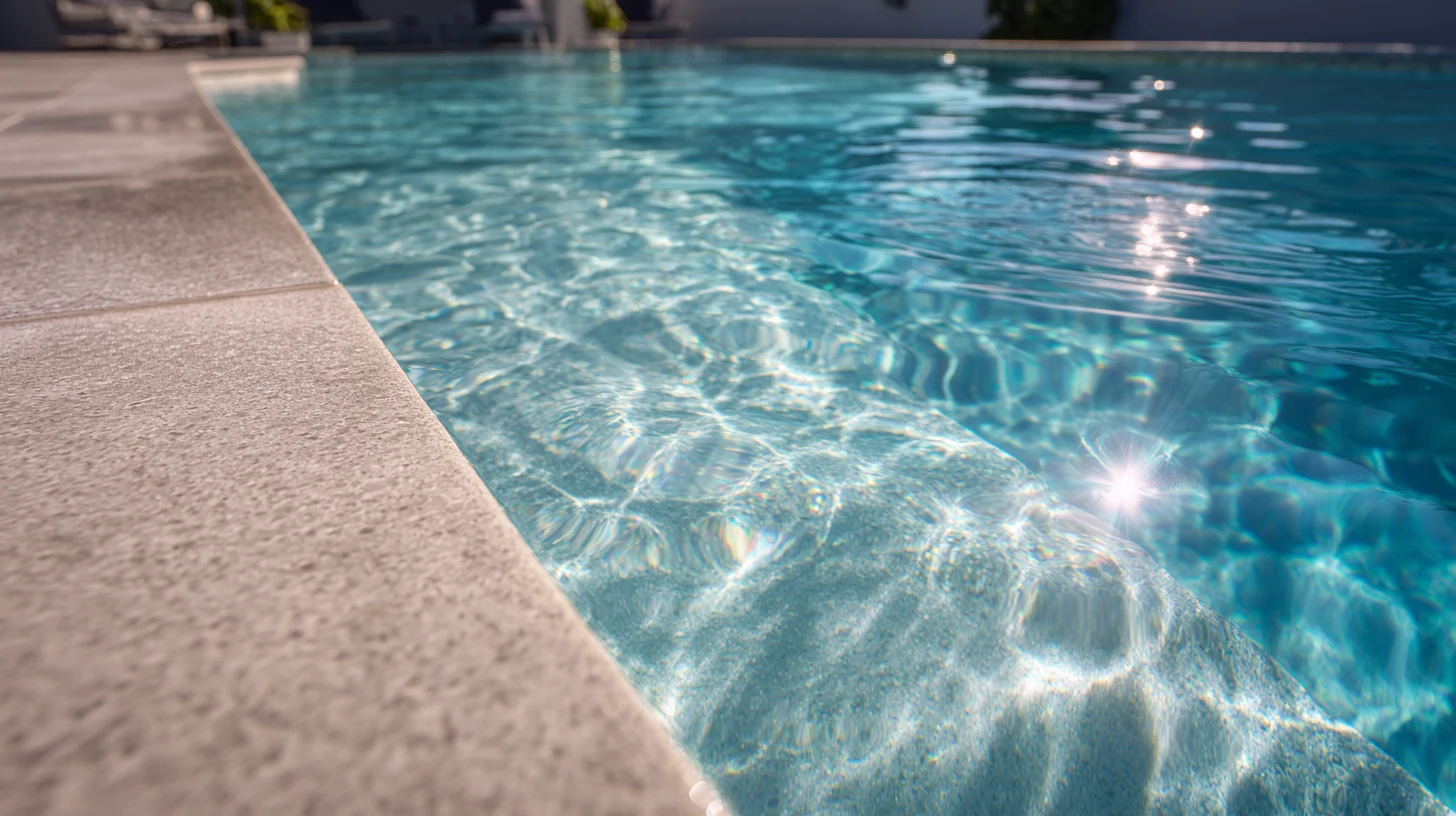
A pool deck has to stay walkable when wet. Texture does most of the work: the rough profile of cool deck finishes, tumbled or textured stone and pavers with a matte face all hold traction better than smooth surfaces.
Sealer is where good decks become slippery. High-gloss “wet look” sealers darken the color and can reduce traction, which is why many products for pool decks offer an additive grit or a matte finish. Ask what sealer will be used and how it affects traction before choosing it for looks.
Expansion Joints
Concrete moves with temperature and moisture, and expansion or control joints give it a place to do so. A resurfacing job should respect the existing joints, carrying them through the new surface with a flexible sealant rather than bridging them with rigid material. The joint between the deck and the pool coping deserves the same attention, since it moves more than most.
Sealing Schedule
Coatings, pavers and natural stone all benefit from periodic resealing, and the interval depends on the product, sun exposure and wear. Look at water behavior as a guide: when water no longer beads and the surface darkens quickly when wet, the sealer is wearing.
Cost Comparison by Surface
There is no reliable published local figure for pool deck resurfacing by material, so the options are ranked here rather than priced. In relative terms, coating an existing sound deck is the least expensive route; paver overlays cost more; travertine is usually the highest; and anything that requires removing and replacing the slab changes the category entirely.
What moves the price within each option is predictable: deck area, how much repair the slab needs, the height transitions at doors and coping, removing an old coating, and whether the enclosure has to be worked around. If you are budgeting a deck as part of a new pool, a line-item view of pool costs shows where it fits among the other lines.
The deck rarely lives alone. A new surface is also the best moment to deal with a tired enclosure, whose posts sit in the slab, and the repair-or-replace checks for a cage take only a walk around the frame.
If the pool’s interior finish is also near the end of its life, plan both jobs together before scheduling the deck. Resurfacing the interior can splash and stain a brand-new deck, so the order matters.
Decks, pavers and hardscape around the pool are part of our outdoor living work.
On a new build, the deck is designed together with the pool itself, so its drains, joints and enclosure footings are part of the custom pool plan from the start.
Share this article