The short answer
Before adding a pool to a vacation rental near Disney, confirm three things: that the property can legally operate as a short-term rental (state license from DBPR plus local zoning and HOA rules), how the pool will meet Florida's residential pool safety law for guests who do not know the house, and what heating and weekly service will cost to run. A rental pool is a piece of operating equipment, not just an amenity.
Whether it pays back cannot be answered with a rule of thumb. Compare what similar listings with and without private pools earn in your specific neighborhood, then subtract the build cost, financing, heating, service, insurance and a reserve for resurfacing and equipment.
Key takeaways
- Check the rental rules before the pool plans. A pool on a house that cannot legally rent short term solves the wrong problem.
- Design for strangers. Guests do not know the house, so layered safety features make more sense than the legal minimum.
- Winter guests expect heat. The heater choice affects both your utility bill and how quickly a cold pool is ready for arrivals.
- Specify finishes and equipment for high turnover: durable interior finish, textured deck, easy service access and remote monitoring.
- Run payback on neighborhood comparables, not averages. A private pool matters more in some submarkets than in others.
Why a Pool Changes Nightly Rate and Occupancy
Around the theme parks, vacation homes compete with hotels, condo resorts and each other. A private pool is one of the features that separates a vacation home from a hotel room, and booking platforms let guests filter for it. That is the mechanism: a pool can put a house in front of guests who would otherwise never see it, and it can justify a higher rate against homes without one.
What nobody can give you honestly is a universal percentage. The effect depends on the submarket, the size of the house, the season, how many nearby listings already have pools and what guests in that area expect. In some resort communities nearly every rental home has a pool, and not having one is the thing guests notice. Elsewhere it is a genuine differentiator.
So the right question is local: in your community, what do comparable homes with private pools earn compared with those without? Market data tools used by rental managers can answer that for a specific area, and that answer is the starting point for the payback math.
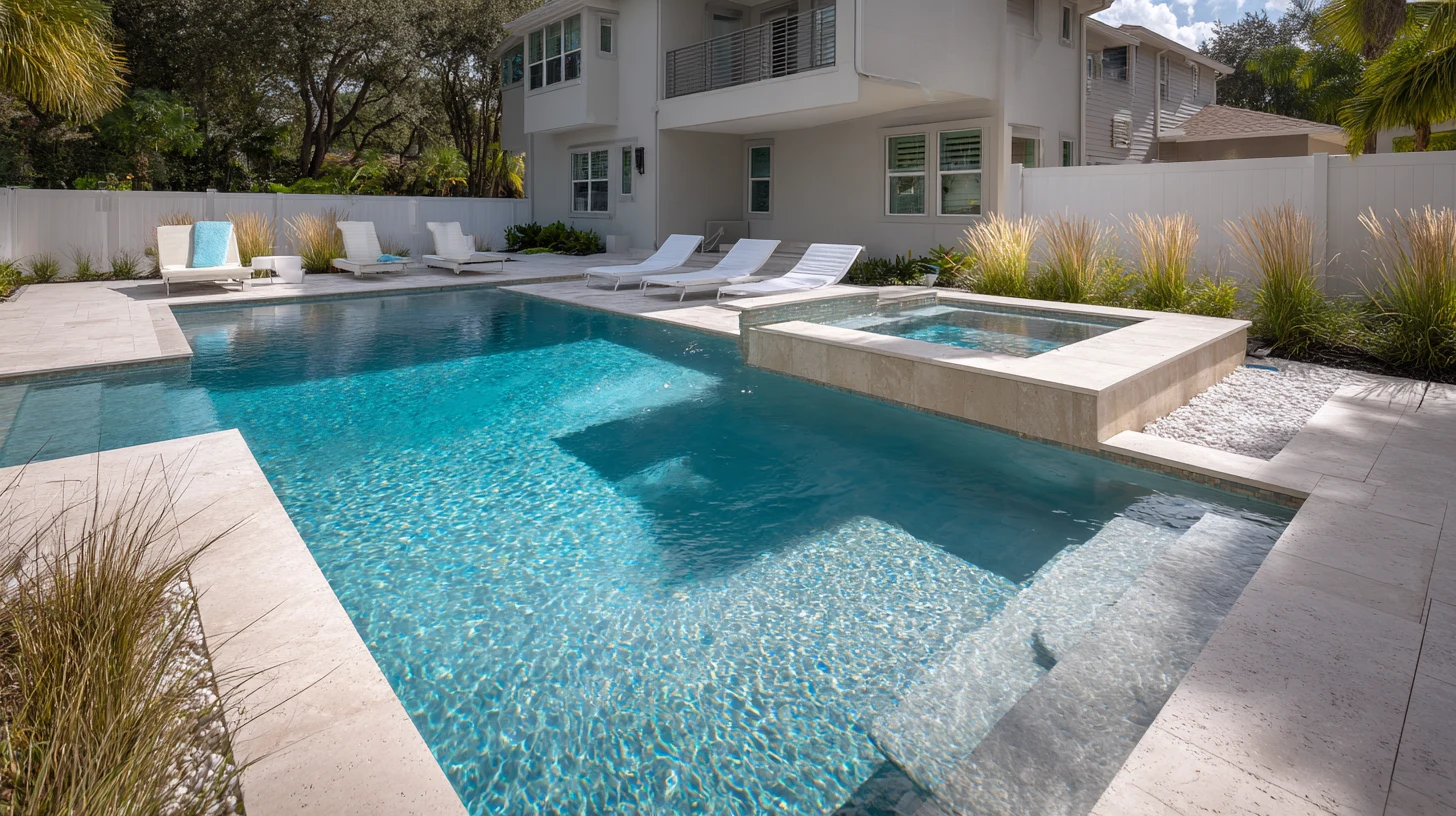
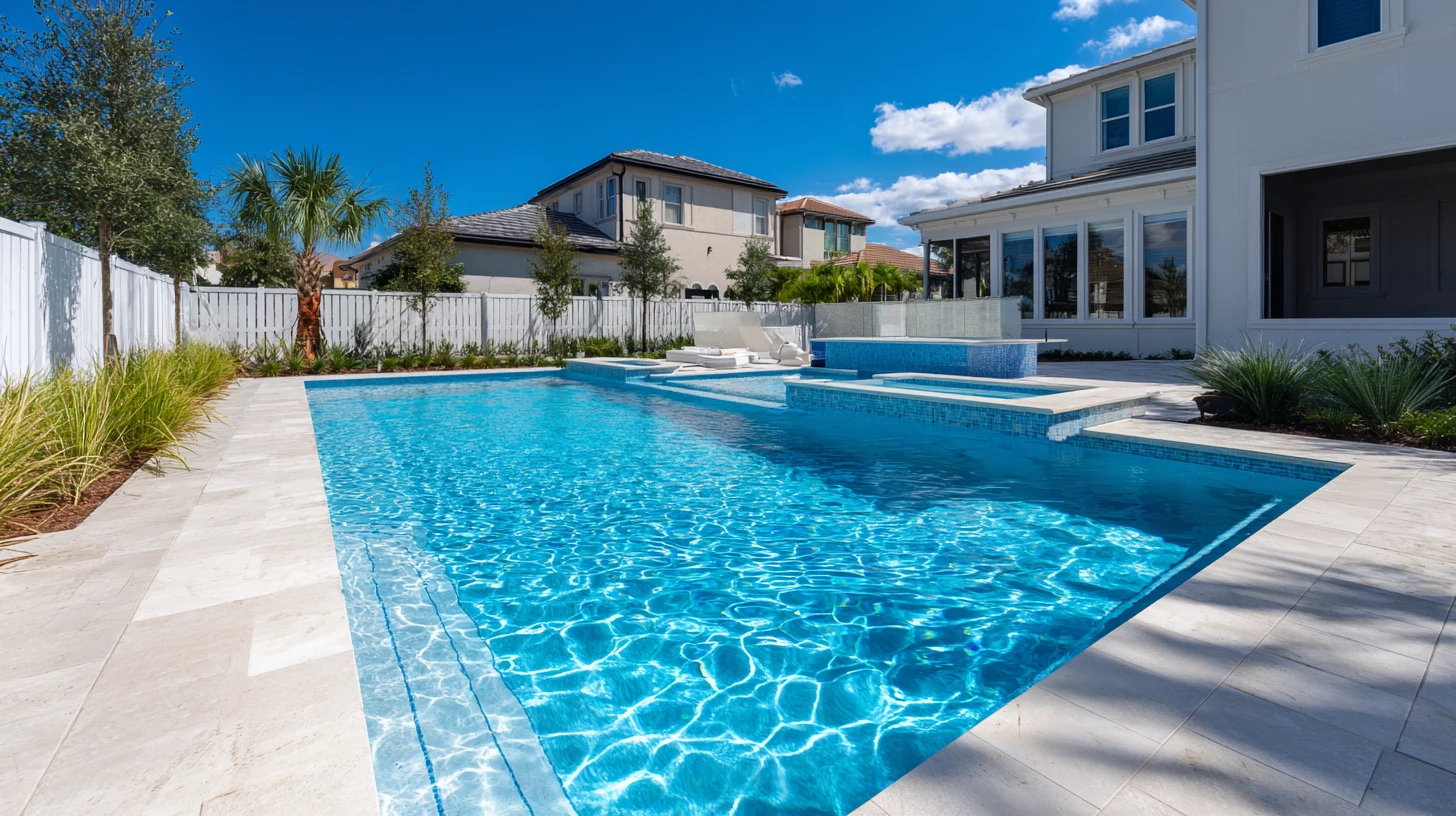
Once a pool is part of the listing, guests judge it on details that owners sometimes treat as extras. Whether it is heated in January. Whether there is a spa. Whether the pool area is lit and usable after dark, shaded somewhere, and screened from bugs. Whether there is a shallow area or sun shelf for small children. These are the features that show up in reviews, and most of them are far cheaper to include during construction than to add later.
Short-Term Rental Rules: State License and Local Zoning
Florida regulates vacation rentals as transient public lodging. A property rented to guests more than three times a year for periods of less than 30 days, or advertised as regularly rented that way, needs a vacation rental license from the Department of Business and Professional Regulation’s Division of Hotels and Restaurants. Transient rental taxes are also collected at state and county level.
Local rules come next. Florida law limits how local governments can regulate vacation rentals: ordinances adopted after June 1, 2011, may address issues such as noise, parking and registration, but may not prohibit vacation rentals or regulate how long or how often they are rented. Ordinances adopted on or before that date can still apply. Homeowners association covenants are separate from all of this and can restrict rentals regardless of what local law allows.
The practical sequence is simple: confirm the rental status of the property, then design the pool.
Davenport and Four Corners
This part of the corridor straddles county lines. Four Corners is an unincorporated area where Lake, Orange, Osceola and Polk counties meet, and parts of Davenport’s rental communities fall under Polk County or the City of Davenport. The parcel record tells you whose rules and whose building department apply. Our page on custom pools in Davenport covers how rental use shapes pool design there.
Four Corners addresses deserve an extra check, because county lines run through the area and the mailing address alone does not show which one applies. How rental use shapes pool design around Four Corners is covered on its own page.
Kissimmee and Celebration
Kissimmee has its own city government and building department, while Celebration and much of the surrounding area are unincorporated Osceola County with their own community covenants. Rental rules and architectural review can therefore differ between neighborhoods only a short drive apart. If you are planning in this area, custom pools in Kissimmee explains the design side.
Champions Gate Corridor
ChampionsGate and similar resort communities along the I-4 corridor were developed with vacation homes in mind, and many homes there already have pools. That makes the pool less of a differentiator and more of an expectation, and it shifts the question toward what the pool offers: heat, a spa, an enclosure, a game area or a view.
Pool Safety Requirements for Guest Properties
The state’s Residential Swimming Pool Safety Act sets the baseline for every new residential pool, rental or not. It offers five routes, from a compliant barrier or an approved safety cover to alarms and self-latching doors on the house, and requires at least one of them before the pool can pass final inspection.
For a rental, the minimum is a floor, not a plan. Guests arrive tired, with children who have never seen the house, and they do not know which door opens onto the pool. Owners in this market commonly combine features: a screen enclosure or fence with self-latching gates, alarms on the house doors that open to the pool, and clear written pool rules in the home and in the listing.
Shared pools in resort communities are generally regulated as public pools by the Florida Department of Health. A private pool serving a single rental home is a different situation, and which rules apply depends on how the property is classified. Confirm it with the Department of Health and DBPR for your specific property instead of relying on what a neighbor was told.
Heating: Gas, Heat Pump or Solar
Winter is a busy season for many vacation homes, and guests from colder places expect to swim. That makes heating an operating decision more than a comfort one.
Heat pumps are usually the cheapest to run but heat slowly and lose efficiency on cold nights. Gas heaters raise temperature quickly, which suits a spa or a pool that must be ready for an arrival, but cost more per degree. Solar can carry much of the load on sunny days if the roof allows it. Many rental owners pair a heat pump for base heat with gas for the spa, and how the three systems compare on cost and speed is worth reading before choosing.
A cover saves more heat than any other single measure, but in a rental it depends on guests or managers using it every night, which is not realistic in most operations. Plan the heater size assuming the pool will be uncovered.
Durability Choices for High-Turnover Use
A family pool sees the same swimmers every week. A rental pool sees new ones every few days, many of them in holiday mode. Design choices that hold up to that:
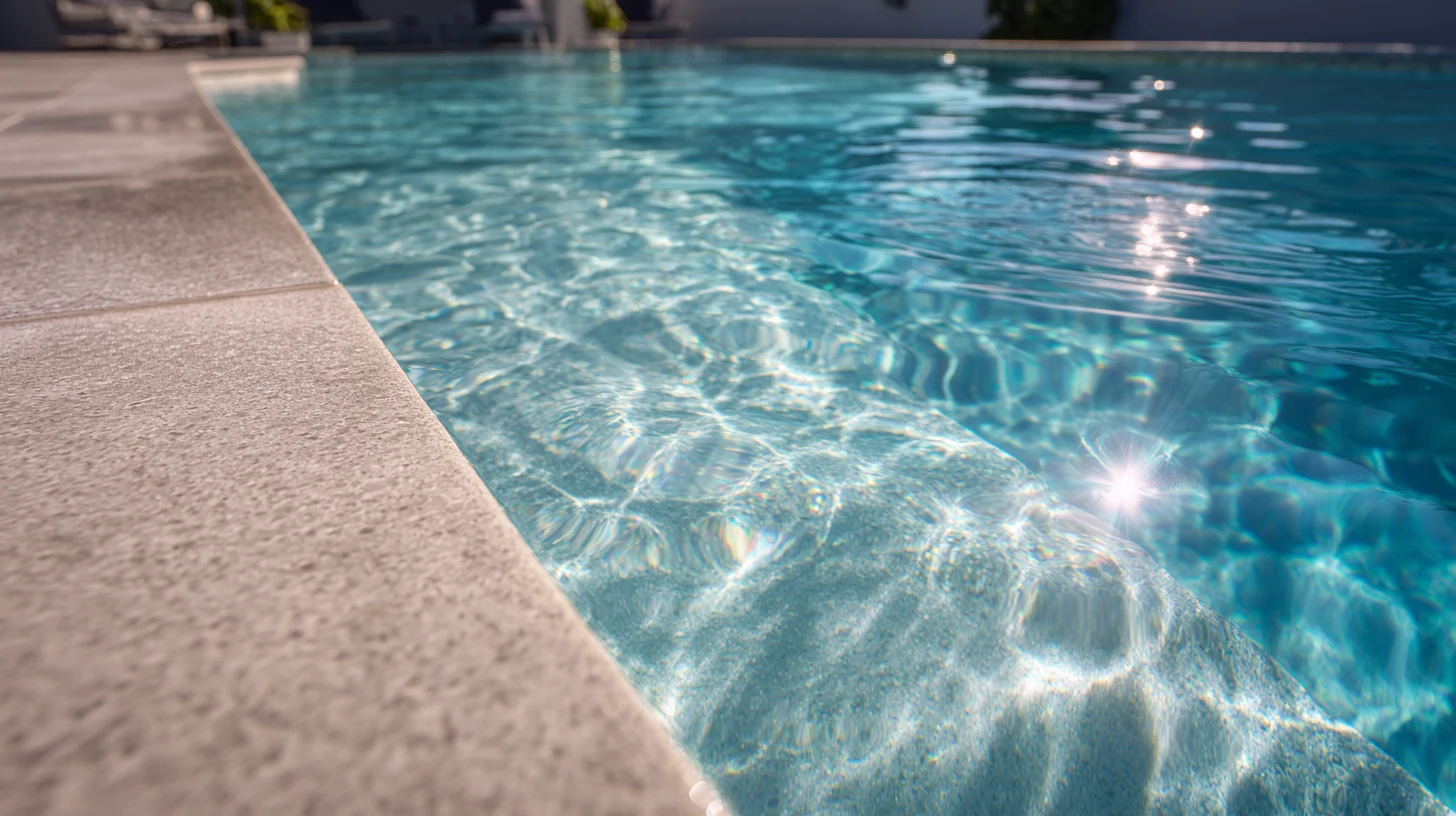
- an interior finish chosen for durability and forgiveness of chemistry swings, since aggregate finishes generally outlast standard plaster;
- a textured deck surface that stays slip-resistant when wet and does not get uncomfortably hot;
- coping and waterline tile that resist chipping from toys and furniture;
- equipment placed where a service technician can reach it easily, with automation that allows remote checks of temperature, pump status and, where available, chemistry;
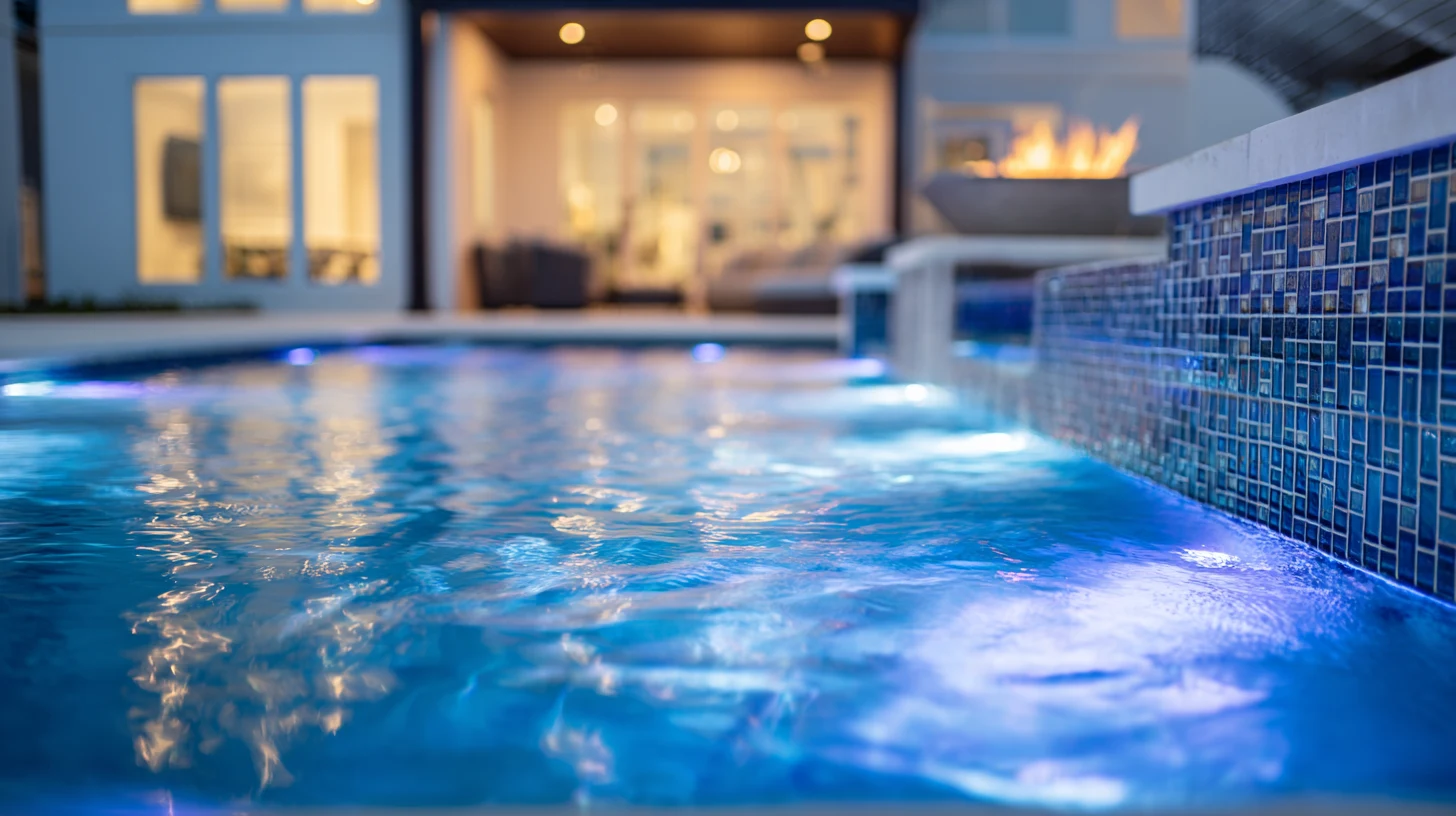
- lighting that makes the pool edge visible at night.
Maintenance and Service Contracts
Rental pools need consistent service, and the schedule should follow occupancy rather than the calendar alone. Heavy use, sunscreen, rain and heat all move chemistry quickly in Florida summers.
Put three things in writing with the service company: the visit frequency and what each visit includes, who responds to an equipment failure during a stay and how fast, and how chemistry and safety checks are documented. Documentation protects you with guests, insurers and platforms alike.
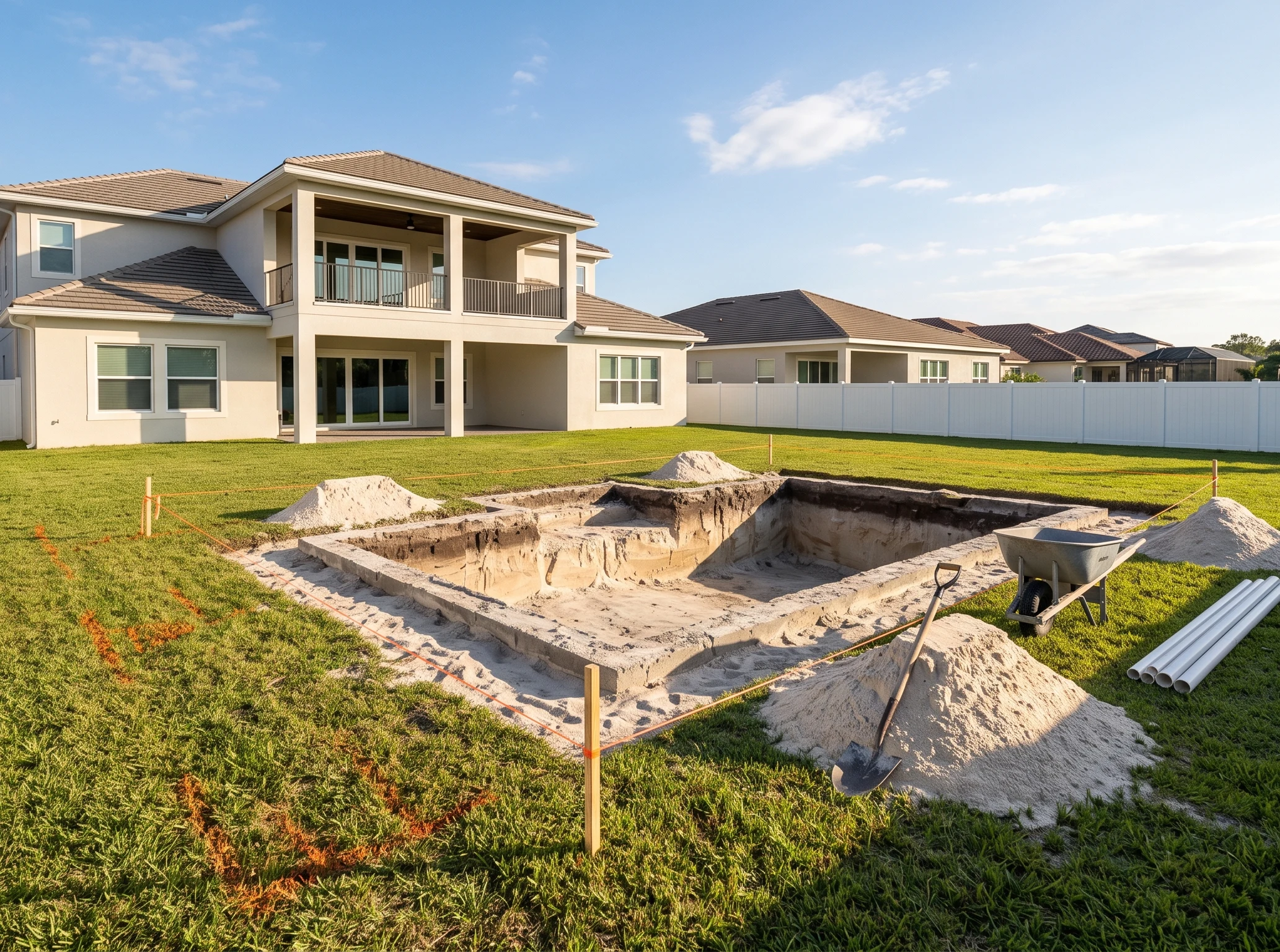
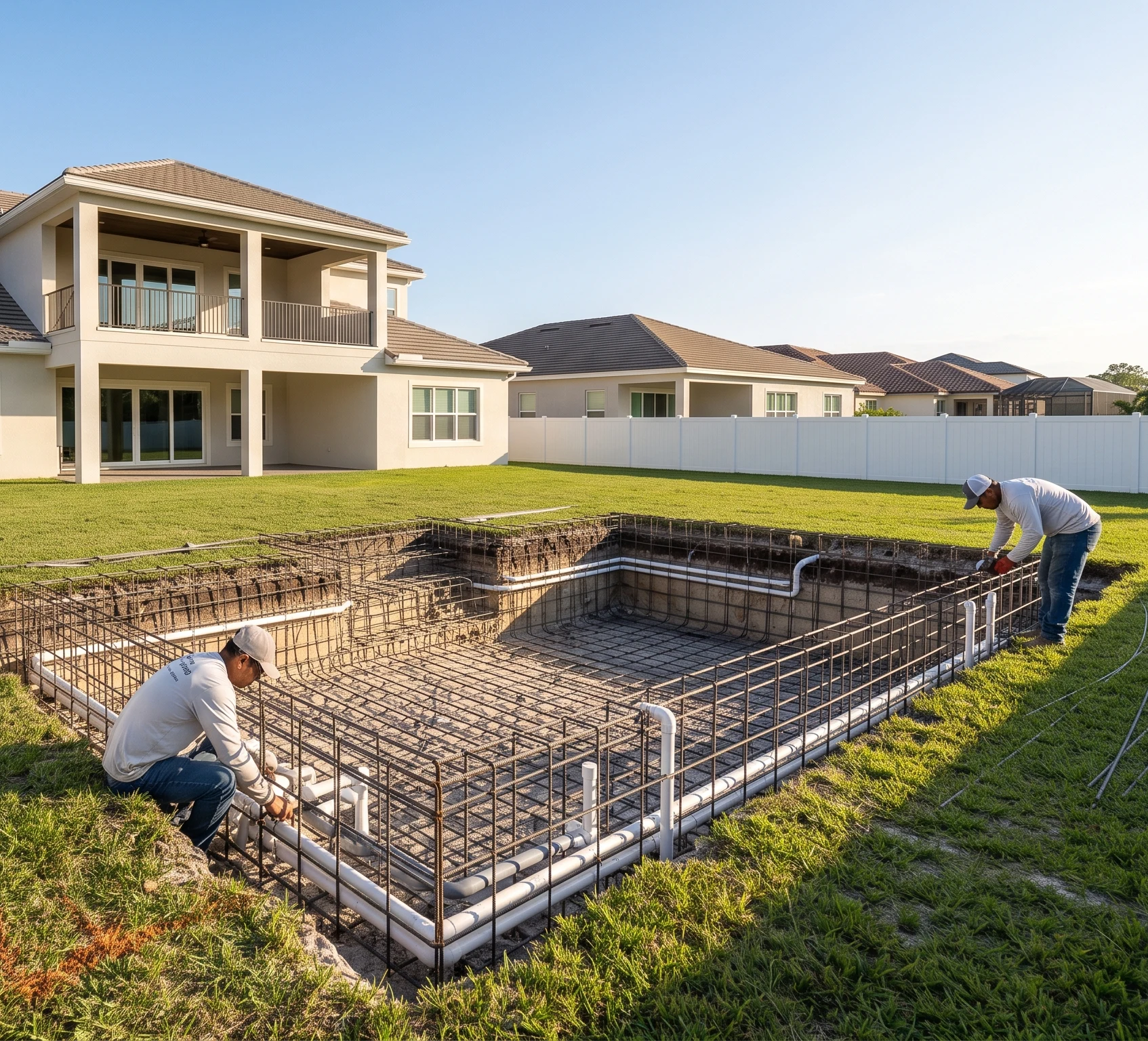
Construction itself has an operating cost. While the pool is being built, the house is a job site and usually cannot be rented, so schedule the permit and the build for your slowest booking months, and leave room for the wet season to stretch the calendar.
Screen Enclosure for Guest Comfort
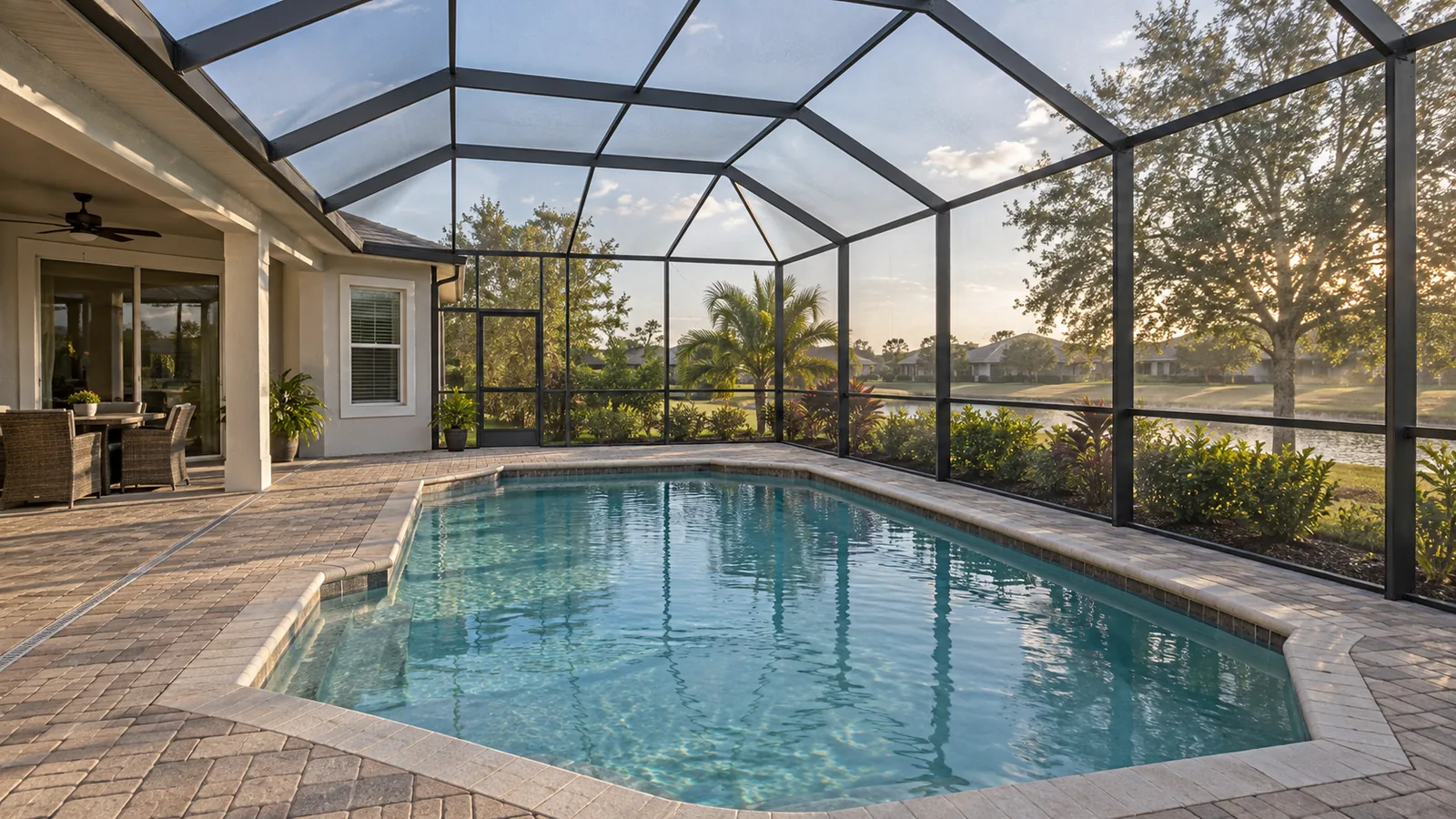
An enclosure keeps insects and leaves out of the pool area, which guests notice immediately at dusk. It also reduces debris, which lowers the cleaning burden between stays, and it can be part of the pool’s safety plan if it is built and fitted for that. Specifying an enclosure, from mesh to door placement, is simpler when you know the pool will be used by guests rather than family.
How to Run the Payback Math
A rental pool is an investment decision, so treat it like one. The calculation has two sides, and each line should come from your own quotes and market data.
| Side | Lines to include |
|---|---|
| Added income | Rate difference versus comparable homes without pools, occupancy difference, heat fees if charged |
| Upfront cost | Pool, deck, enclosure, heater, permits, financing costs |
| Annual cost | Service, chemicals, electricity or gas, insurance changes, repairs |
| Reserves | Interior resurfacing, equipment replacement, rescreening |
Added annual income minus annual cost gives the yearly return on the pool; divide the upfront cost by it to see how many years it takes to recover. If the number only works under optimistic occupancy, the pool is a lifestyle choice rather than an investment, which is still a valid reason, just a different one. For the build side of the table, a line-by-line guide to pool costs around Orlando helps you ask for the right quotes.
The build side of that calculation is the part we can help with. With a property in mind, a custom pool can be scoped around rental use from the first drawing: heat, safety layers, durable finishes and service access included.
Share this article