The short answer
Artificial turf works well in Florida where grass fails for reasons turf does not share: deep shade, heavy foot or pet traffic, small areas that are hard to mow, and spots that turn to mud. It works poorly in full sun where people walk barefoot, because synthetic turf gets much hotter than grass; studies have measured surface temperatures well above 150°F on hot days.
A good installation needs a compacted, free-draining base, attention to pet odor, and periodic rinsing and brushing. UF/IFAS cites a lifespan of about 10 to 20 years and considers artificial turf counter to Florida-Friendly Landscaping goals. HomeGuide's 2026 national figures put installation at about $10 to $25 per square foot.
Key takeaways
- Heat is the main drawback in Florida. In full summer sun, turf can be too hot for bare feet and paws.
- The base decides drainage. Turf over poorly prepared ground floods, smells and ripples.
- Pet areas need an infill and a cleaning routine planned for urine, or odor becomes the main complaint.
- Turf is not maintenance free. It still needs rinsing, brushing, leaf removal and seam checks.
- HOA covenants may restrict turf. Florida protects Florida-friendly landscaping, but whether turf qualifies is not settled.
Why Homeowners Switch From Grass
Most Florida turf projects start with a specific frustration. St. Augustine that will not grow under oaks. A side yard that turns to mud every summer. A dog run worn to sand. A small strip too awkward to mow. A vacation home where nobody is around to look after a lawn.
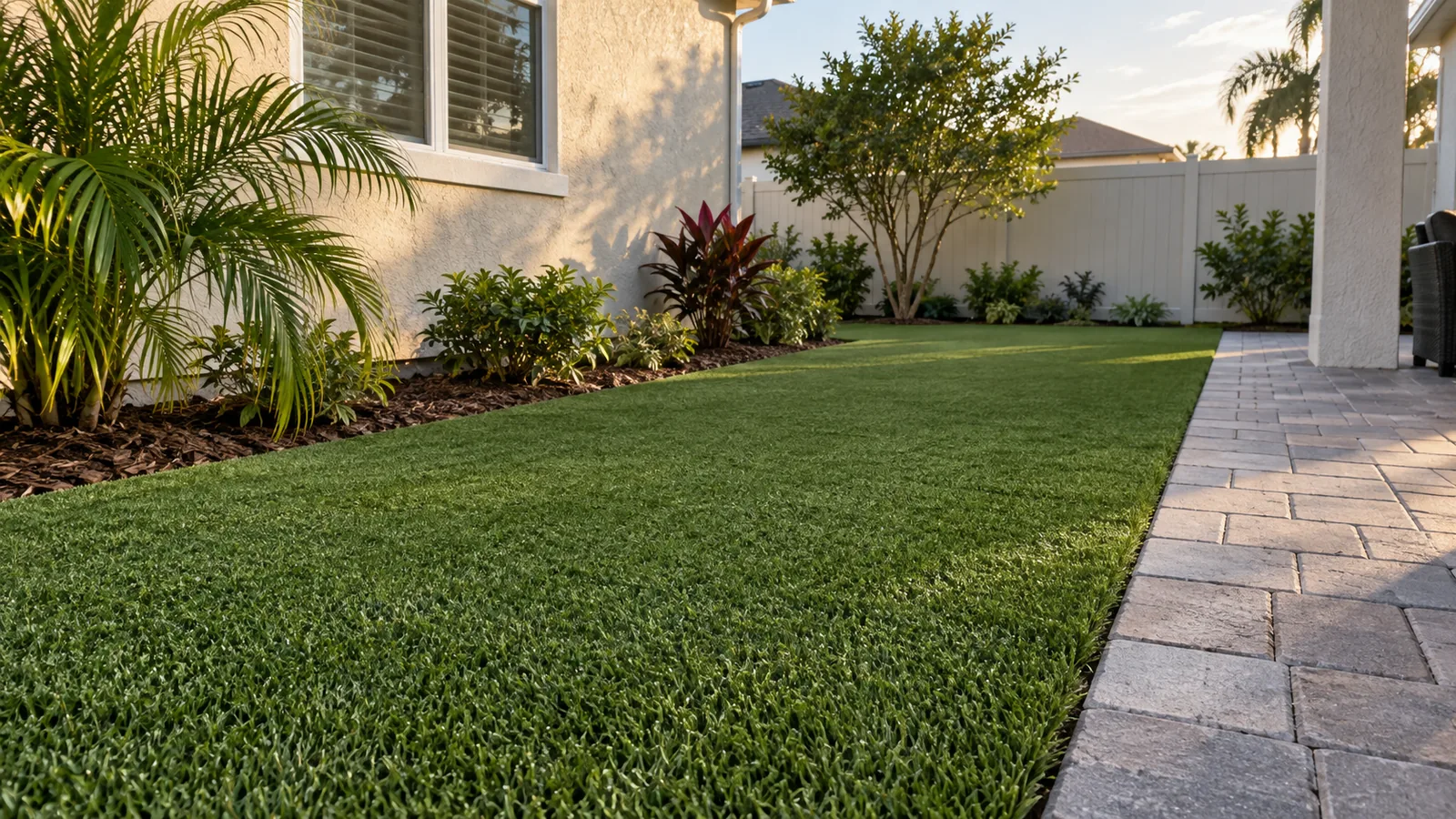
In those situations, artificial turf solves a real problem. It looks green in shade, does not need mowing, fertilizer or watering to stay alive, and holds up to traffic that kills grass. Those are genuine advantages, and they explain why it appears in more Central Florida backyards every year.
When a Groundcover Is the Better Answer
For the most common frustration, grass that will not grow in shade, turf is not the only fix. UF/IFAS Extension suggests looking at groundcovers before replacing a struggling lawn with synthetic grass. Shade-tolerant groundcovers such as Asiatic jasmine, and sun-loving options such as perennial peanut or native sunshine mimosa, stay green with little mowing, absorb rain and stay cool underfoot. They do not take heavy foot traffic or dogs the way turf does, which is exactly where the two options divide.
The question is not whether turf is good or bad, but where in your yard its strengths matter more than its weaknesses. Those weaknesses deserve as much attention as the benefits, because they are the part sales conversations tend to skip.
Heat Retention in Full Sun
Synthetic turf absorbs sunlight and has no moisture to cool itself, so it gets much hotter than living grass. In a study at Brigham Young University, synthetic turf reached 157°F on a day when the air was about 81°F, while natural grass peaked at about 88°F. A Penn State study measured synthetic surfaces averaging 117°F against 78°F for natural grass. UF/IFAS Extension notes that artificial grass can reach 160°F.
Watering cools it only briefly; the same research found that surface temperatures climbed back quickly once the water evaporated. In Central Florida, where summer sun is strong for months, this makes full-sun turf uncomfortable or unsafe for bare feet and paws during the hottest hours.
That is why turf tends to work best in shade, in areas used mostly in the evening, or where people wear shoes. Lighter colors and some newer products claim cooler surfaces, but no turf behaves like grass in July sun.
Drainage Base Requirements
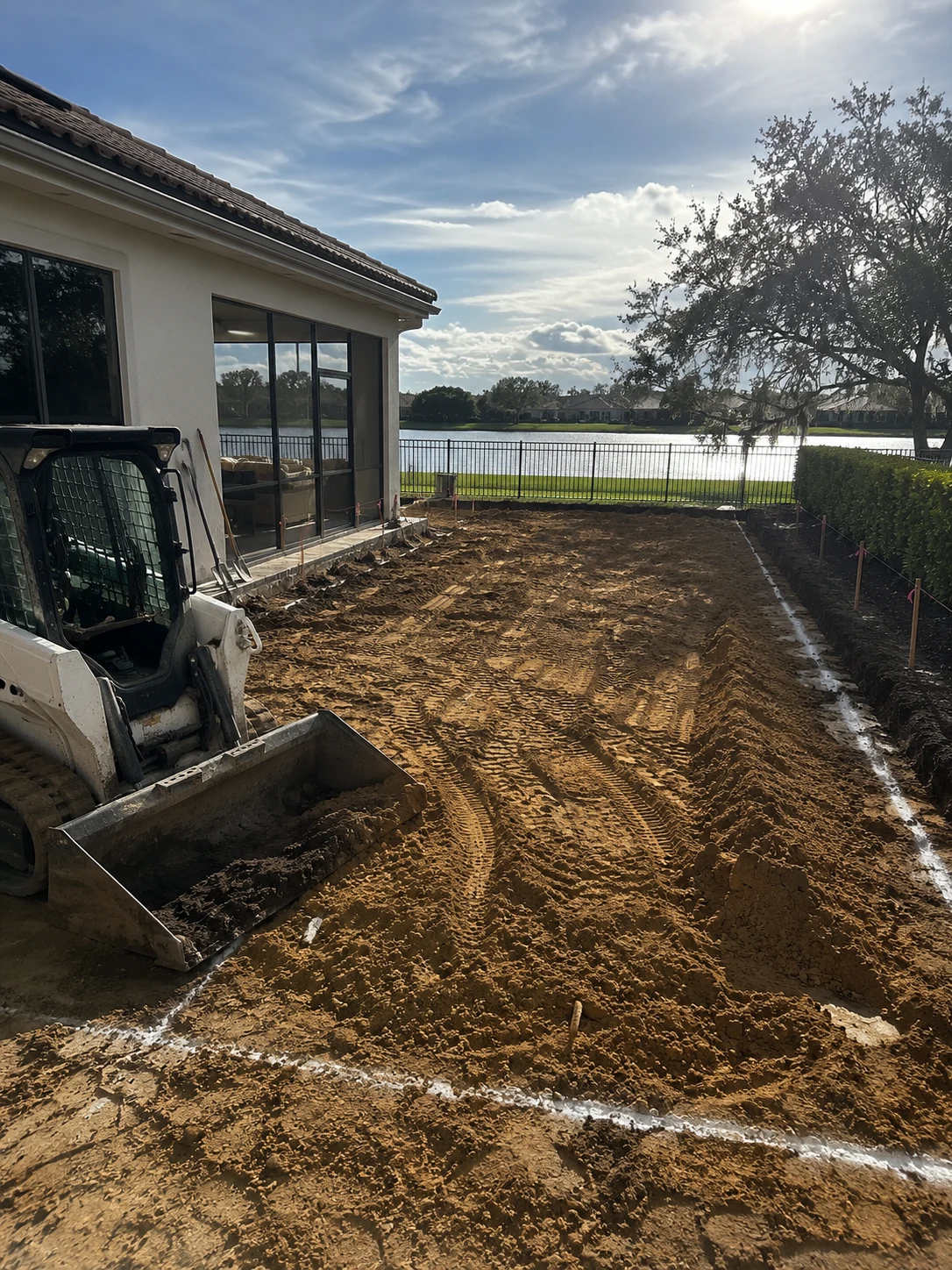
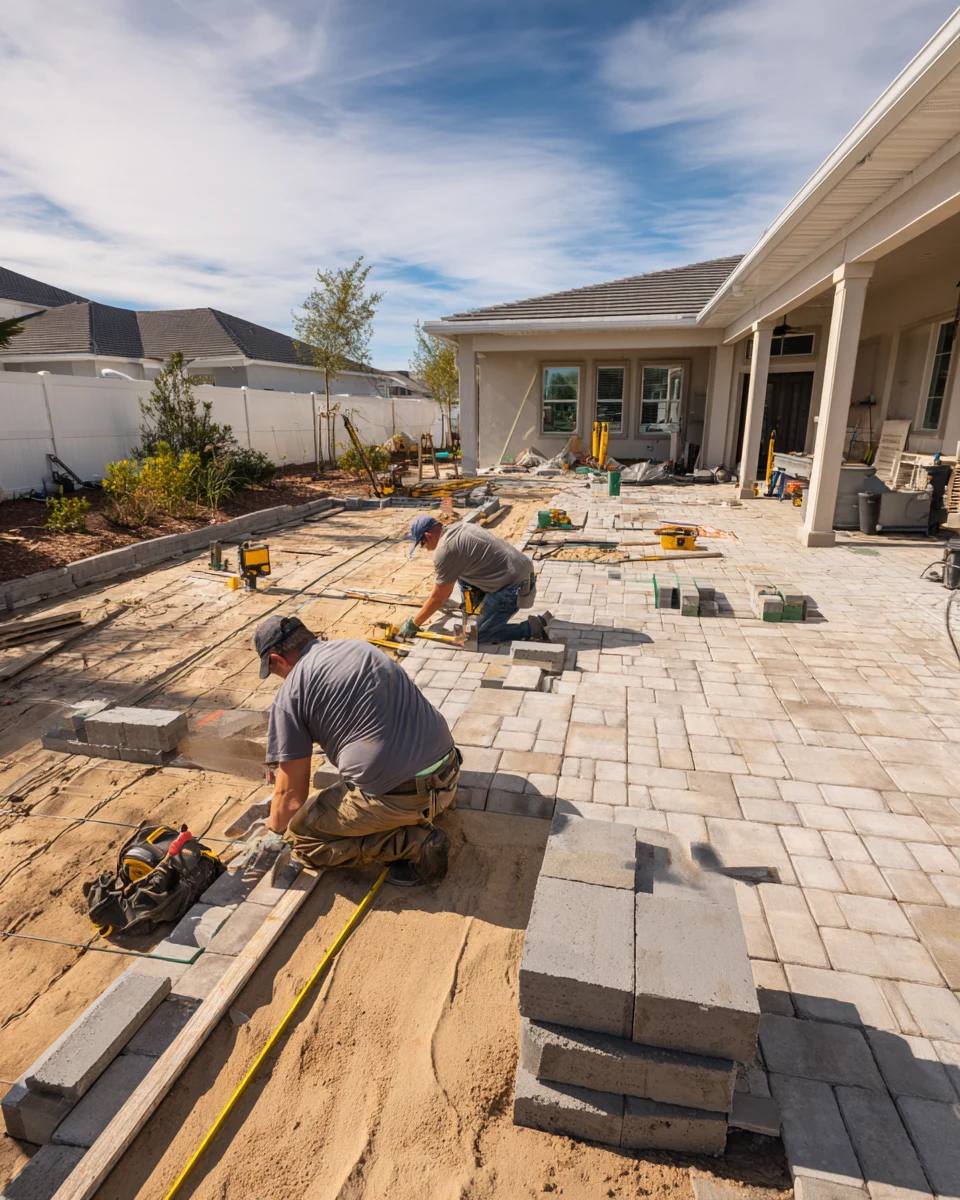
Turf itself drains through holes or permeable backing, but only as well as the base below it. A proper installation removes grass and soil, shapes the subgrade so water flows away, and installs a compacted, free-draining aggregate base.
UF/IFAS points out that artificial turf creates a compact surface that does not absorb rain the way living grass and its roots do, so runoff increases. On flat Central Florida lots with a high water table in the wet season, that matters. If an area already holds standing water, turf will not fix it; the cause has to be found first, and finding the source of standing water is the step to take before any turf is ordered.
Weed Barrier
A weed barrier fabric under or within the base reduces weeds coming up from below. Most weeds in mature turf actually sprout from seeds in debris on top, so keeping the surface clean matters as much as the barrier.
Pet Turf and Odor Management
Dog urine is the most common turf complaint after heat. Urine drains through the backing into the base, and in hot, humid weather bacteria break it down into ammonia, which produces odor.
Pet installations use turf with high-flow backing, a base designed to drain quickly, and infills intended to control odor, such as zeolite-based products that absorb ammonia. Regular rinsing, and periodic use of enzyme cleaners, are part of owning pet turf. Solid waste is picked up as on grass.
Infill Types and Maintenance
Infill is the granular material brushed between the blades. It weighs the turf down, helps the blades stand up and adds cushion. Silica sand is common and inexpensive; coated sand reduces odor and heat to some degree; zeolite targets pet odor; crumb rubber is mostly used on sports fields. Choose infill for the use of the area, not just the price.
Maintenance is lighter than a lawn but real. UF/IFAS describes weekly washdowns to remove dust, pet waste and odor as part of keeping turf clean. Leaves and debris need regular removal, the blades need occasional brushing to stand up, and infill may need topping up in high-traffic areas.
Blade Height and Density
Longer blades look lusher but flatten more under traffic and hold more debris. Shorter, denser turf wears better in play and pet areas. Blade shape and thatch layer affect how natural the turf looks and how well it springs back.
Seam Visibility
Turf comes in rolls, so larger areas have seams. Well-installed seams are hard to see; poorly joined ones show as lines, and the direction of the blades must match across them. Seams are also where turf most often lifts, especially where dogs dig or water runs across the surface.
Around Pools and Play Areas
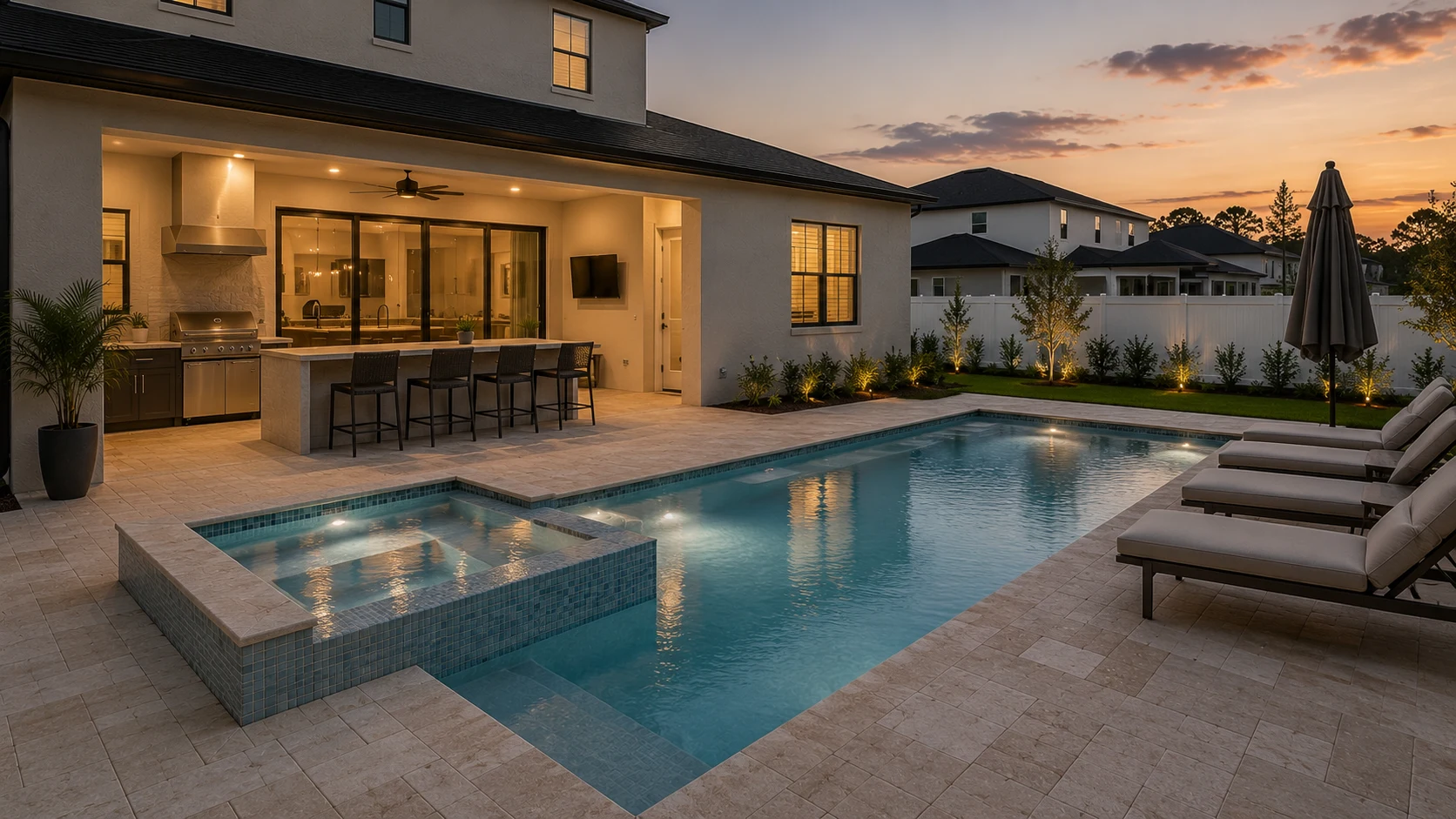
Around pools, turf can soften hard edges and replace grass that struggles with splash-out and foot traffic. The heat problem is at its worst here, because people walk barefoot and wet feet pick up any debris. Keep turf away from the pool’s edge and coping, provide a hard deck area next to the water, and make sure pool water and rain drain through and away from the deck. Where the deck ends and the turf begins is best decided while the pool area is being designed, as part of the custom pool layout rather than after it.
In play areas, turf over a shock-absorbing pad offers a cleaner surface than mulch or sand. The pad and base design matter for fall protection under play equipment, and the heat caution applies to children as much as to pets.
HOA Restrictions on Turf
Many homeowners associations regulate what can replace a lawn, and some restrict or prohibit artificial turf in front yards or visible areas. Florida law, section 720.3075 of the Florida Statutes, prevents HOA documents from prohibiting Florida-friendly landscaping as defined in state law.
Whether artificial turf qualifies is not settled. UF/IFAS, which runs the Florida-Friendly Landscaping program, considers artificial grass counter to the program’s sustainability goals. In practice, check your covenants and submit to the architectural committee before installing turf where it is visible.
Lifespan and Cost per Square Foot
UF/IFAS cites a lifespan of about 10 to 20 years for synthetic turf, depending on product quality, sun exposure and use, after which worn turf usually goes to a landfill. Heavy traffic and pet use shorten it; shade and light use extend it.
HomeGuide’s 2026 cost data puts installed artificial grass between roughly $10 and $25 a square foot. Site preparation, base depth, drainage work, pet-specific products, infill and access all move the price, and small areas cost more per square foot because setup costs are spread over less turf. Treat those as national planning figures rather than a Central Florida price: base preparation, drainage, infill and access move real bids above or below the range, and none of it is a SAVAM House quote.
Before choosing turf for a whole yard, it is worth deciding where it will actually be better than grass or other ground cover: the shaded side yard, the dog run, the strip behind the pool cage. Our outdoor living team looks at sun exposure and drainage first, because those two conditions decide whether turf will be an improvement or a new problem.
Share this article