The short answer
Start with fuel. A wood fire pit is the simplest and cheapest but produces smoke and sparks and must sit well away from the house, the screen and anything combustible. Propane and natural gas fire pits and fire tables light with a switch, produce no embers and can sit closer to living areas, within the limits set by their manufacturer and certification. Natural gas needs a permitted line from the house; propane uses a tank.
In Florida, recreational fires generally need no burn authorization if they are attended and fully extinguished, but local fire rules, county burn bans during drought and HOA covenants can restrict them. HomeGuide's 2026 national figures put a gas fire pit installation at about $3,500 to $8,000.
Key takeaways
- Never place a wood fire inside or next to a screen enclosure. Sparks and heat damage screen and can ignite nearby furniture.
- Gas fire features follow their certification and installation manual. Those clearances, not a general rule, govern placement.
- A natural gas line is permitted work by a licensed contractor. Plan its route before the patio is paved.
- Burn bans in drought can prohibit even backyard fires. Check your county before lighting a wood fire in the dry season.
- In a warm climate, a fire table that doubles as a surface for drinks and a flame that runs low gets more use than a big bonfire pit.
Wood Burning, Propane or Natural Gas
The fuel decision shapes everything else: where the fire can go, what it costs to install, how often you will actually use it and what rules apply.
| Wood | Propane | Natural gas | |
|---|---|---|---|
| Ambience | Crackle, smell, real embers | Clean flame, no smoke | Clean flame, no smoke |
| Effort to use | Build, tend and extinguish | Switch on; swap or refill tanks | Switch on; no refills |
| Placement flexibility | Least, needs distance from everything | Moderate, per the manual | Moderate, but tied to the gas line |
| Installation | Pit or kit on a proper base | Appliance plus tank location | Appliance plus permitted gas line |
| Affected by burn bans | Often restricted | Rules vary by jurisdiction | Rules vary by jurisdiction |
Wood suits owners who want a traditional fire and have yard space away from the house. Propane suits a fire table near seating, or a first fire feature without trenching. Natural gas suits homes that already have gas service and owners who want to use the fire often, with no tanks to manage.
Built-In vs Portable
Portable fire pits, whether wood bowls or propane tables, cost less, can be moved and require no construction. They still need a safe, stable surface and the clearances in their manual.
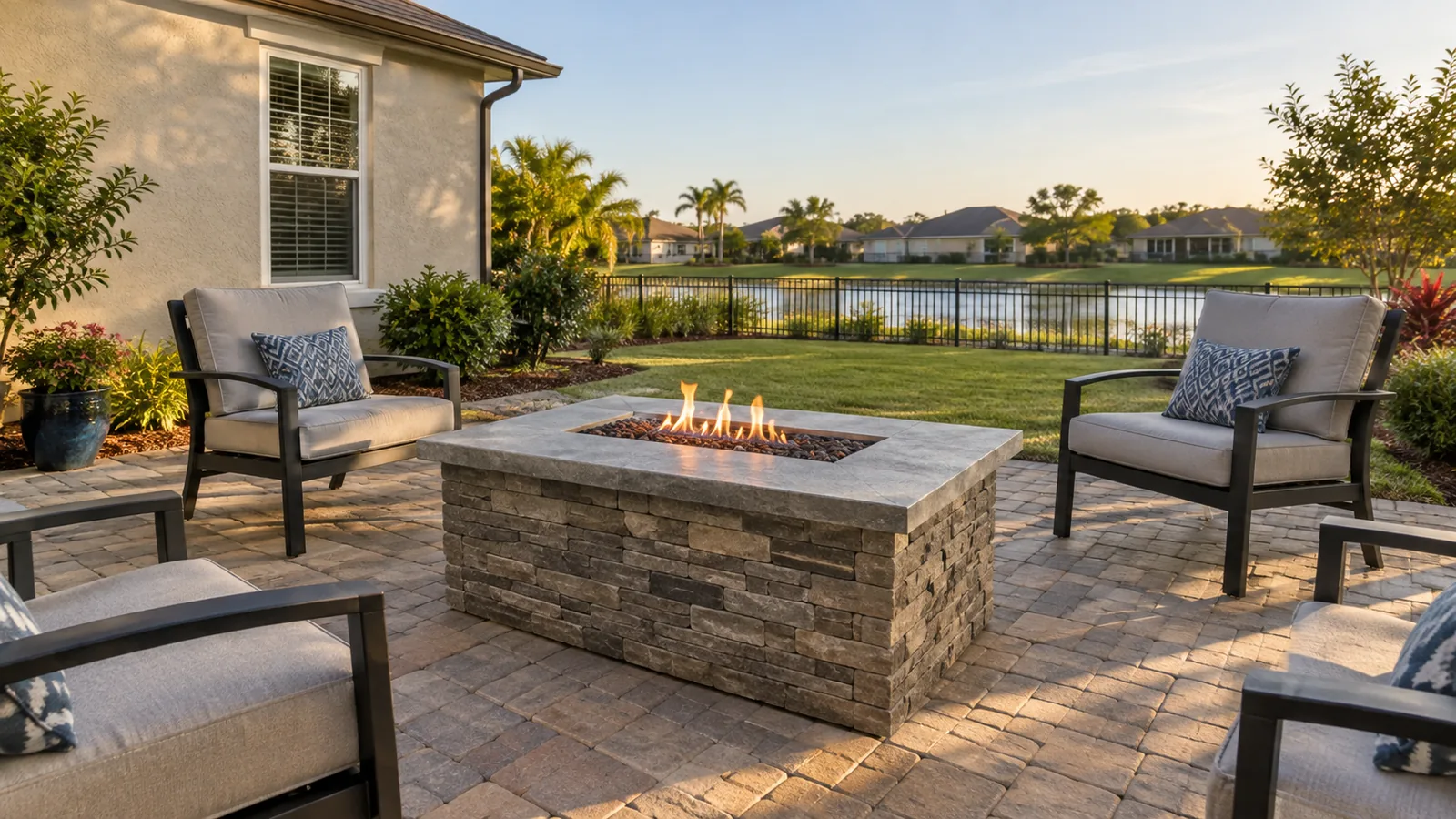
Built-in fire pits are part of the hardscape, often ringed by a seat wall and set into a paver or stone patio. They look permanent because they are, so their location, fuel and gas line need to be right the first time. Built-in wood pits are typically lined with fire brick; built-in gas pits use a certified burner system installed per its instructions.
Clearances and Safety Codes
There is no single distance that applies to every fire feature, and anyone quoting one without knowing the appliance is guessing.
For open wood fires, Florida’s Department of Environmental Protection explains that recreational burning in a campfire, outdoor fireplace or similar contained device does not require an authorization, as long as the fire is attended and completely extinguished. Local fire rules add distance requirements; many Florida jurisdictions require open recreational fires to be well away from structures and combustible material, commonly 25 feet, unless contained in an approved device. Your local fire authority states what applies.
For gas fire features, the governing documents are the appliance’s certification and installation manual. Outdoor decorative gas appliances in North America are certified to ANSI Z21.97, and the manufacturer specifies clearances to walls, overhead structures and combustibles, the fuel supply and whether the unit can be used under a cover. Following that manual is what keeps the installation legal and the warranty intact.
Ventilation Under Covers
Wood fires do not belong under a lanai roof or patio cover. Gas fire tables and fireplaces are sometimes allowed under covered structures, but only when the manufacturer permits it and with the overhead clearance and open sides the manual requires. A space enclosed on several sides can trap combustion gases, which is why the manual’s ventilation requirements must be followed exactly.
Placement Relative to the Lanai and Pool
Most Central Florida backyards have a lanai, often a screen enclosure and sometimes a pool, all within a few steps of each other. That makes placement the main design challenge.
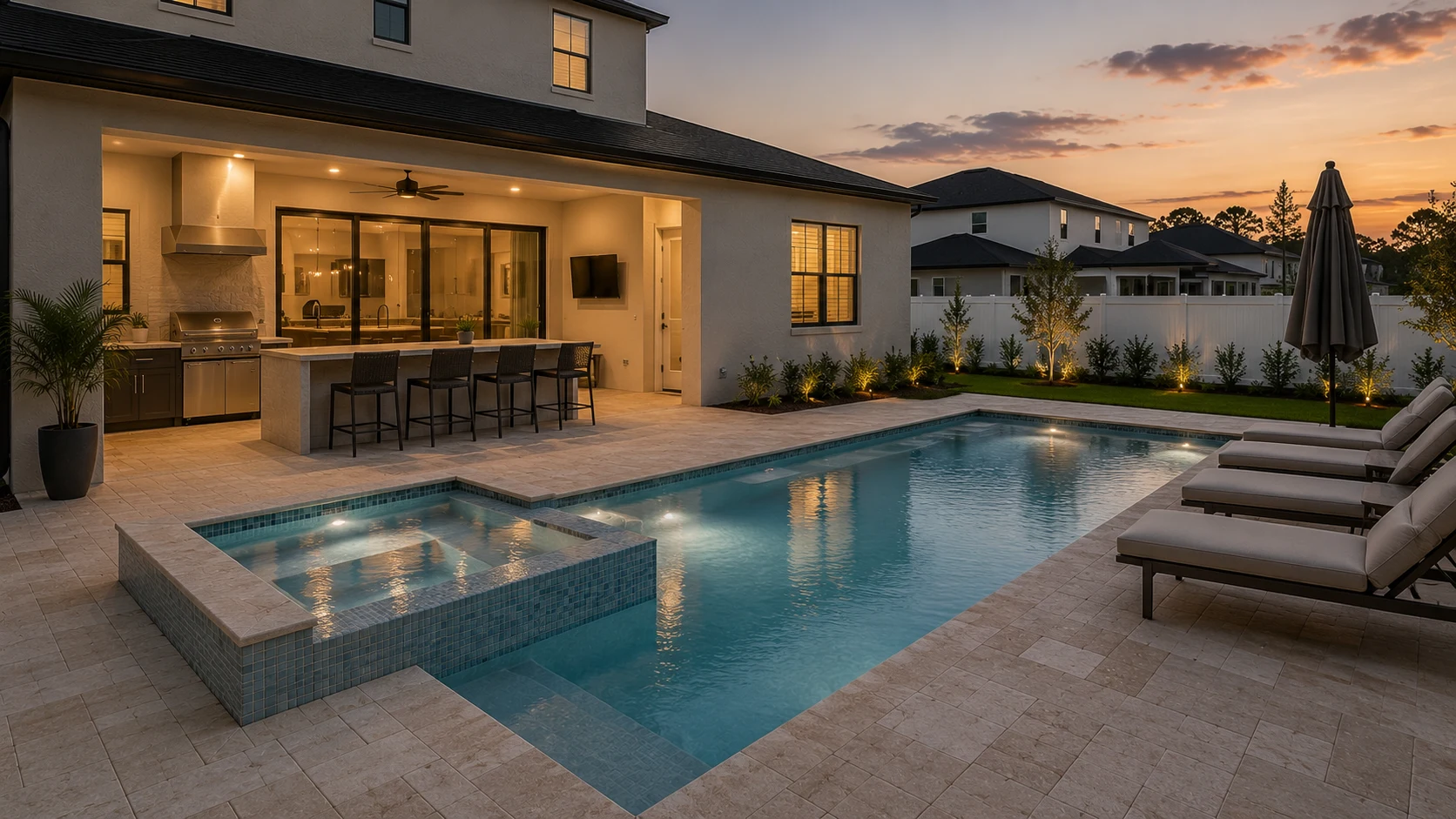
Keep wood fires out of screen enclosures and clear of them outside, since sparks melt screen and heat damages it. Consider the prevailing breeze so smoke does not drift through the sliding doors. Near a pool, a fire table on the deck works well for evenings, but leave clear walking space around it and keep it away from pool covers, towels and cushions. Gas fire features are easier to place near the pool and lanai precisely because they produce no embers.
HOA and Community Rules
Many associations restrict open wood fires, require gas appliances, or regulate where fire features and propane tanks can be placed. Some condominium and townhome communities prohibit them in shared or limited common areas. Read the covenants and submit the design for approval before building a permanent fire feature.
Gas Line Runs and Permits
A natural gas fire pit needs a gas line from the house supply, sized for the appliance and routed under or around the patio. That line is permitted and inspected work in Florida and is installed by a licensed contractor. Running it before pavers or concrete go down is much cheaper than cutting a finished patio.
Propane fire tables usually hide a tank in the base or connect to a nearby tank. Larger tanks that serve several appliances have placement rules of their own, which the propane supplier and local code set. If an outdoor kitchen grill is planned too, both appliances can often share the same gas planning; the gas, water and power planning for an outdoor kitchen covers the utility side.
Seat Walls and Surrounding Hardscape
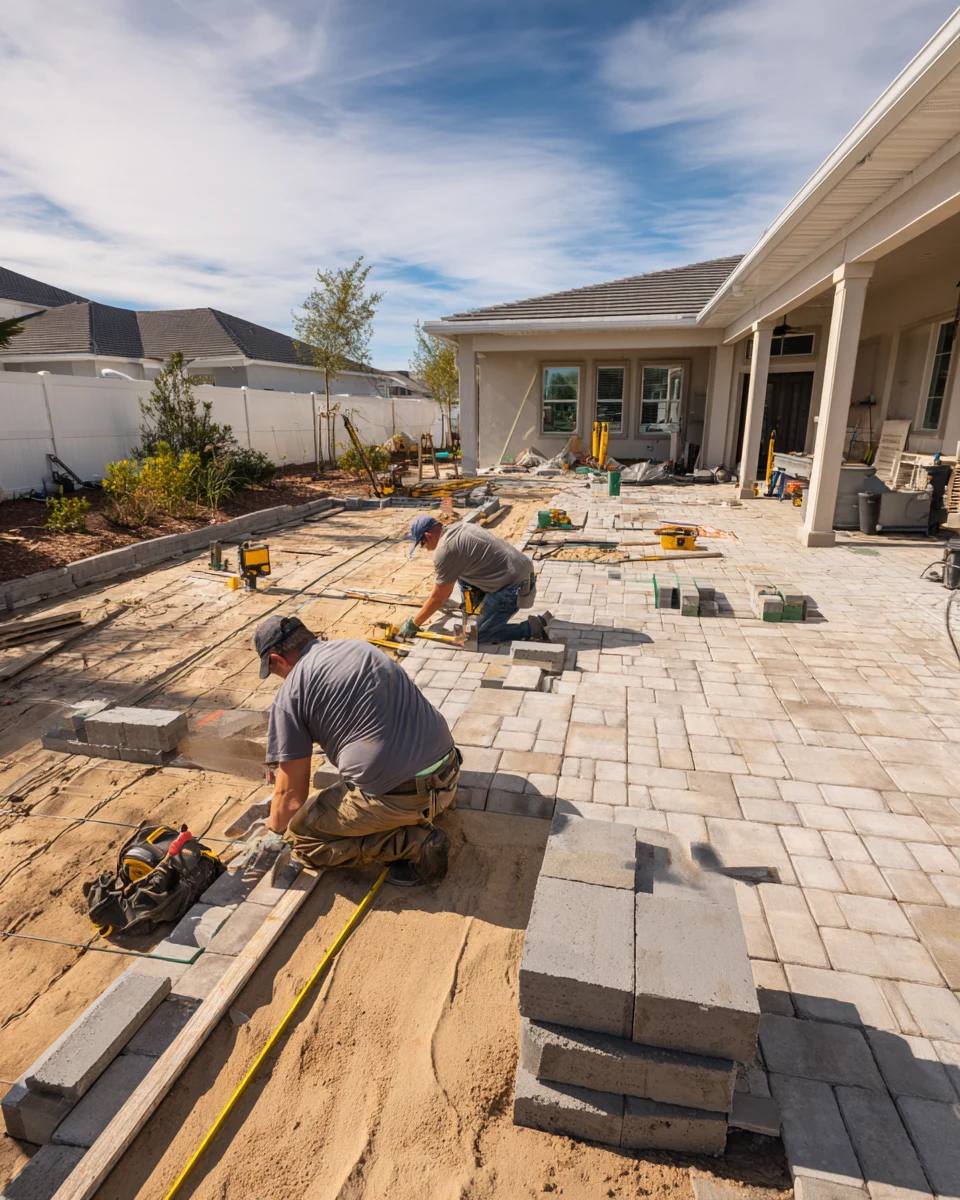
A built-in fire pit is usually the center of a small patio with seat walls or fixed seating around it. The paving around a wood pit takes heat and occasional embers, and the base must be stable and well drained so the pit does not settle. The compacted base that keeps a well-built paver patio flat is the same kind of base a built-in fire pit needs.
Seat walls double as extra seating for gatherings, but their height and distance from the fire matter: close enough to feel the warmth on a cool night, far enough to be comfortable when the flame is high.
Using It in a Warm Climate
A fire pit in Central Florida is used on cool evenings from late fall to early spring, and far less in summer. That affects the design. Gas fire tables that double as a coffee table for drinks and plates tend to get used year-round, even with the flame low or off. A large wood pit built for bonfires may see only a handful of fires a year.
Some owners add a fire feature for the view as much as the warmth: a low flame along a table or a pair of fire bowls near the pool, visible from inside the house. On nights when the fire is off, well-planned landscape lighting around the seating area does much of the same work.
Burn Bans
During drought, Florida counties can impose burn bans that prohibit most outdoor burning, including backyard fires, campfires and outdoor fireplaces. These are most common in the dry season, typically late winter and spring, exactly when fire pits are most appealing. Check your county’s current status before lighting a wood fire; gas appliances may be treated differently, and local rules decide.
Cost by Type
HomeGuide’s 2026 cost figures range widely by type: about $150 to $500 to install a 24-inch fire pit and $1,300 to $4,500 for a 72-inch pit, about $3,500 to $8,000 for a gas fire pit installation, and about $3,000 to $8,800 for a sunken fire pit with built-in seating. These are national reference ranges; the gas line run, permits, finish materials and site work can push an actual project past either end.
The biggest drivers are fuel (a gas line adds cost), whether the feature is built in, the size and finish of the surround, seat walls, and any paving or electrical work around it.
A fire feature works best as part of a backyard planned as a whole, with seating, paving, lighting and the lanai in mind. When you are deciding where yours should go, our outdoor living team can plan its location and the gas or electrical infrastructure it needs together with the rest of the space.
Share this article