The short answer
A paver patio or driveway lasts when it sits on a compacted aggregate base, a thin and even layer of bedding sand, and a solid edge restraint, with joints filled and the surface sloped to shed water. In Central Florida's sandy soils and heavy summer rain, base preparation and drainage decide far more than the paver itself. HomeGuide's 2026 national figures put most paver patios at about $10 to $25 per square foot installed.
Pavers are not automatically better than poured concrete. Their advantages are that they flex with minor movement, can be lifted and relaid when roots or settling cause problems, and do not crack as one slab. Concrete can cost less for simple shapes and has no joints to maintain.
Key takeaways
- Most paver failures are base failures. Settling, ruts and wavy surfaces start in the layers you never see.
- Standard residential pavers are 2 3/8 inches (60 mm) thick; driveways need a stronger base, and many installers step up to thicker units.
- Without a solid edge restraint, pavers creep outward and joints open, especially along lawn edges.
- Polymeric sand holds joints better than plain sand in heavy rain but must be installed dry and set correctly.
- Sealing is optional. A glossy wet-look sealer changes color and traction, and it has to be maintained once you start.
Pavers vs Poured Concrete in Central Florida
Pavers are individual units interlocked on a flexible base. Poured concrete is one rigid slab. That difference explains most of the trade-offs.
A slab cracks when the ground under it moves, and a crack in concrete is permanent and visible. Pavers move slightly with the base and can be lifted, the base corrected and the same units reset, which is why tree roots, a settled corner or a buried utility repair do not ruin a paver patio the way they ruin a slab. Pavers also come in colors, sizes and patterns that plain concrete does not offer without decorative finishes.
Concrete has its own advantages. A simple rectangle of broom-finished concrete usually costs less, has no joints to refill or weed, and suits utility areas. The honest comparison is not that one material is better, but which failure you would rather deal with: a cracked slab, or joints that need occasional attention.
In Central Florida, a few local conditions favor a well-built paver installation. Sandy soils shift when saturated, summer storms deliver large amounts of water quickly, and oak and palm roots are common near patios. A flexible, repairable surface copes with all three.
Base Preparation: The Part That Fails
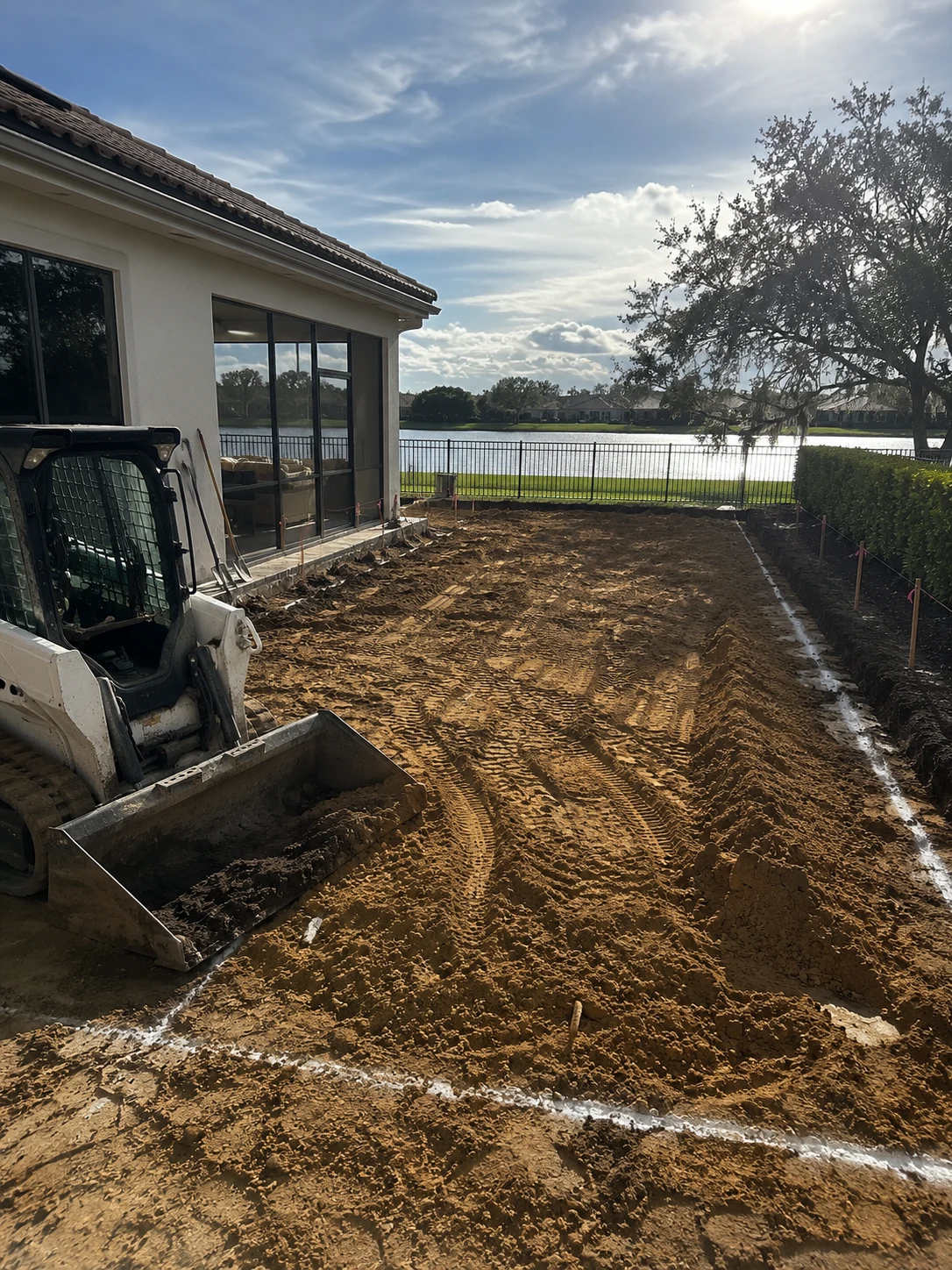
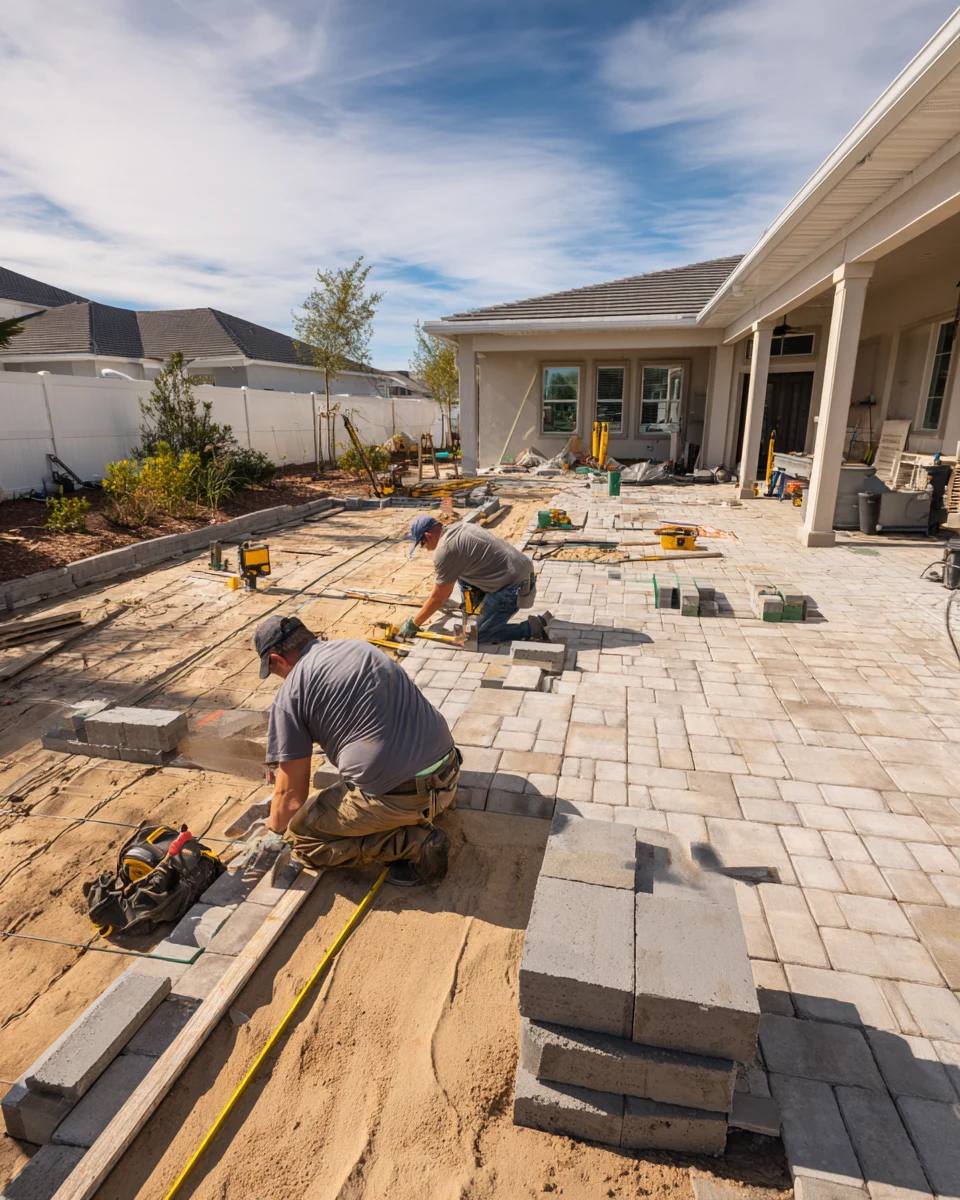
The paver you see is the top of a system: compacted subgrade, a layer of compacted crushed aggregate, a thin bedding layer of coarse sand, then the pavers, then the joint material. When a patio sinks in the middle or ruts along a path, one of the lower layers is almost always the cause.
The Interlocking Concrete Pavement Institute recommends compacting the aggregate base for patios and residential driveways to at least 98 percent of standard Proctor density, and spreading bedding sand to a nominal one-inch thickness. The base itself is usually several inches deep under a patio and deeper under a driveway, adjusted to the soil. Bedding sand is not meant to fix an uneven base; a thick, uneven sand layer is a common reason pavers settle unevenly.
On Central Florida sites, the subgrade often includes loose fill sand around newer homes and organic material near old planting beds. Both need to be removed or compacted before the base goes in. Skipping that step saves a day and costs a patio.
Paver Types, Thickness and Patterns
Concrete pavers are the most common, made in a wide range of shapes and colors. Clay brick pavers hold color well. Natural stone, including travertine, is a separate category with different care, and travertine as a deck material has trade-offs of its own.
According to ICPI guidance, pavers 2 3/8 inches (60 mm) thick are used for pedestrian areas, residential driveways and areas with limited vehicle use, while streets and heavier traffic call for units at least 3 1/8 inches (80 mm) thick.
Patterns are not only aesthetic. Herringbone patterns interlock in more directions and resist the turning and braking of car tires better than running bond or stack bond, which is why they are common on driveways.
Driveway vs Patio Thickness
A driveway carries concentrated wheel loads, repeated daily, and the turning of tires at the garage apron. That is carried mainly by a thicker, well-compacted base and a strong edge, and secondarily by the paver. Many installers choose thicker units and herringbone patterns for driveways even where 60 mm pavers would technically be acceptable, because the cost difference is small compared with rebuilding a rutted apron.
Edge Restraint and Joint Sand
Pavers are held in place by their neighbors and, at the perimeter, by an edge restraint: a concrete curb, a buried plastic or aluminum edge spiked into the base, or a building wall. ICPI describes edge restraints as essential, because without them pavers creep outward, joints widen and the bedding sand washes away.
The weakest spot on many patios is the lawn edge, where a restraint was skipped or set on sand instead of base. That is where the first loose pavers usually appear.
Joint material locks the units together. Fine sand swept into the joints works, but heavy rain and pressure washing wash it out over time.
Polymeric Sand
Polymeric sand contains binders that harden after they are activated with water, which keeps joints filled and resists washout, weeds and ants better than plain sand. It is less forgiving to install: pavers must be dry, excess must be removed from the surface before wetting, and the product’s cure time has to be respected. Haze and patchy joints are usually installation problems, not product problems.
Weed and Ant Control
Weeds and fire ants both take advantage of open joints. Filled, compacted joints are the best prevention. Weeds that do appear usually root in the sand and organic debris that collects near the surface rather than in the base, and they pull out easily when joints are maintained. For fire ants, bait treatments are the usual approach; ask a pest professional rather than pouring chemicals into the joints.
Permeable Pavers and Drainage
Standard pavers are laid tight and water runs off the surface, so the patio has to be sloped away from the house and toward somewhere water can go. Permeable pavers are designed differently: wider joints filled with small stone and a base of open-graded aggregate that stores water and lets it soak into the ground.
Permeable systems can reduce runoff from a patio, but they depend on the ground underneath being able to accept water. Where the water table rises close to the surface in the wet season, or where soil is compacted clay-like fill, their capacity is limited. They also need their joints kept clear of sediment to keep working.
Whichever system you use, the patio is only one part of how water moves across the lot. If water already stands where you want to build, diagnose that first; yard drainage in Central Florida explains how.
Sealing: Wet Look, Matte or None
Sealing is optional. A sealer can deepen color, resist stains from grills and leaves, and help lock in joint sand. It also changes the surface, and once you start, it has to be maintained.
Wet-look sealers give a glossy, darker finish that some owners love and that can reduce traction when wet, a real concern around pools. Matte or natural-look sealers change the appearance less. Many owners choose not to seal at all and simply clean and re-sand joints as needed. If you do seal, wait until the pavers have dried out and any efflorescence has been dealt with, and follow the sealer manufacturer’s recoat interval.
Settling, Re-Leveling and Repairs
The repairability of pavers is their biggest practical advantage. A sunken area can be lifted, the base corrected and compacted, and the same pavers relaid. Units damaged by a dropped tool or a stain can be replaced one by one, which is why it is worth keeping a few spare pavers from the original batch, since colors can vary between production runs.
Common causes of settling in Central Florida are inadequate base compaction, washouts from gutters or downspouts discharging onto the patio, irrigation soaking the edges and roots lifting sections. Fixing the cause matters; releveling a spot that a downspout keeps flooding only buys time.
Routine care is modest. Sweep debris out of the joints, rinse the surface, and after any pressure washing, check the joints and top them up, since a strong jet removes joint sand along with the dirt. Keep the spray fan wide and the tip well away from the surface to avoid etching concrete pavers. Stains from grills, rust and leaves respond best to cleaners made for pavers, used before the stain sets.
Cost per Square Foot Installed
HomeGuide’s 2026 cost data puts most paver patio projects at about $10 to $25 per square foot, depending on materials, labor and preparation. That is a national range; the local number depends on the details below. That is a national planning range. Base preparation, paver type, pattern, borders and drainage decide whether a Central Florida bid comes in above or below it.
| Cost driver | Why it matters |
|---|---|
| Removing an old slab or poor soil | Demolition and excavation before any base goes in |
| Base depth | Driveways and soft soils need more aggregate and compaction |
| Paver type and thickness | Premium finishes, clay and stone cost more than standard concrete units |
| Pattern and cuts | Herringbone, borders and curves add labor and waste |
| Edges and steps | Restraints, seat walls and step-downs add material and time |
| Drainage work | Regrading, drains or permeable systems |
The table explains why two quotes for the same square footage can differ: they rarely assume the same base, pattern and edges. Compare what each quote says about base depth and edge restraint before you compare the price.
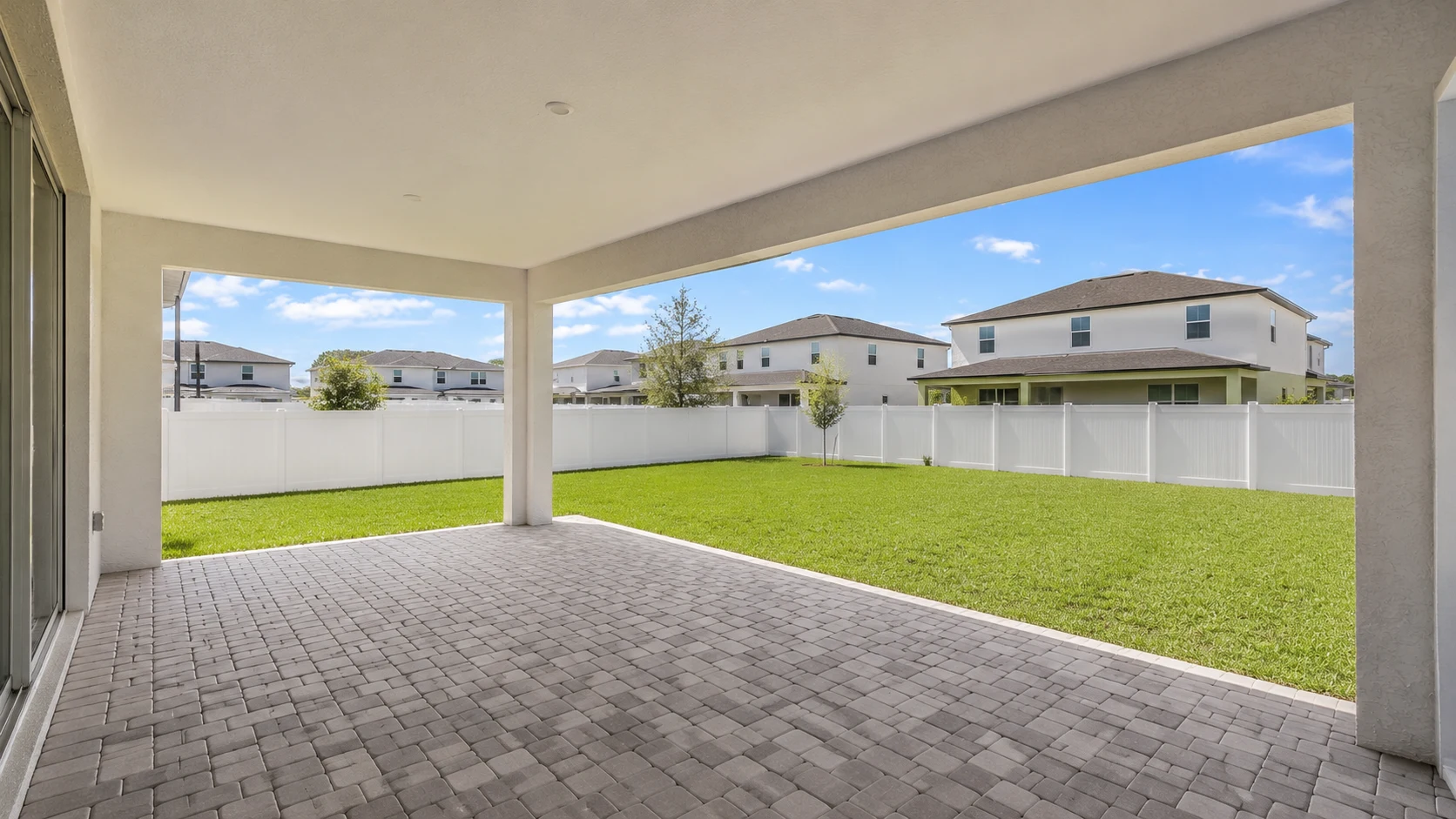
Pavers are one element of most backyard projects, together with covered areas, kitchens and pool decks. Planning one begins outside, not in a catalog: grade, soil and where the water goes are checked on site before any paver is chosen, and that is how our outdoor living projects start.
Share this article