The short answer
Lower sheens such as flat and matte hide wall imperfections and touch up well but are harder to clean; higher sheens such as satin and semi-gloss resist moisture and scrubbing but show every flaw in the surface. A common approach is flat on ceilings, matte or eggshell on living and bedroom walls, satin in kitchens, halls and bathrooms, and semi-gloss on trim and doors.
In a humid house, the product matters as much as the sheen. Bathrooms and laundry rooms benefit from paints formulated with mildew-resistant additives and from good ventilation. Many modern matte and eggshell lines are far more washable than older flats, so the manufacturer's data for a specific product is a better guide than sheen names alone.
Key takeaways
- Sheen names are not standardized across brands. One company's eggshell can be shinier than another's satin.
- Higher sheen means easier cleaning and more visible flaws. Wall condition should influence the choice as much as the room.
- Touch-ups blend best on flat and matte finishes and worst on semi-gloss and gloss.
- Ventilation and a mildew-resistant product do more for a bathroom than jumping to a high sheen.
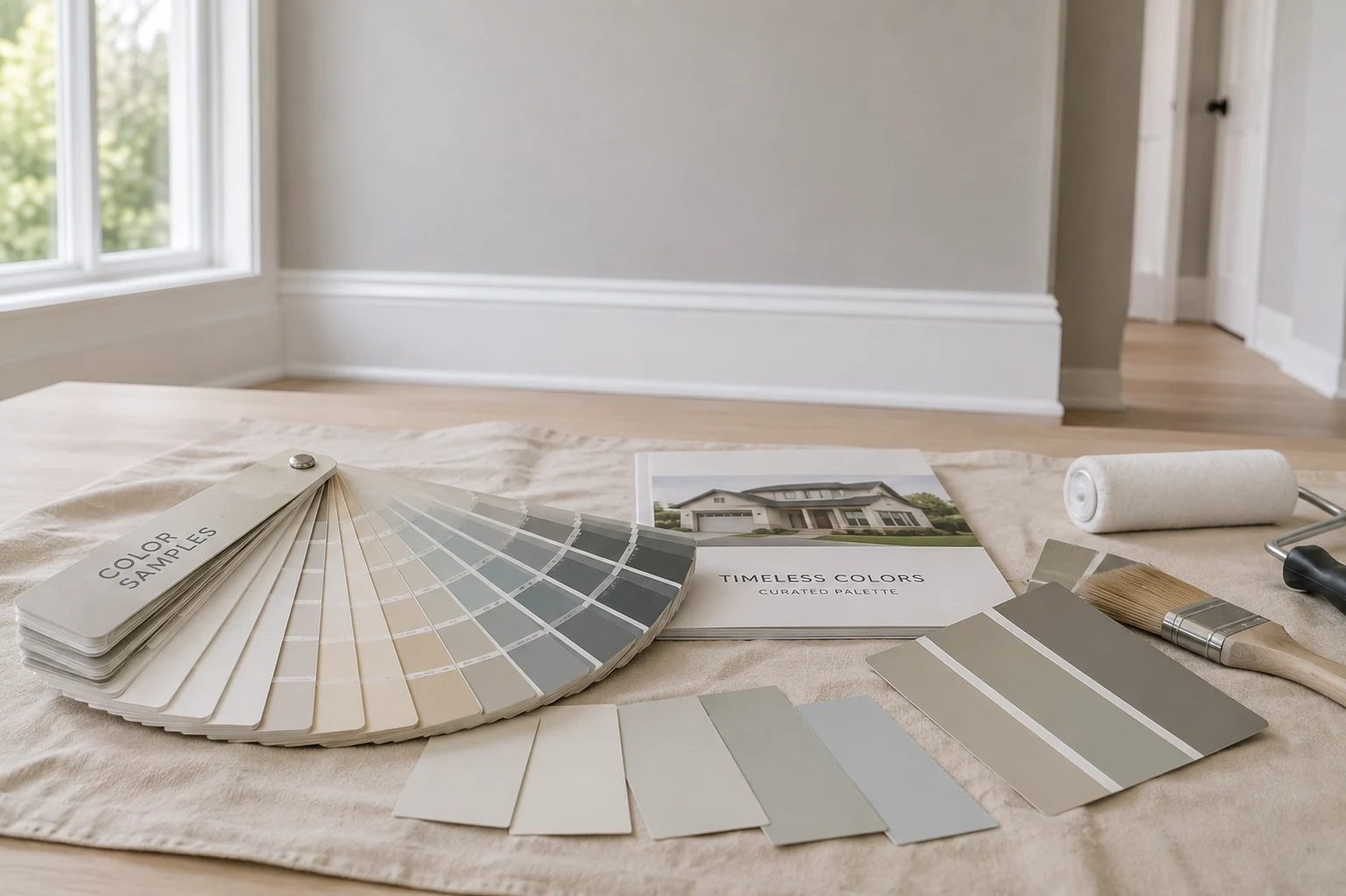
- Sheen also changes how a color reads. Test samples in the actual sheen you plan to use.
Flat, Matte, Eggshell, Satin, Semi-Gloss and Gloss
Sheen describes how much light a dried paint film reflects. Low-sheen paints scatter light, which makes a surface look soft and even. High-sheen paints reflect it more directly, which makes a surface look crisp and bright but shows its shape clearly.
From lowest to highest, the usual names are:
- Flat: almost no reflection. Hides flaws best, cleans least well.
- Matte: a little more reflection than flat, often with better washability in modern formulas.
- Eggshell: a low, soft glow. A common default for walls.
- Satin: a noticeable sheen, easier to wipe clean, more likely to show roller marks and patches.
- Semi-gloss: clearly shiny. Tough and cleanable, used widely on trim and doors.
- Gloss: highly reflective. The hardest-wearing and the least forgiving of surface flaws.
Manufacturers measure sheen with a gloss meter, which reports how much light bounces off the surface at a set angle. The Master Painters Institute defines standard gloss levels that many specifications use:
| Common name | Gloss units at 60° | |
|---|---|---|
| G1 | Flat | 5 or less |
| G2 | High-sheen flat or matte | 10 or less |
| G3 | Eggshell | 10 to 25 |
| G4 | Satin | 20 to 35 |
| G5 | Semi-gloss | 35 to 70 |
| G6 | Gloss | 70 to 85 |
| G7 | High gloss | More than 85 |
Manufacturers do not all use the same names for the same ranges. An eggshell from one company can look like a satin from another, which is why sample boards in the real product are more reliable than names.
Washability vs Hiding Imperfections
The central trade-off is simple. A shinier film is smoother and tighter, so dirt sits on top and wipes away more easily, and moisture has a harder time getting in. The same smoothness reflects light off every dent, seam, patch and roller mark underneath it.
That makes wall condition part of the decision. A newly finished, well-sanded wall can carry satin without looking lumpy. An older wall with years of patches may look better in matte, even in a room where satin would be the textbook choice. In Florida homes with textured walls, such as orange peel or knockdown, the texture hides some flaws already, and a lower sheen keeps the texture from looking harsh.
Paint technology has narrowed the gap. Many current matte and eggshell products are formulated to be scrubbable, so a durable low-sheen wall is realistic in rooms where only flat was once considered risky. The product’s technical data, including its scrub resistance and whether it is marketed for high-traffic areas, is a better guide than sheen alone.
Best Sheen by Room
There is no single correct answer for any room, but these combinations are common and practical:
| Usual choice | When to go higher | When to go lower | |
|---|---|---|---|
| Living and dining rooms | Matte or eggshell | Young children or pets | Imperfect or textured walls |
| Bedrooms | Flat, matte or eggshell | Kids rooms that see scuffs | Low-use guest rooms |
| Kitchens | Eggshell or satin | Walls near the cooktop | Rarely |
| Bathrooms and laundry | Satin | Showers without a fan | Powder rooms with no shower |
| Hallways and stairs | Eggshell or satin | Heavy traffic | Long walls lit from the side |
| Ceilings | Flat | Bathroom ceilings | Almost always flat |
| Trim and doors | Semi-gloss | Gloss for a lacquered look | Satin for a softer look |
Kids and High-Traffic Halls
Hallways, stair walls, mudroom areas and children’s rooms take hands, backpacks, toys and the occasional crayon. These walls benefit from a finish that can be wiped without burnishing, which is when a cleaned area turns shinier than the wall around it. Eggshell or satin in a durable line is the usual answer. A scrubbable matte is an option where the walls are not perfectly smooth and a shinier finish would highlight it.
Kitchens and Grease
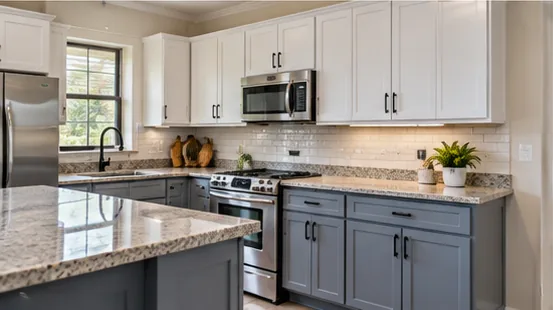
Kitchen walls collect fine grease from cooking, especially near the range. A satin or durable eggshell cleans more easily than flat and resists staining. The backsplash area usually has tile, so the painted walls in question are mostly around it and above cabinets. Cabinets themselves are a different finishing job, with harder enamels and a much longer cure, covered in the guide to painting kitchen cabinets.
Bathrooms and Laundry: Mildew-Resistant Options
Bathrooms combine heat, steam and poor air movement, and in a humid climate the air outside the bathroom is already moist. Mildew grows where moisture lingers on surfaces.
Three things reduce the problem, roughly in order of importance:
- Ventilation. A bath fan that actually exhausts outdoors, sized for the room and run during and after showers, removes the moisture that mildew needs.
- A product formulated for bathrooms. Many paint lines offer bath-specific or mildew-resistant formulas with additives that inhibit growth on the paint film.
- Sheen. Satin or semi-gloss sheds water and wipes clean more easily than flat.
Existing mildew has to be cleaned and the surface allowed to dry before painting. Paint applied over mildew does not stop it; it grows through. Laundry rooms follow the same logic, particularly where a dryer vents poorly or a washer sits in a closed closet.
Ceilings and Popcorn Retexture
Ceilings are nearly always painted flat. A flat finish hides the joints and minor waves that raking light from windows exposes, and ceilings rarely need scrubbing. Bathrooms are the common exception, where a ceiling paint with a little more sheen or a bath-specific product helps with condensation.
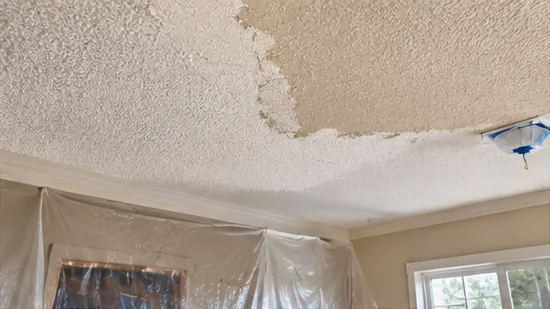
When a textured or popcorn ceiling has been removed and the ceiling retextured or skim coated, the new surface needs a primer designed for fresh joint compound before the flat finish. Without it, the compound absorbs paint unevenly and patches show. Whether a textured ceiling should be tested before it is disturbed is its own question, handled in the article on popcorn ceiling removal.
Trim, Doors and Baseboards
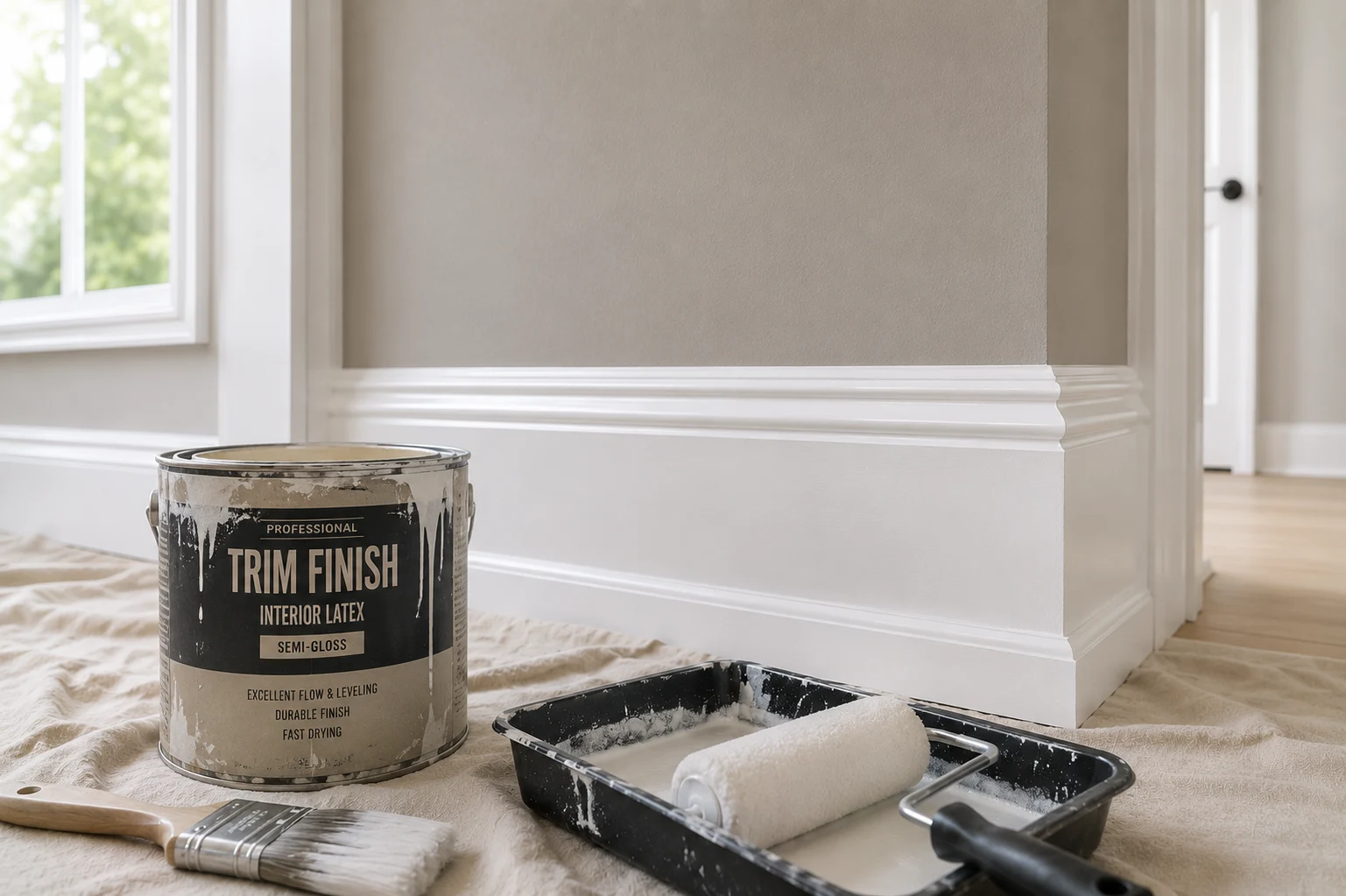
Trim and doors take the most contact of any painted surface: hands on door edges, vacuums against baseboards, shoes on stair risers. Semi-gloss is the usual choice because it is hard, cleanable and gives a crisp line against a lower-sheen wall. Gloss gives an even more polished look and shows more flaws. Satin trim is a softer, more contemporary option that still cleans reasonably well.
Many trim paints are enamels, including waterborne alkyd and urethane-modified products, that level out brush marks and cure harder than wall paint. They take longer to reach full hardness, so doors may feel tacky where they close against stops for a while after painting. Leaving doors open for longer after painting, as the product directs, reduces sticking.
Color Selection Under Florida Light
Sheen and color interact. A higher sheen returns more light, so the same color looks slightly lighter and more saturated on satin than on matte. Strong Florida daylight, bouncing off lawns, pools and light stucco outside, adds its own tint to interior walls, and colors can shift noticeably between morning and afternoon.
This is why a sample painted in the chosen sheen, in the room, viewed at different times of day, beats a chip under store lighting. Light reflectance values, fixed elements like floors and counters, and the sample method that avoids surprises are the subject of choosing house paint colors.
Sheen and Wall Texture
Many Florida homes have textured walls, such as orange peel or knockdown, rather than smooth drywall. Texture changes how sheen reads. On a textured wall, a higher sheen creates small highlights on every bump, which can make the texture look busier and emphasize patched areas where the texture does not quite match. Lower sheens let texture recede.
That is one practical reason many textured homes use eggshell or matte on walls, saving satin for rooms where cleaning matters most. Smooth walls, especially newly skim-coated ones, carry higher sheens more gracefully, as long as the finishing work is good.
Rentals, Resale and Practical Choices
For rental properties and homes being prepared for sale, practical considerations often lead the choice. A single wall color and sheen throughout simplifies touch-ups between tenants, and a durable eggshell or scrubbable matte hides wear while allowing cleaning. Neutral colors in a consistent sheen photograph evenly. Trim and doors in semi-gloss, in one white, keep repairs simple. Keeping a record of the product, color and sheen used in each area saves time every time a wall needs attention.
Coverage and Coats Needed
Most repaints use two finish coats. One coat can be enough when the new color is close to the old one, the product has strong hiding power and the wall is in good condition. A dramatic color change, a light color over a dark one, or walls with patches and new compound usually need a primer and two coats.
Sheen affects coverage indirectly. Uneven porosity, from patches or bare compound, shows most as uneven sheen, so priming repairs matters more with satin and semi-gloss. Very deep colors may need an extra coat or a tinted primer regardless of sheen.
Touch-Up Behavior
Touching up paint that has been on the wall for a while rarely matches perfectly, and sheen is the main reason. Flat and matte finishes hide touch-ups best, because there is little reflection to reveal a difference in thickness or texture. Eggshell is usually manageable. Satin, semi-gloss and gloss often show a touch-up as a patch of different shine, especially when seen at an angle.
For higher sheens, repainting a whole wall section from corner to corner, rather than dabbing, gives a more even result. Keeping leftover paint labeled by room and sheen makes future touch-ups much easier.
Choosing sheens is usually settled room by room during planning for an interior painting project, alongside color samples and the condition of each wall.
Share this article