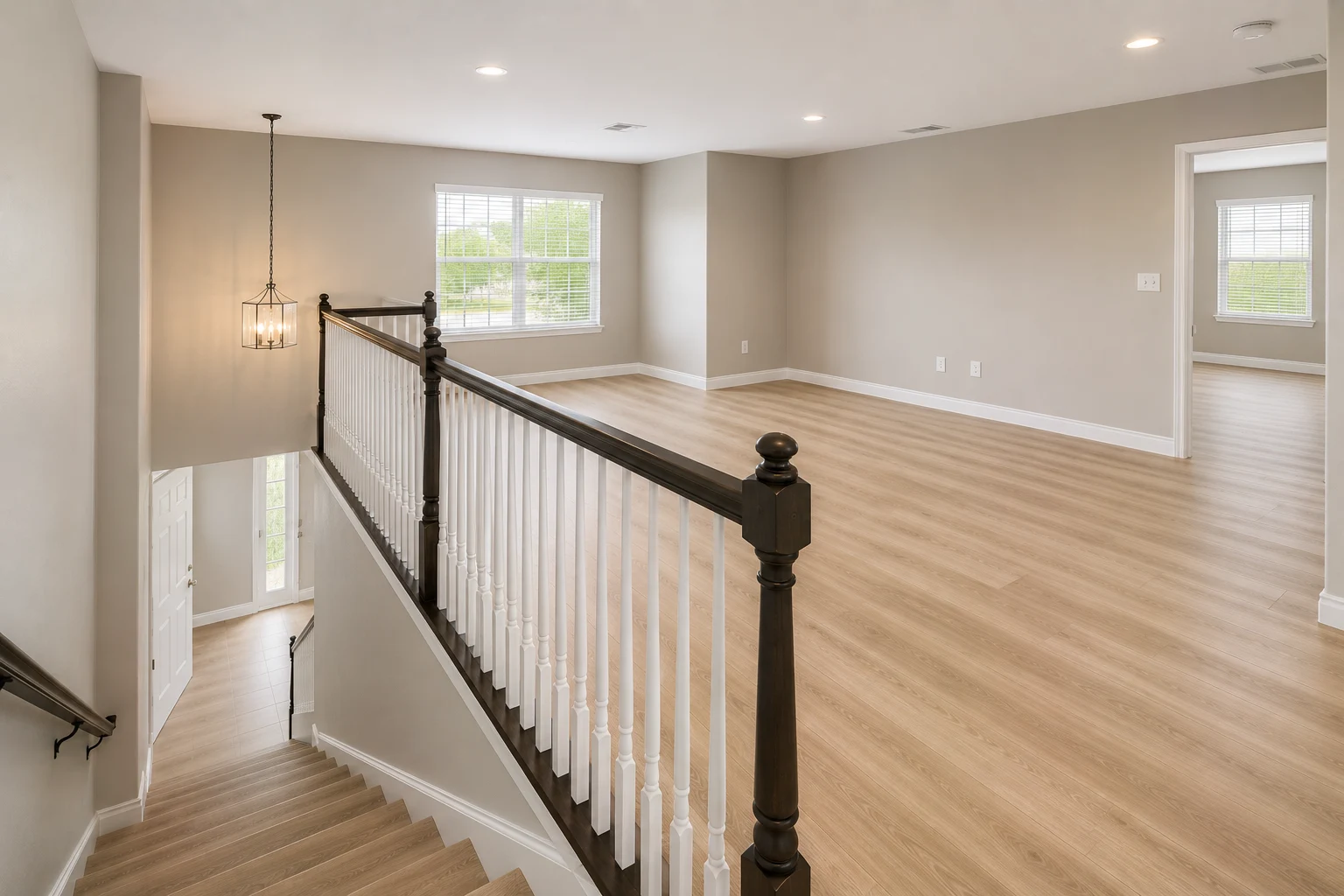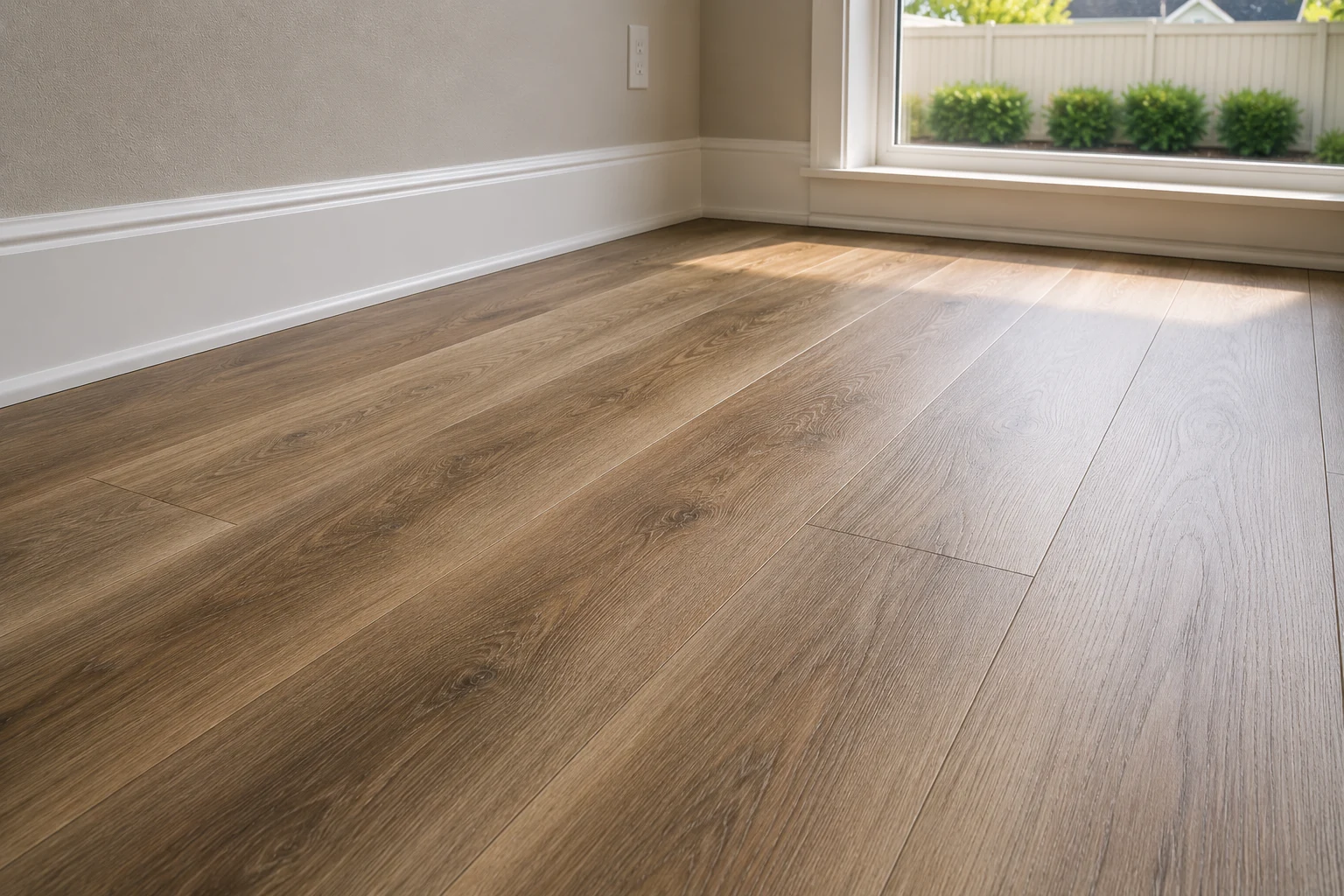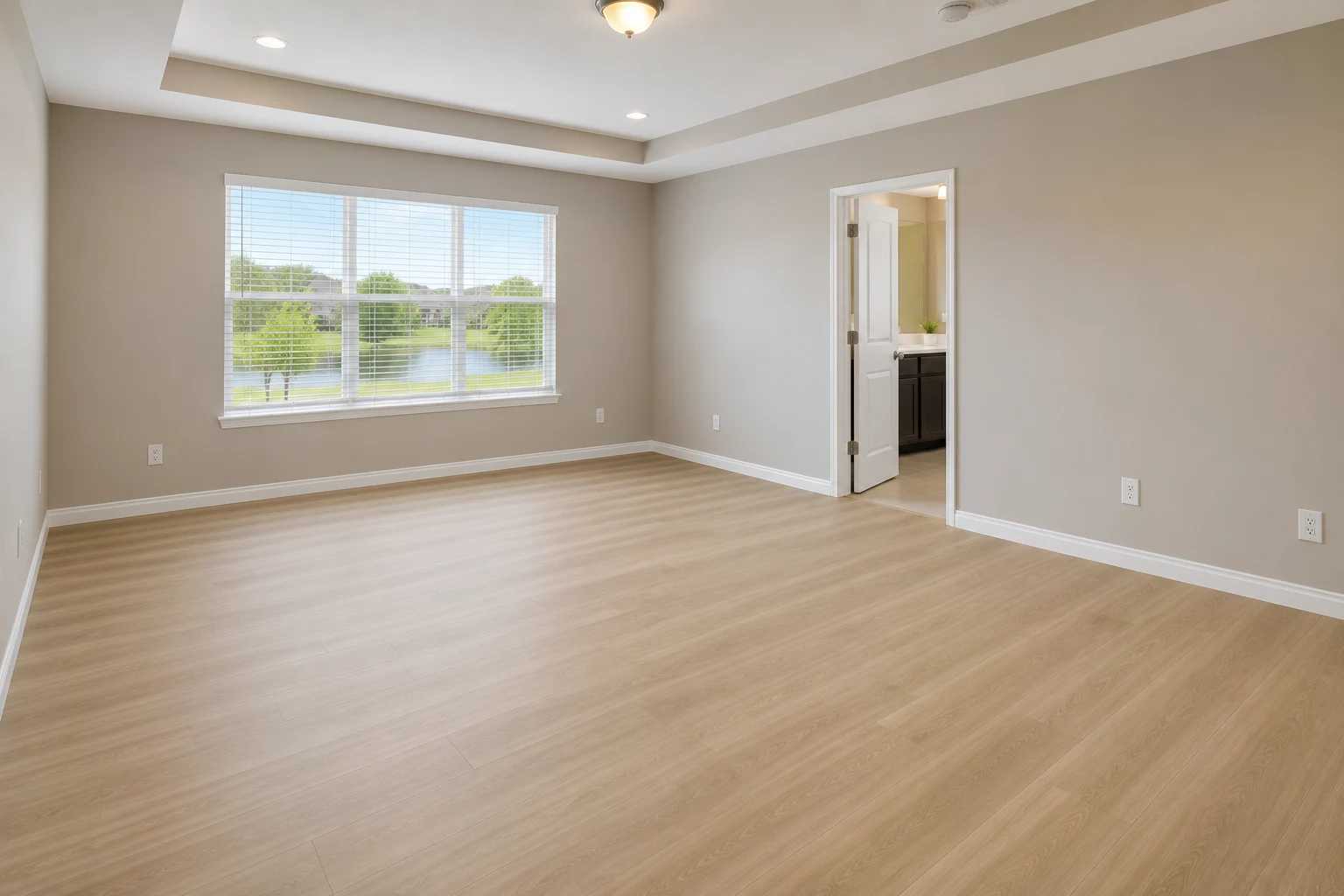
The short answer
Porcelain tile wins where durability, water and sand matter most: entries, kitchens, bathrooms, laundry rooms and rooms opening to the pool deck. It is very hard, absorbs almost no water and can outlast several vinyl floors, but it costs more to install, needs a flat slab and is hard and cold underfoot. Luxury vinyl plank wins on comfort, sound, installation speed and cost, and it is easier to replace later.
Many Florida homes use both: tile in the wet and high-traffic areas and vinyl plank in bedrooms and living spaces. HomeGuide's national cost data puts porcelain tile at roughly $15 to $50 per square foot installed and vinyl plank at roughly $4 to $16, with slab preparation, removal and trim on top.
Key takeaways
- Porcelain is defined by very low water absorption, 0.5 percent or less, which makes it dense and water-resistant through its body.
- Vinyl plank is waterproof as a plank; seams, edges and the slab below still decide how an installed floor handles water.
- Large porcelain tiles need a flatter slab than vinyl plank, and preparation can be a large share of the tile cost.
- Tile removal is slow and dusty; a floating vinyl floor comes up quickly, which matters when the floor may change again.
- Mixing both works when the transitions are planned for height, direction and doorways.
Where Each One Clearly Wins
Porcelain tile and luxury vinyl plank solve different problems, and in some rooms the decision is easy.
| Porcelain tile | Luxury vinyl plank | |
|---|---|---|
| Scratch and wear resistance | Very high | Depends on wear layer |
| Water in the material | Absorbs almost none | Plank waterproof; seams are the weak point |
| Comfort and sound | Hard, cool, louder | Softer, warmer, quieter |
| Slab flatness needed | High, especially large tiles | Moderate |
| Installation time | Longer, includes cure time | Shorter |
| Removal later | Slow and dusty | Fast for floating floors |
| Typical installed cost | Higher | Lower |
Tile wins in entries that collect sand, kitchens, bathrooms, laundry rooms and rooms that open onto a pool deck or lanai, where wet feet and dropped items are constant. It also wins where the owner wants a floor that can last decades without replacement.
Vinyl plank wins in bedrooms, offices, family rooms and upstairs spaces, where comfort, quiet and cost matter more than extreme durability, and where the owner may want to change the floor again in ten or fifteen years.
Laminate and wood options follow different logic, and how laminate and wood stack up against vinyl covers them. This article stays with the two floors most often weighed against each other on a Florida slab.
Heat, Humidity and Barefoot Comfort
Porcelain feels cool because it conducts heat away from bare feet. In a Florida summer, that is welcome in living areas and near the pool. It is also hard: standing for long periods in a kitchen, sitting on the floor with children or dropping a glass all feel different on tile.
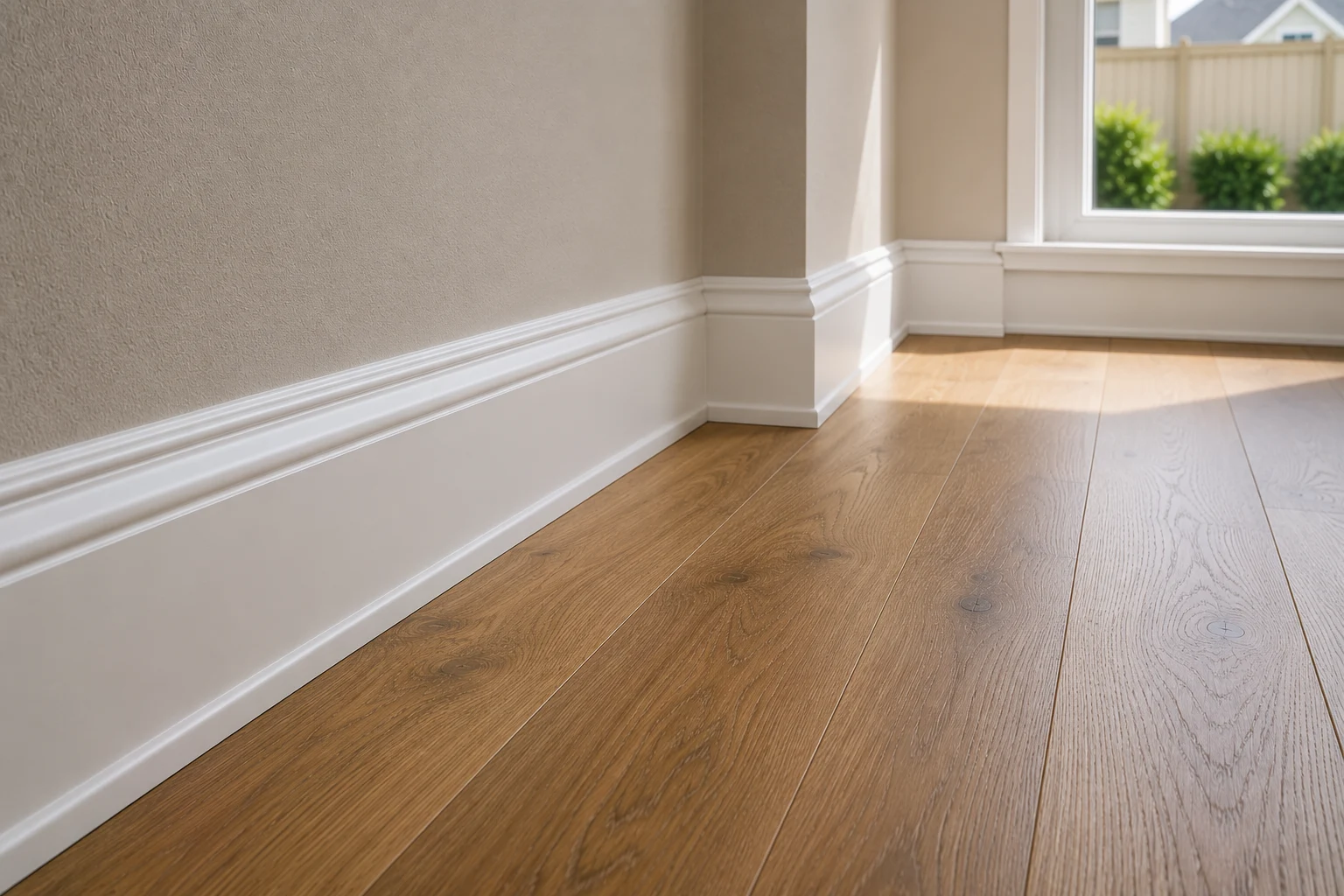
Vinyl plank feels warmer and softer, and many products include an attached underlayment that adds some cushion and reduces sound. It does not absorb humidity, so it does not swell with Florida’s weather.
Sun is where vinyl needs more care. Floating vinyl expands with heat, and planks near large sliding doors or windows in direct sun can move more than those in shaded rooms. Manufacturers address this with expansion gaps, transition breaks on long runs and, in some cases, advice to protect the floor from prolonged direct sun with window treatments. Porcelain is not affected by sun, although dark tile in direct sun can get hot to the touch.
Sound in Two-Story Homes
Sound is part of comfort. Tile and hard surfaces reflect noise, so footsteps, dropped keys and chair legs are louder in the room and can carry to the floor below in two-story homes. Vinyl plank with an attached or approved underlayment reduces impact noise, which is one reason upstairs bedrooms and lofts often get vinyl while the ground floor gets tile. Rugs and soft furnishings help in any tiled room.
Water Exposure and Flooding
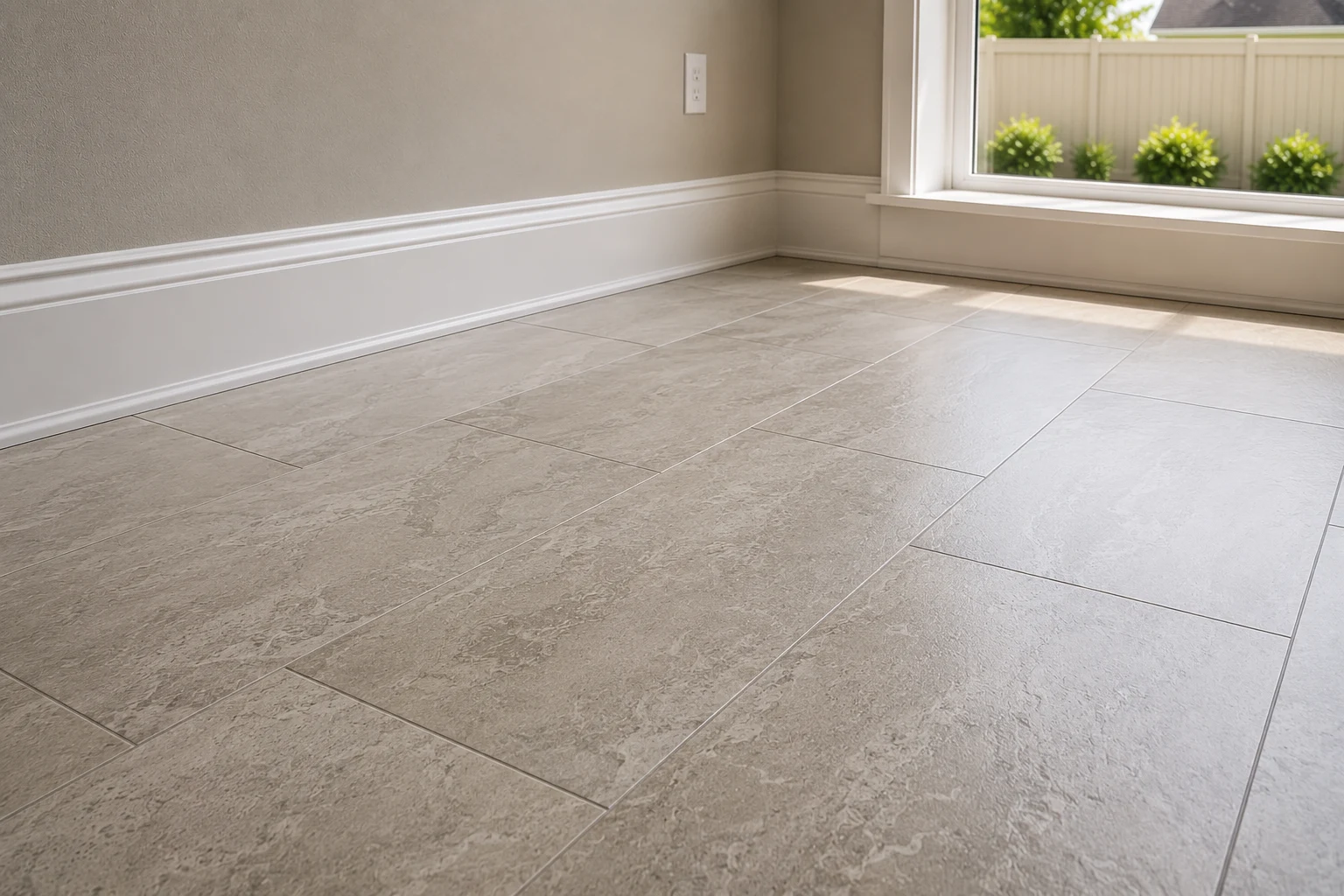
Porcelain is defined by very low water absorption, 0.5 percent or less under the industry test method, so water does not soak into the tile body. Grout and the setting bed are more porous, but tile on a slab generally tolerates spills, mopping and wet feet without harm.
Most rigid-core vinyl plank is waterproof as a plank, meaning the plank itself will not swell or break down in water. The installed floor is a different question: water that reaches the seams or edges can get under a floating floor and sit on the slab, where it dries slowly and can cause odor or mold. Glue-down vinyl limits that, but adhesives have their own moisture limits.
In a flood, tile set on a slab is often cleaned, dried and kept, depending on how long the water stayed and what it carried. A floating floor usually has to come up so the slab can dry, and whether the planks can be reused depends on the product and the water. Flood damage is a claims and cleanup decision that depends on insurance terms and the type of water, so it is worth asking the insurer how flooring is treated before an event.
Installation Cost and Time
HomeGuide’s cost data puts porcelain tile at roughly $15 to $50 per square foot installed and vinyl plank at roughly $4 to $16. The range for tile is wide because tile size, pattern, setting materials and slab preparation vary so much. Both are approximate national ranges for early budgeting; product grade, tile size, pattern, slab preparation and local labor can put a specific floor outside them.
Time differs too. A floating vinyl floor can often be walked on the same day it is installed. Tile involves setting, cure time, grouting and more cure time before heavy use, so the same area takes longer. For a whole house, that difference affects how long furniture is stored and whether the family can stay in the home during the work.
Removal of the old floor and preparation of the slab are separate from both prices. Tile removal alone runs roughly $2 to $7 per square foot in HomeGuide’s national data, and self-leveling underlayment roughly $2 to $5.
Large Format Tile and Lippage Control
Large porcelain tiles, and long wood-look planks in particular, look clean with fewer grout lines, but they magnify any unevenness. Lippage is the height difference between the edges of neighboring tiles, and the tile installation standard limits it based on tile size and joint width. Meeting that limit with large tiles depends on a flat slab, the right setting method and, often, a leveling clip system.
That is the main reason tile quotes vary: a slab that needs grinding and self-leveler before large tiles can go down adds material and labor. The flatness numbers and how they are reached are covered in preparing a slab before flooring.
Wood-Look Plank Tile
Wood-look porcelain combines the look of wood with the durability of tile, and it is popular in Florida living areas. Long planks, such as 8 by 48 inches, are the most demanding format: many have a slight bow from manufacturing, so installers generally limit the offset between rows to about one-third of the plank length to keep edges even. A random or one-third stagger usually looks more natural than a half offset anyway.
Grout color close to the tile and narrow joints keep the wood effect convincing.
Future Removal Difficulty
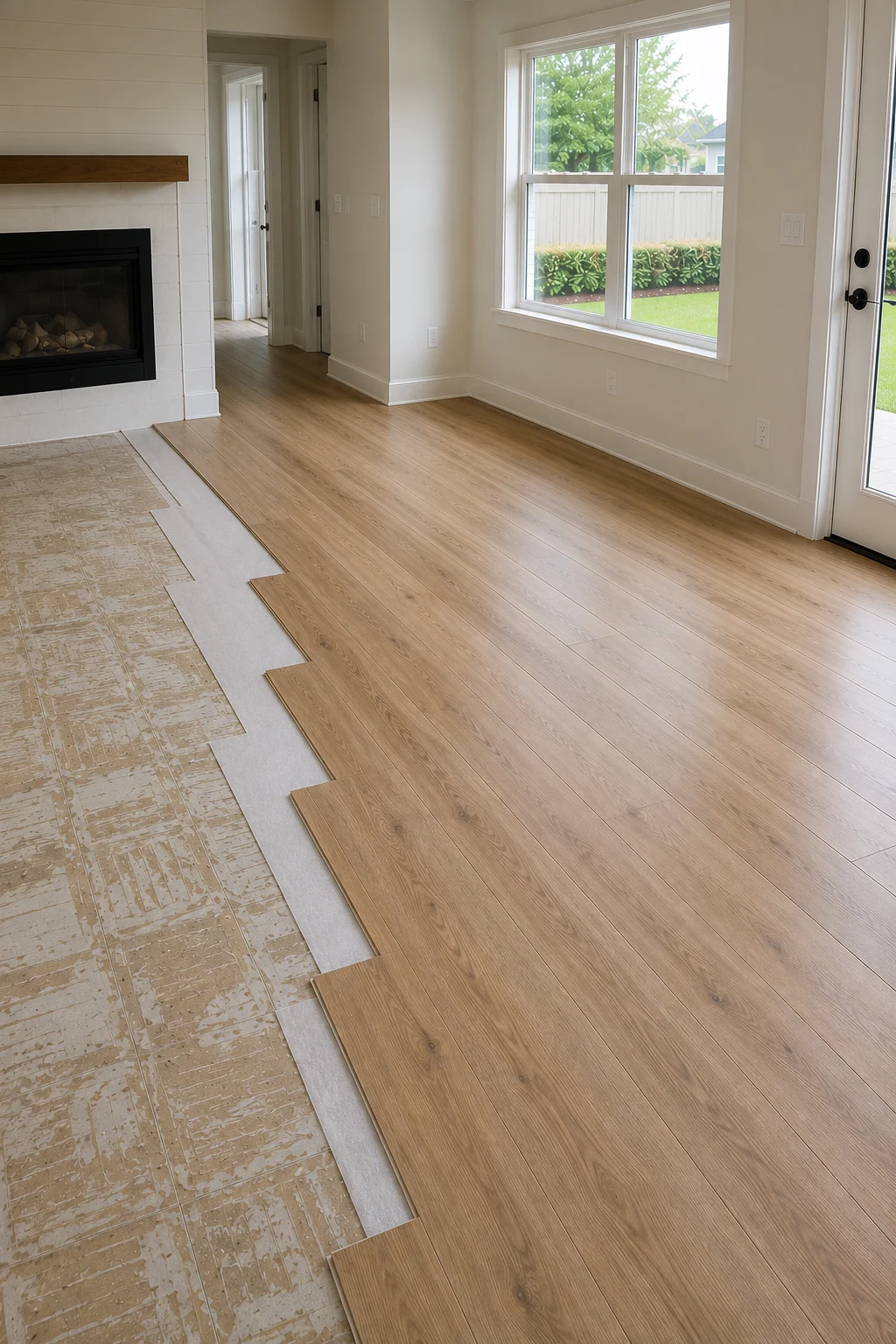
A floor may be replaced again during the life of the house. Removing tile means breaking it up, scraping thinset and often grinding the slab before a new floor, which is slow, loud and dusty even with dust-control equipment. Removing a floating vinyl floor means unclicking or pulling up planks, which takes much less time. Glue-down vinyl sits between the two, since adhesive must be removed or covered.
For a floor that may change with the next owner or in the next remodel, that difference is part of the long-term cost.
Grout Maintenance
Tile itself needs little care, but grout does. Cement-based grout is porous and benefits from sealing and regular cleaning, especially at entries and in kitchens where dirt and spills collect. Epoxy and some premixed grouts resist staining better. Vinyl plank has no grout, and routine care is sweeping and damp mopping with a cleaner the manufacturer approves.
Cracking Over Slab Movement
Concrete slabs shrink and can crack, and settlement or ground movement can widen those cracks over time. Tile is rigid and bonded to the slab, so a moving crack can telegraph through as a cracked tile or grout line. Crack isolation membranes reduce that risk for small in-plane movement, but they do not handle vertical displacement, and they do not replace movement joints at perimeters and in large fields of tile. Floating vinyl floors bridge hairline cracks without showing them, although cracks with height difference still need to be leveled first.
Living With Each Floor Day to Day
Daily life treats the two floors differently. A glass or ceramic dish dropped on porcelain usually breaks, and a heavy pan can chip a tile edge. The same drop on vinyl often survives, although sharp or heavy objects can dent or cut the surface. Furniture legs, rolling office chairs and appliances are the main risks for vinyl: felt pads, chair mats and sliding appliances on boards rather than across the planks keep it looking new. Tile shrugs off rolling loads but shows dirt in grout lines over time.
Replacement differs too. A cracked tile can be replaced individually if spares from the same lot were kept, though matching grout takes care. A damaged vinyl plank can be replaced as well; on floating floors the planks are unclicked from the nearest wall.
Resale and Appraisal Perception
There is no reliable figure for how much either floor adds to a sale price. Buyer perception depends on the neighborhood, the home’s price range and what comparable listings offer. In some areas porcelain throughout is expected; in others, quality vinyl plank in living areas is standard.
What tends to matter more is consistency and condition: one floor through the main living areas rather than a patchwork, clean transitions, no lippage or loose planks, and a floor that suits the rooms it is in.
Questions to Settle Before Choosing
- Which rooms get water, sand or heavy traffic, and which are mainly for comfort?
- Is the slab flat enough for the tile size being considered, or will preparation be needed?
- Has the slab been tested for moisture, and which vinyl products allow the result?
- How long will the household stay, and how likely is another floor change?
- Will the floor run continuously through open areas, and where would transitions fall?
- Is there a budget for preparation, removal and trim as well as the floor itself?
The answers usually point to one floor for some rooms and the other for the rest.
Mixing Both in One Home
Many Florida homes combine the two: porcelain at the entry, in the kitchen, bathrooms, laundry and rooms opening to the lanai, and vinyl plank in bedrooms, offices and upstairs. The details that make that work:
- Heights: tile with its setting bed and vinyl plank are rarely the same height, so transitions are planned, and preparation can bring the two close.
- Where the change happens: at doorways, or at a clear line in an open plan, rather than mid-room.
- Color and direction: tones that relate to each other, and plank directions that make sense from room to room.
- Trim: the right transition profile at each change and consistent baseboard.
The profiles and heights at those changes are covered in finishing floor transitions and trim.
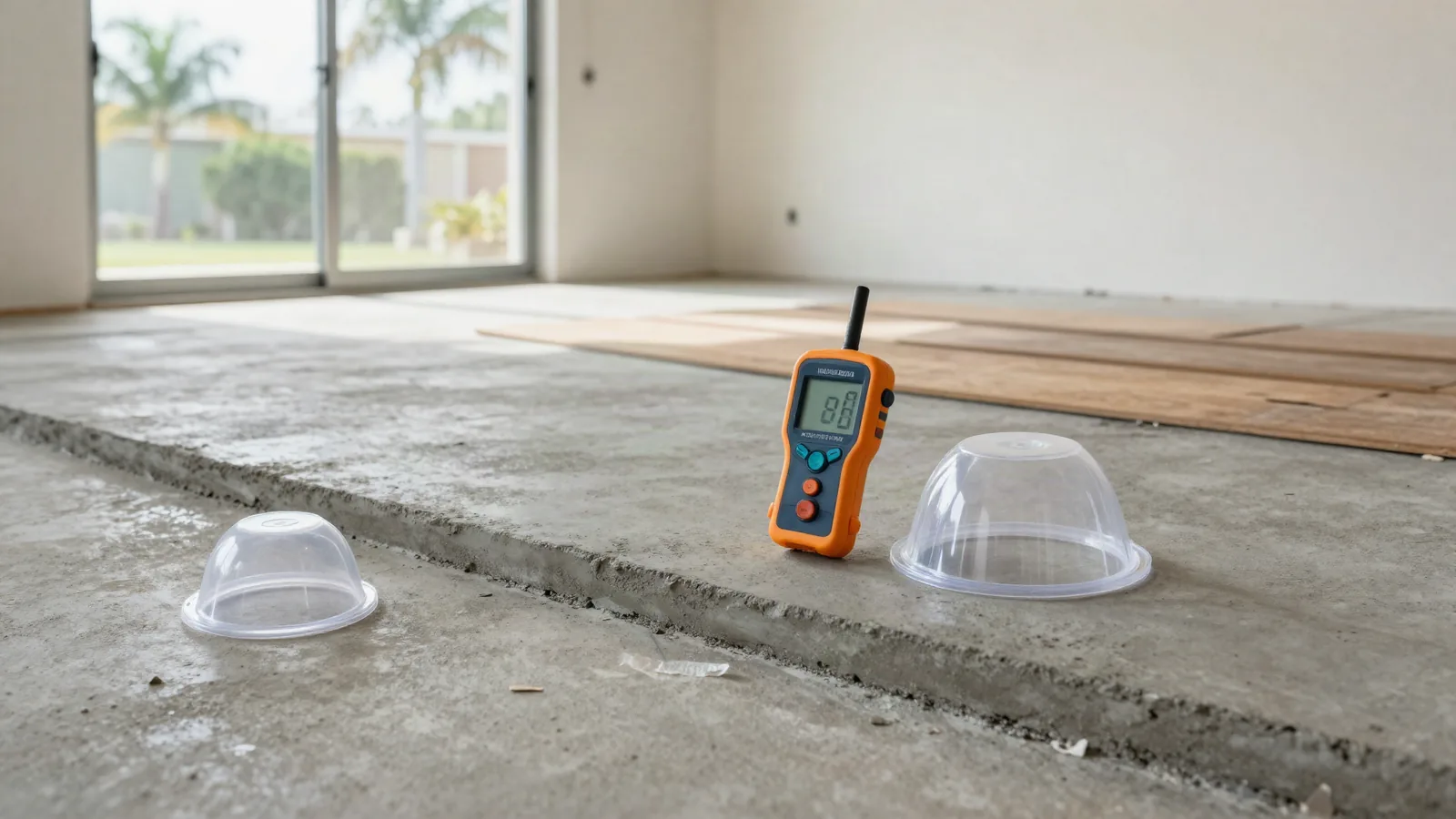
Before choosing either, a moisture check on the slab confirms which vinyl products and installation methods are allowed, as explained in testing a slab for moisture.
Both floors are part of flooring installation on Central Florida slabs, and the choice is usually made room by room once the slab has been checked.
Share this article