The short answer
Short-term rentals near the Orlando parks put years of household wear on a floor in a short time: rolling luggage, sand and pool water, furniture moved by guests and frequent cleaning. Porcelain tile at entries, kitchens, bathrooms and rooms opening to the pool, with a durable vinyl plank or tile elsewhere, is a common approach. For vinyl, a thicker wear layer and a product whose warranty covers the intended use matter more than the look.
Repairability, noise and community rules also shape the choice. Keeping spare boxes of the same product, checking HOA or condo flooring rules before ordering and estimating cost per year of service, rather than price per square foot, help owners compare options.
Key takeaways
- Turnover compresses wear: guests, luggage and cleaning add up faster than in a typical home.
- Wear layer thickness predicts how long a vinyl floor keeps its surface; product and warranty terms should fit rental use.
- Waterproof planks still need attention at seams and edges near pools, showers and kitchens.
- Spare planks or tiles from the same production run make fast repairs between bookings possible.
- HOA and condo rules can restrict floor types or require sound-rated underlayment; check before buying.
What High-Turnover Use Does to a Floor
A family home might see the same four people walk its floors for years. A short-term rental sees a different group every few days, each arriving with luggage, leaving with wet swimsuits and moving furniture to fit their plans. Cleaning crews wash floors more often than most households do. Over a year, that adds up to years of ordinary wear.
The damage patterns are predictable:
- Luggage wheels carrying grit across entries and hallways.
- Sand and pool water tracked in through sliding doors.
- Furniture dragged across floors without pads.
- Spills from kitchens, drinks and poolside snacks.
- Heavy cleaning with whatever product the crew brings.
Choosing a floor for a rental means choosing for those conditions, not for a showroom sample.
Furnished Turnover Damage
Some damage comes from the furnishings themselves: dining chairs without felt pads, bunk beds and cribs moved around, and heavy sofas pushed to open a room. Pads on every leg, checked at each turnover, prevent a large share of scratches and dents. Rugs under dining tables and in bedrooms protect floors from the most concentrated wear.
Wear Layer Minimums for Rentals
On vinyl plank, the wear layer is the clear top layer that protects the printed design, and its thickness, measured in mils, is the best predictor of how long the surface lasts. Rental use calls for a thicker wear layer than a bedroom in a family home. Commercial and light-commercial products typically offer thicker wear layers than entry-level residential lines.
The warranty matters as much as the number. Many manufacturers write separate residential and commercial terms, and a warranty may limit coverage when a home is used as a rental. Reading the terms, and asking the supplier how a short-term rental is classified, avoids a surprise when a claim is needed. Wear layers and how they relate to lifespan are covered in detail in the vinyl plank lifespan guide.
Porcelain tile has no wear layer to wear through, which is why many rental owners choose it for the busiest areas.
Material-by-Material Notes for Rentals
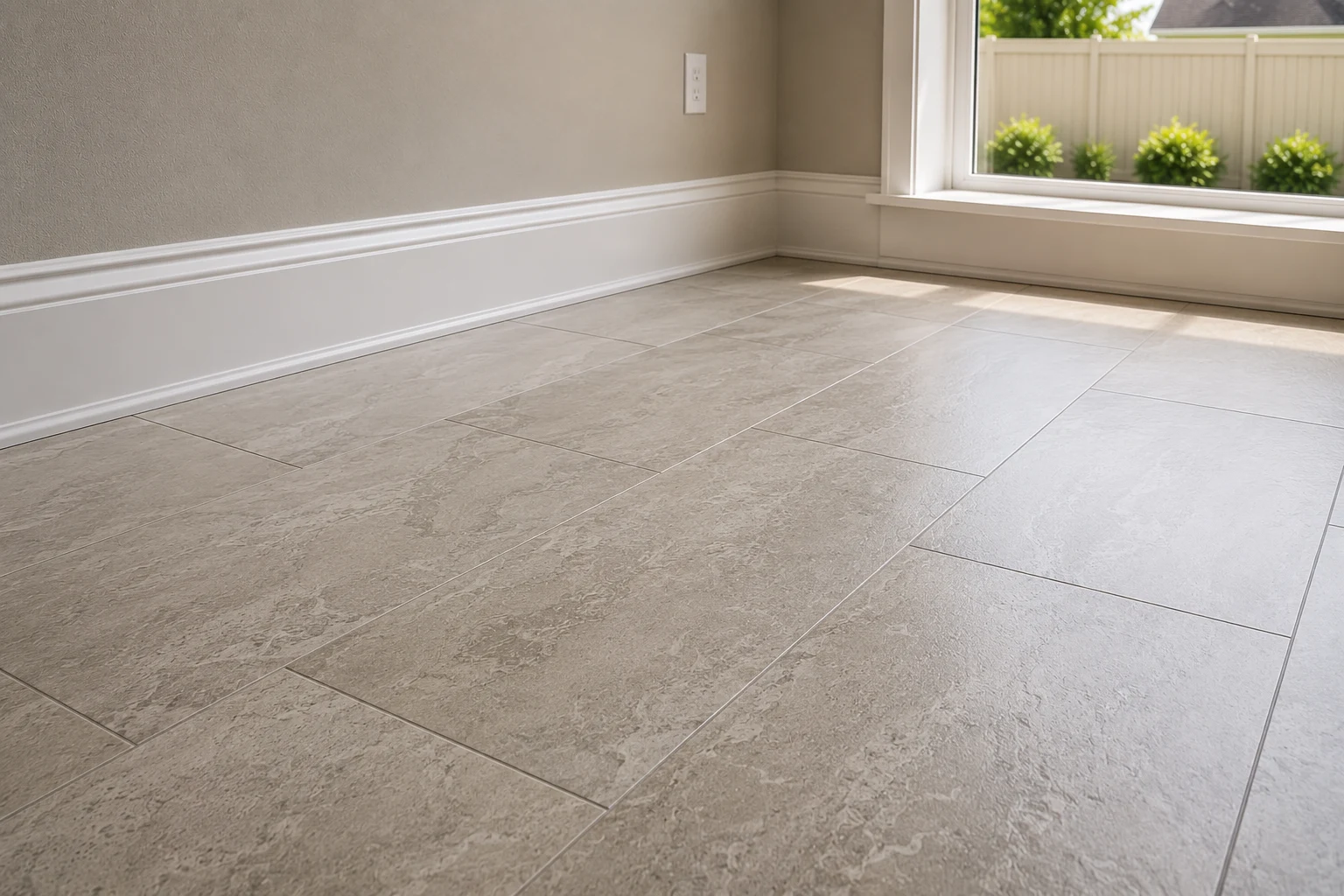
- Porcelain tile: the most durable choice for entries, kitchens, bathrooms and pool-side rooms. Hard and loud, so rugs help in living areas. Grout needs sealing or a stain-resistant product.
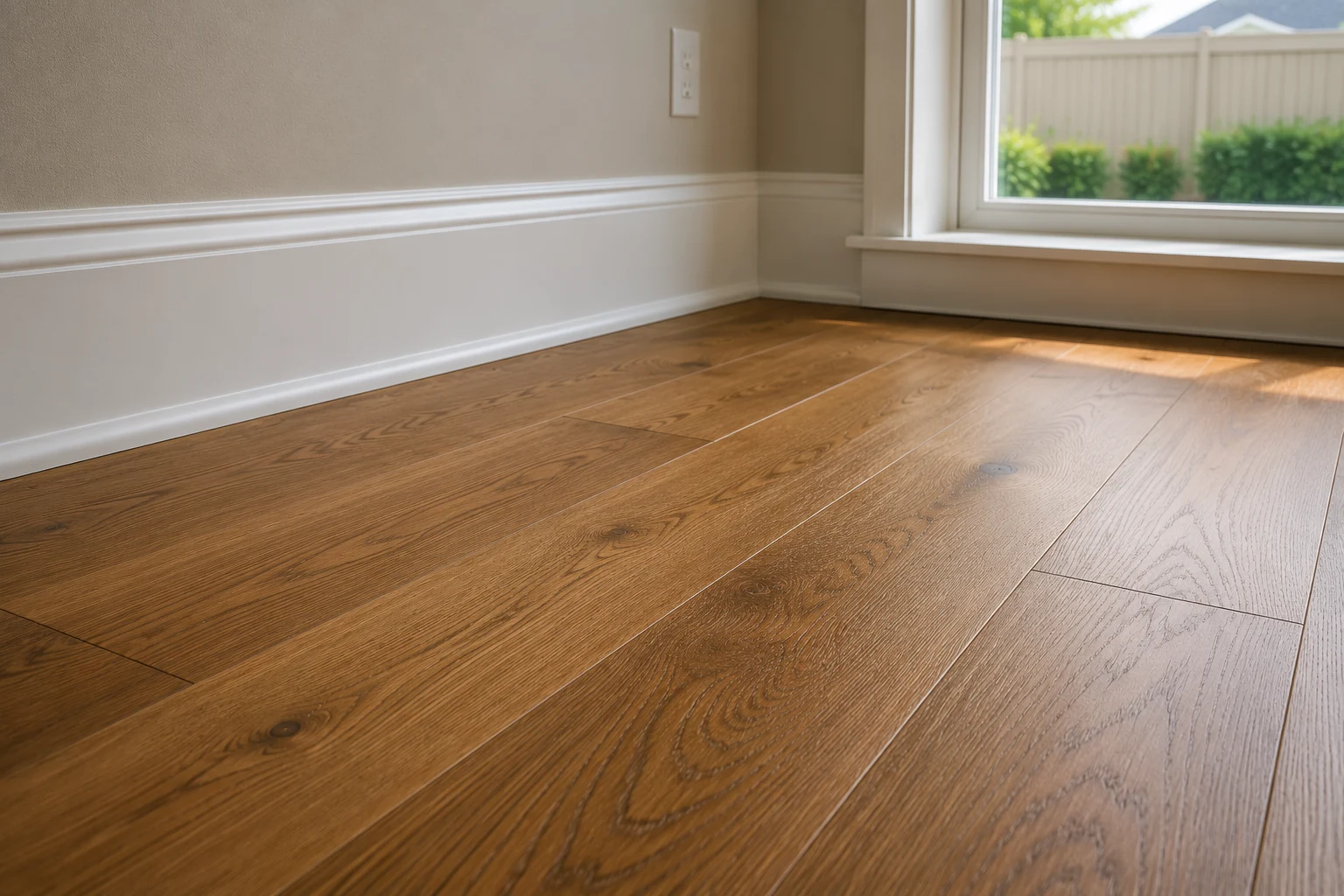
- Rigid-core vinyl plank: comfortable, quieter and fast to install and repair. Choose a wear layer and warranty suited to rental use and keep spares.
- Glue-down vinyl: easier single-plank repairs and less movement near sliding doors, with more slab preparation and adhesive moisture limits.
- Laminate: scratch-resistant but more sensitive to standing water, which limits it near pools and bathrooms.
- Carpet: soft but hard to keep clean between stays; many owners limit it to none or to washable rugs.
Most rentals end up with two floors at most: tile where water and sand arrive, and one durable plank everywhere else.
Waterproof vs Water-Resistant
Rental floors face water daily: showers, pool traffic, kitchen spills and mopping. Porcelain tile absorbs almost no water. Rigid-core vinyl will not swell when wet, but water that finds a seam or an edge can still end up on the slab beneath it. Laminate and wood are more vulnerable and are less common in rentals near pools.
In practice, the areas that take the most water, such as pool doors, bathrooms and laundry, are where tile earns its place. Where vinyl continues near those areas, sealing perimeters where manufacturers allow it, using mats and wiping standing water quickly make a difference.
Noise Between Floors in Townhomes
Two-story rentals and townhomes carry sound from upstairs bedrooms and lofts into living areas below. Hard floors transmit footfall noise more than carpet. Vinyl plank with an attached underlayment, or a sound-rated underlayment the manufacturer approves, reduces impact noise. Rugs in upstairs bedrooms help too.
In buildings where separate units are stacked, such as condos, the Florida Building Code sets sound transmission and impact insulation ratings for floor-ceiling assemblies between dwelling units, and associations often have their own requirements. Replacing a floor in a stacked unit can change how the assembly performs, so the building’s rules and the underlayment’s rating are checked before ordering.
Davenport and Four Corners Townhomes
Davenport and Four Corners, southwest of the parks, have many vacation homes and townhome communities designed for short-term rental. Those homes typically share walls and often have upstairs bedrooms over living areas, so noise, stairs and fast turnaround shape flooring choices. Community rules may also set standards for what can be installed. Owners in Davenport can review flooring services in Davenport for local availability.
Four Corners spans the corner of four counties, so county and community rules depend on exactly where the property sits; details are on the page for flooring in Four Corners.
ChampionsGate Properties
ChampionsGate is a resort community with many vacation homes and a mix of single-family homes, townhomes and condos. Resort communities often have their own architectural or association standards, and condos add rules about underlayment and approvals. Owners check those rules first, then choose a floor that fits both the property’s use and the association’s requirements.
Stairs and Lofts
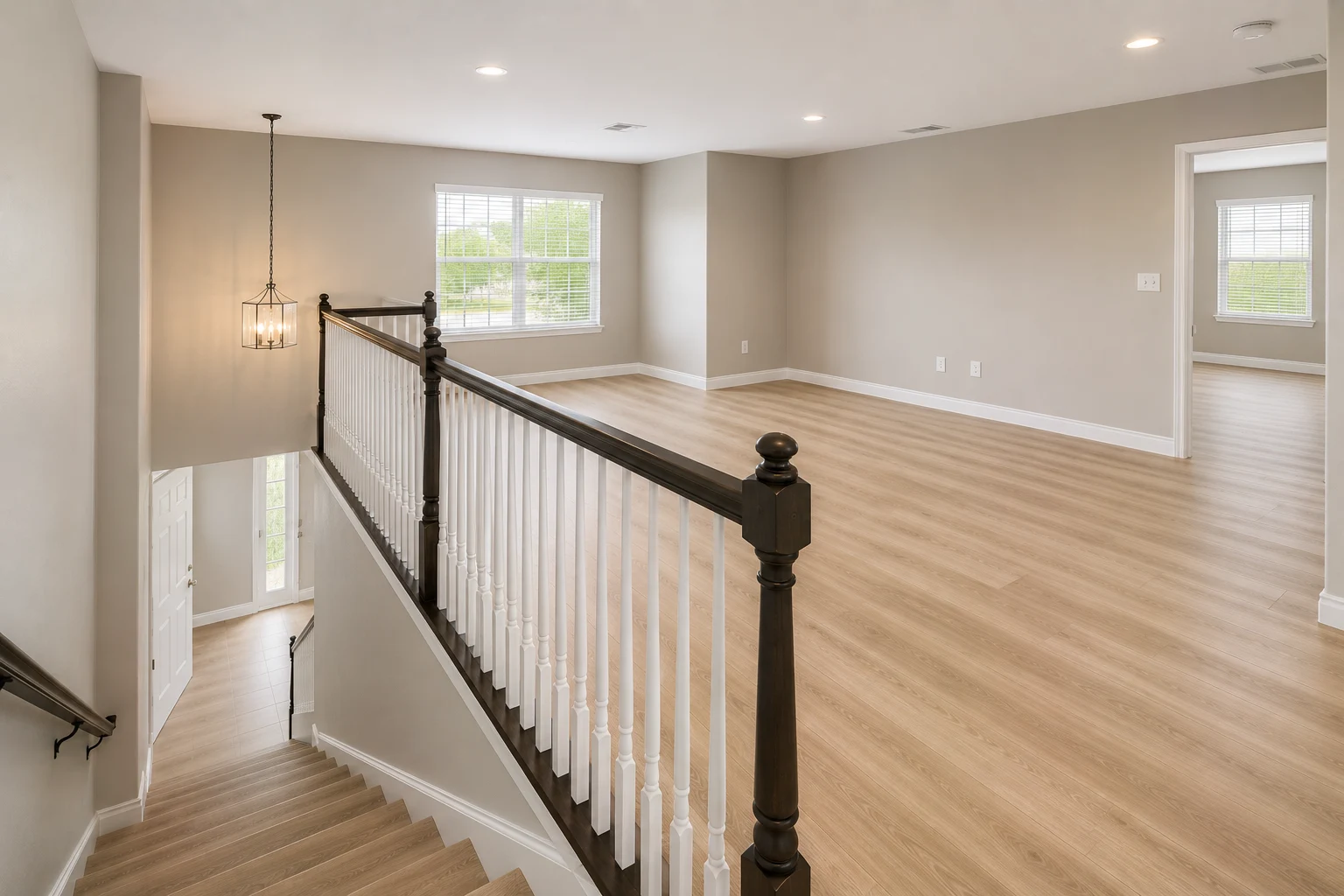
Two-story rentals add stairs and upstairs lofts, where children play and luggage is carried up and down. Stair nosings take the most wear in the house. Using the manufacturer’s matching stair parts, fastened as the instructions require, and choosing a surface with good grip makes stairs safer and longer lasting. Lofts over living areas benefit from sound-reducing underlayment and rugs.
Cleaning Between Guests
Turnover cleaning is fast and repeated, so the floor should clean easily with a simple routine:
- Tile tolerates frequent mopping. Grout is the weak point; sealed or stain-resistant grout and a consistent cleaner keep it looking fresh.
- Vinyl plank cleans with sweeping and damp mopping. Steam mops and harsh cleaners can damage some products, so the manufacturer’s approved products are shared with the cleaning crew.
- Mats and walk-off areas at entries catch sand before it spreads.
Leaving written care instructions for cleaning crews, with approved products, prevents damage from well-meaning but wrong methods.
Repairability: Replacing One Plank
Damage in a rental is certain; what matters is how fast it can be fixed. Keeping two or three boxes of the same product, from the same production run, in storage makes repairs possible without color mismatch. Products are discontinued, so spares bought at installation are often the only exact match later.
Glue-down vinyl allows a single damaged plank to be cut out and replaced. Floating floors are unclicked from the nearest wall, which is simple near edges and more involved in the middle of an open room. Tile repairs mean removing the damaged tile and grout carefully and setting a spare, with cure time before use.
Planning Work Around Bookings
Flooring work in a rental competes with the booking calendar. Useful steps:
- Block dates early, allowing extra time for preparation and cure times.
- Order materials in advance and confirm delivery before the start date.
- Acclimate materials as the manufacturer requires, which may mean delivery before installation begins.
- Plan furniture storage on site or off.
- Schedule cleaning and new listing photos after the work is finished.
Slow seasons are the natural window, but they are also when many owners schedule work, so contractors’ calendars fill up.
Documenting the Floor for Future Repairs
Keeping records makes future repairs faster: the product name, color, collection, production lot and installation date, along with the installer’s contact details and the warranty. Spare boxes are stored in a climate-controlled owner’s closet, not a hot garage, so they stay flat and match the installed floor. Photos of the finished floor, including transitions and stairs, help when a repair or claim is needed.
HOA and Community Standards
Many rental communities have homeowners’ or condo associations with rules affecting flooring: allowed materials, sound-rated underlayment in upper units, approval before work and working hours for contractors. Some require a written application. Checking those rules before buying materials avoids having to replace a new floor that does not comply.
Florida also regulates vacation rentals themselves. Transient rental properties are licensed through the state’s Department of Business and Professional Regulation, and local registration and rules can apply. Those requirements are separate from flooring but affect when and how a property can be taken offline for work.
Cost per Year of Service
Price per square foot is only part of the cost of a rental floor. A more useful comparison divides the installed cost, plus expected repairs, by the years before replacement. A floor that costs more but lasts much longer with fewer repairs can cost less per year, and less downtime means fewer lost bookings.
Useful factors to include:
- Installed cost with preparation, removal and trim.
- Expected service life under rental use, not residential marketing claims.
- Repair frequency and cost, including spare material.
- Downtime for installation and repairs.
- Cleaning time per turnover.
The same thinking applies to other features that make a rental competitive, such as outdoor spaces and whether a pool pays off for a short-term rental.
For rentals in Davenport, Kissimmee, Four Corners and nearby, flooring choices, preparation and scheduling around bookings are part of flooring installation.
Share this article