The short answer
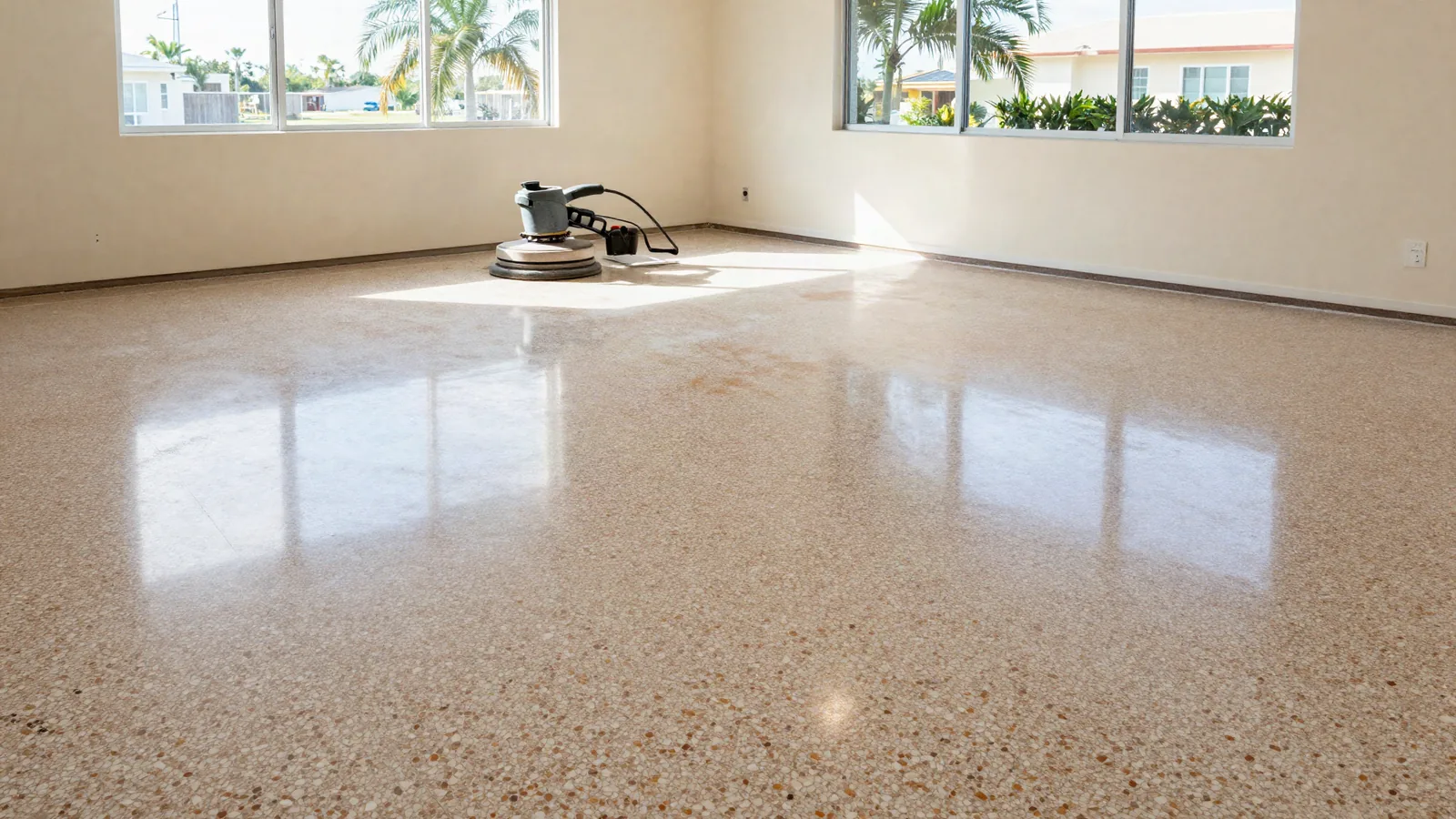
Terrazzo is a floor of marble, glass or other chips set in cement or epoxy, then ground and polished. Cement terrazzo found under old carpet or tile in older homes can often be restored: cracks and holes are filled, the surface is ground and honed with progressively finer abrasives, grouted, polished and sealed. Results depend on the floor's condition, and patches and some stains may not match or disappear completely.
HomeGuide's national cost data puts terrazzo restoration at roughly $3 to $8 per square foot for typical work, with a wider range for badly damaged floors, compared with roughly $20 to $50 per square foot for new terrazzo. Restoration is specialist work done by terrazzo contractors. Covering terrazzo with a new floor is still a reasonable choice when damage, cost or design make restoration impractical.
Key takeaways
- Terrazzo is made of aggregate chips in a cement or epoxy binder, ground and polished in place.
- Old adhesive, carpet tack strip holes and tile mortar are the most common damage found on covered terrazzo.
- Restoration follows a sequence: repair, grind, hone, grout, polish and seal.
- New aggregate patches can come close to the original, but an exact match is not guaranteed.
- Slip resistance depends on the finish and sealer; a polished floor is not automatically slippery, but wet floors need care.
Why Terrazzo Turns Up Under Old Flooring
Terrazzo is one of the oldest durable floor types still in use. The National Terrazzo and Mosaic Association describes it as chips of marble, glass or other aggregate set in a cement or epoxy binder, ground and polished after it cures. Its history goes back centuries, and two developments in the 1920s, divider strips and the electric grinding machine, made it practical for many more buildings.
In homes, terrazzo was usually poured in place over the slab, often with metal divider strips forming patterns or controlling cracks. When tastes changed, many owners covered it with carpet, vinyl or tile rather than removing it, since removing terrazzo is heavy work. Decades later, remodels uncover it again.
Finding it raises a real choice: restore it, cover it again or remove it. Each can be right, depending on the condition of the floor and the plan for the house.
How to Tell What Is Under Your Carpet or Tile
A few simple checks help before any decision:
- Look at a closet corner or a floor vent. Lifting carpet in a closet or looking at the edge of a register opening often reveals what lies below.
- Check for divider strips. Thin metal lines forming a grid or pattern are a strong sign of terrazzo.
- Look for chips in a smooth surface. Terrazzo shows scattered stone or glass chips in a matrix, unlike concrete, which looks uniform, or tile, which has grout lines.
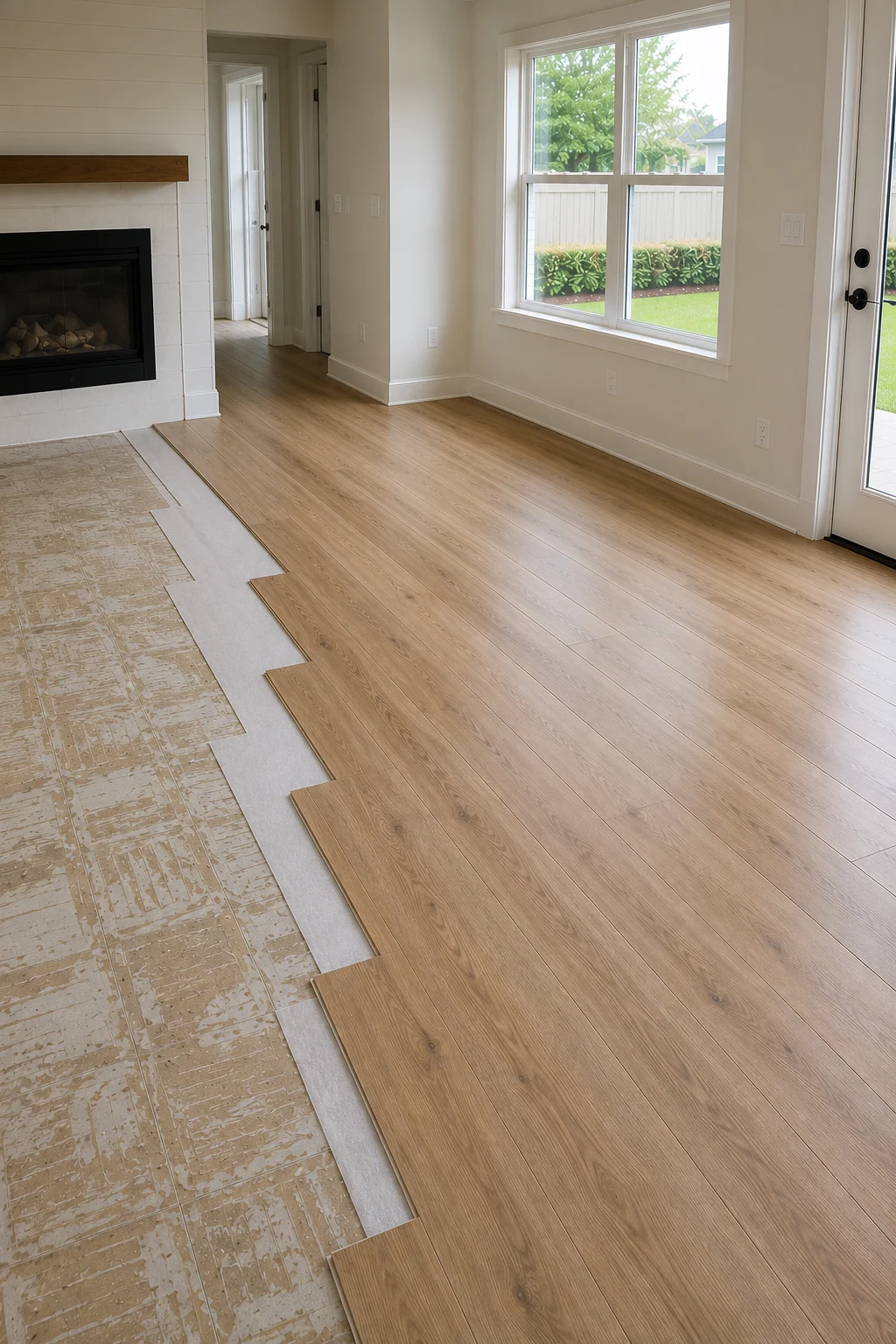
- Note what covers it. Carpet leaves tack strip holes near walls and sometimes glue. Tile leaves mortar, which is harder to remove and can damage the surface.
A terrazzo contractor can inspect a sample area to judge thickness, cracking, stains and repairs before quoting.
Removing Old Adhesive
Old flooring leaves residue. Carpet pad adhesive and tack strip nails are common; vinyl flooring and black mastic are harder. Some older vinyl flooring and adhesives contain asbestos, so older adhesives are tested before they are scraped, ground or sanded, and any asbestos-containing material is handled by a licensed abatement contractor. Tile mortar is chipped and ground away carefully, since aggressive removal can dig into the terrazzo and create more patching.
The Restoration Process Step by Step
The association’s restoration guidance describes a general sequence, adapted by contractors to each floor:
- Map and inspect cracks, holes, stains and old repairs.
- Repair cracks and holes with a filler, often a resin, colored to match the matrix, and replace badly damaged sections, typically back to the nearest divider strip.
- Initial grind to remove the damaged surface, old coatings and lippage between panels.
- Grout the surface with a matching cementitious or resin grout to fill small voids, then let it cure.
- Fine grind and hone with progressively finer abrasives.
- Polish to the desired sheen.
- Clean and seal with a sealer suited to terrazzo.
The exact number of steps and the cure times depend on the floor and the products used.
Grinding, Honing and Polishing Grits
Grinding and polishing use abrasives measured in grits, from coarse to fine. Coarse grits flatten the floor and remove damage; finer grits remove the scratches left by the previous step; the finest grits bring out the shine. For cement terrazzo, the association’s guidance describes wet grinding starting with a grit of 50 or coarser, then fine grinding with 120-grit carborundum or 200-grit resin abrasives before sealing.
Skipping steps leaves visible scratches. Going to a very high polish looks dramatic but shows scratches and wear sooner in busy areas, so many homeowners choose a honed or medium sheen for living spaces. The contractor can show samples on the actual floor.
Cement vs Epoxy Terrazzo
Most terrazzo found under old flooring in homes is cement-based: a thicker layer of cement matrix and aggregate. Epoxy terrazzo is a thinner system that uses a resin binder, allows more colors and patterns and is common in newer and commercial buildings. The two are restored with different materials and techniques, and epoxy terrazzo is generally recommended for interior use because sunlight can affect it. A contractor identifies the type before quoting.
Crack and Chip Repair
Cracks in terrazzo often reflect cracks in the slab below. Small, stable cracks are filled with a colored filler so they are less noticeable. Wide or moving cracks may return, since the slab can keep moving; a filler repairs the surface, not the slab. Chips and holes from tack strips, plumbing changes or removed walls are filled with matching material.
Where plumbing was moved or walls were removed, larger sections may need new terrazzo poured to match. Those areas are the hardest to blend.
Matching Aggregate in Patches
Patches are made with chips and binder chosen to look like the original. Old floors used aggregate that may not be available today, and time and wear change how the original looks. The association’s guidance notes that matching may not be exact. A good match comes close from a standing distance, but patches can remain visible up close. Asking to see a sample patch before full restoration sets expectations.
Sealing and Long-Term Care
Cement terrazzo is porous enough to absorb stains without protection. A penetrating sealer suited to terrazzo reduces absorption and makes cleaning easier. Care after restoration is straightforward:
- Dust mop regularly to remove sand, which scratches polished floors.
- Clean with pH-neutral cleaners made for terrazzo or stone. Acidic cleaners, vinegar and harsh alkaline cleaners can dull or etch the surface.
- Wipe spills quickly, especially acidic ones such as juice or wine.
- Use mats at entries, particularly doors from the pool or yard.
- Reseal on the schedule the sealer manufacturer recommends.
Not every stain comes out. Deep stains from rust, oils or old adhesives may lighten but remain partly visible after restoration.
Slip Resistance After Polishing
A common concern is that polished terrazzo will be slippery. The association notes that terrazzo is not inherently slippery, and slip resistance depends heavily on the finish and on the sealer or coating applied. Some topical coatings are slicker than a properly sealed, honed or polished surface. Water, sand and soap residue on any hard floor reduce traction, so mats near pool doors and prompt cleanup of spills matter as much as the finish.
When Covering Makes More Sense
Restoration is not always the right answer. Covering the terrazzo with a new floor may be more practical when:
- Damage is extensive, with many removed walls, plumbing trenches or large missing areas that would need new pours.
- The floor stops and starts across rooms because of past additions, making a consistent result hard.
- The owner does not like the look of the aggregate or colors, even restored.
- Budget or schedule favors a faster floor.
- Floor heights must match other new floors in the house.
Covering keeps the option open for a future owner, and a floating floor over terrazzo can be removed without harming it.
Restoration Cost vs New Flooring
HomeGuide’s cost data puts terrazzo restoration at roughly $3 to $8 per square foot for typical work, with extremes from about $1 for light cleaning to $20 or more for badly damaged floors. New poured terrazzo runs roughly $20 to $50 per square foot or more, which is why existing terrazzo is usually worth evaluating. These are national reference figures for budgeting, not a quote from a terrazzo contractor; the extent of cracking and patching, old adhesive and the final sheen decide the actual price.
Covering terrazzo with a new floor is another option. The terrazzo becomes the substrate, and it is usually solid and flat. The cost is the new floor plus whatever preparation the manufacturer requires, such as flattening lippage between panels or roughening a polished surface for adhesion, as covered in preparing a slab for new flooring. The terrazzo remains for a future owner to uncover.
Removing terrazzo is the most expensive path: it is thick, hard and bonded to the slab. It is usually chosen only when floor heights must change or the floor is too damaged to use.
Where the terrazzo is covered, the choice between tile and vinyl plank on top follows the same logic as any slab, which comparing porcelain and vinyl plank covers.
Questions to Ask a Terrazzo Contractor
- Is the floor cement or epoxy terrazzo, and how thick is it?
- Which cracks and holes will be filled, and how will patches be matched?
- Can a sample area be done first, including a patch?
- How many grinding and polishing steps are planned, and what final sheen?
- Which sealer will be used, and how often should it be reapplied?
- How will slurry and dust be contained, and which rooms are affected?
- How long do fills and grout cure before the next step?
Clear answers make quotes comparable and set expectations about patches and stains.
Living in the House During Restoration
Restoration takes rooms out of use. Furniture is removed, doors and baseboards are protected, and wet grinding produces slurry that is collected and disposed of. Fills and grout need time to cure between steps, so work may pause for a day or more. Households often plan restoration before moving in, during other remodeling work, or room by room when they are living in the home.
Resale and Buyer Appeal
Restored terrazzo appeals to some buyers who value its durability and character, especially in homes where it suits the architecture. Other buyers prefer a uniform modern floor. There is no reliable data showing a consistent sale-price premium for restored terrazzo, so restoration is best decided on its merits: condition, cost, design and how long the owner plans to stay.
A restored floor that runs through the main living areas, with patches that blend and a finish that suits the house, tends to make the strongest impression. A floor restored in one room and covered in the next can look inconsistent.
When the terrazzo is part of a larger remodel, its decision is made alongside walls, kitchen and bathroom changes, which is how it fits into a whole-home remodel.
Restoration itself is specialist terrazzo work. For homes where the terrazzo is covered, preparing it and installing the new floor is part of flooring installation.
Share this article