The short answer
Start by confirming, on the state's MyFloridaLicense.com lookup, that the company holding your permit has an active Florida pool/spa contractor license, then ask for current certificates of insurance. After that, compare quotes line by line on the same scope, read the contract for allowances, change order terms and exclusions, and make sure payments follow completed work rather than running ahead of it.
Florida law gives you useful tools: a contractor who takes more than 10 percent of the price as an initial payment must apply for permits within 30 days and start within 90 days of permit issuance, and the construction lien law lets you protect yourself against unpaid subcontractors and suppliers. Use both.
Key takeaways
- Verify the license of the entity that will pull the permit, not just the salesperson or the brand name on the truck.
- A cheaper quote is often a narrower scope. Put quotes side by side on the same lines before comparing totals.
- Payments should trail the work. A schedule that asks for most of the money before the shell is built carries risk you do not need.
- Collect lien releases for work that others performed on your pool, especially from anyone who sent you a Notice to Owner.
- Warranties differ for the shell, the interior finish, equipment and workmanship. Get each one in writing.
Licensing and Insurance to Verify First
Nothing else about a builder matters if the company is not legally allowed to do the job or is not insured when something goes wrong. Check those two things before you spend an hour comparing tile samples.
Florida licenses pool contractors under Chapter 489 of the Florida Statutes. The residential pool/spa contractor category covers constructing, repairing and servicing residential pools and spas, including the equipment, interior finishes and heaters that come with them. Its scope does not include direct connections to the sanitary sewer or to potable water lines, and electrical work is permitted and inspected separately, so other licensed trades are part of most pool jobs.
The key point is who holds the permit. The license that matters is the one attached to the company that will pull your pool permit and answer for the work.
CPC License Lookup
Certified pool/spa contractor licenses carry the prefix CPC. Search the license number or business name on MyFloridaLicense.com, the Department of Business and Professional Regulation’s public lookup. Confirm that the license is active, that it is a pool contractor license, and that it belongs to the business named on your contract, not a different entity or a person who is no longer with the company.
Then ask for certificates of insurance sent directly from the insurance agent: general liability, and workers’ compensation or a valid exemption for the people who will be on your property. A certificate you receive from the agent is harder to fake than a PDF from a salesperson.
Questions to Ask on the First Call
A first conversation should tell you how the builder thinks, not just what they charge. Useful questions:
- Who pulls the permit, and under which license?
- Which parts of the job do your own crews do, and which are subcontracted?
- Who will be my point of contact during construction, and how will I hear about inspections?
- How do you handle groundwater, and what happens if you find it during excavation?
- What is your typical sequence from permit to final, and what usually delays it?
- Can I see pools you built several years ago, not just last month?
Pay attention to how specific the answers are. “We handle everything” is not an answer to “who does the plumbing.”
Checking Past Work
Photos on a website show what a builder wants you to see. Two checks show more. First, permit history: many building departments let you search permits by contractor, which shows how many pools a company has permitted locally and whether those permits were closed with a final inspection. Second, older pools: ask to see or speak with owners of pools that are five or more years old. Finishes, coping joints and decks tell the truth about workmanship only after a few Florida summers.
Design and Engineering Capability
A rendering is a sales tool; engineered drawings are what the building department reviews and what the crew builds from. Ask who produces the structural engineering, whether the design accounts for your survey, setbacks and drainage, and how changes to the design are handled once the permit is issued. A builder who is vague here tends to be vague when the site does something unexpected.
How You Will Be Kept Informed
Pools are built in stages with gaps between them, and the gaps are where owners worry. Agree before signing how you will hear about inspections, delays and decisions that need your input, and who the single point of contact is. Weekly updates by message are enough for most projects, as long as they actually happen.
How to Compare Three Quotes Fairly
Quotes are only comparable when they describe the same pool, the same deck, the same enclosure and the same inclusions. Lay them out line by line before looking at totals.
| Complete quote | Incomplete quote | |
|---|---|---|
| Pool description | Dimensions, depths, surface area, features | Shape name or rendering only |
| Equipment | Brand and model for pump, filter, heater | Generic description |
| Finishes | Named product or allowance with a dollar value | Unspecified |
| Deck and enclosure | Material, square footage, included or excluded | Not mentioned |
| Permits and engineering | Stated as included, with fees | Silent |
| Exclusions | Listed, with how extras are priced | None listed |
When all three quotes are complete, differences in price mean something. When one is incomplete, its lower total usually reflects what it left out. Knowing the typical cost lines and published price ranges makes it easier to spot which one.
Allowances vs Fixed Scope
An allowance is a budget placeholder for something not yet chosen, like waterline tile or coping. It is normal, but low allowances make a quote look cheaper than the pool you will actually select. For each allowance, ask what product it assumes, and agree in writing on how overages and credits are handled.
Red Flags in a Pool Contract
Read the contract as if the project were going badly, because that is when it matters. Warning signs include:
- no license number, or a license that belongs to a different business than the one on the contract;
- a completion date with no mention of weather, inspections or permit timing;
- vague scope, such as “standard deck” or “equipment package,” with no specifics;
- exclusions for conditions that are common locally, like groundwater, without saying how they will be priced;
- a requirement to pay large sums before any work is done;
- no description of warranties, or a single line covering everything.
Change Order Terms
Changes happen. What matters is that the contract says how they are requested, priced and approved, and that nothing changes without a signed change order showing the cost and the effect on the schedule. Verbal changes are the source of most end-of-project disputes.
Payment Schedules and Draw Structure
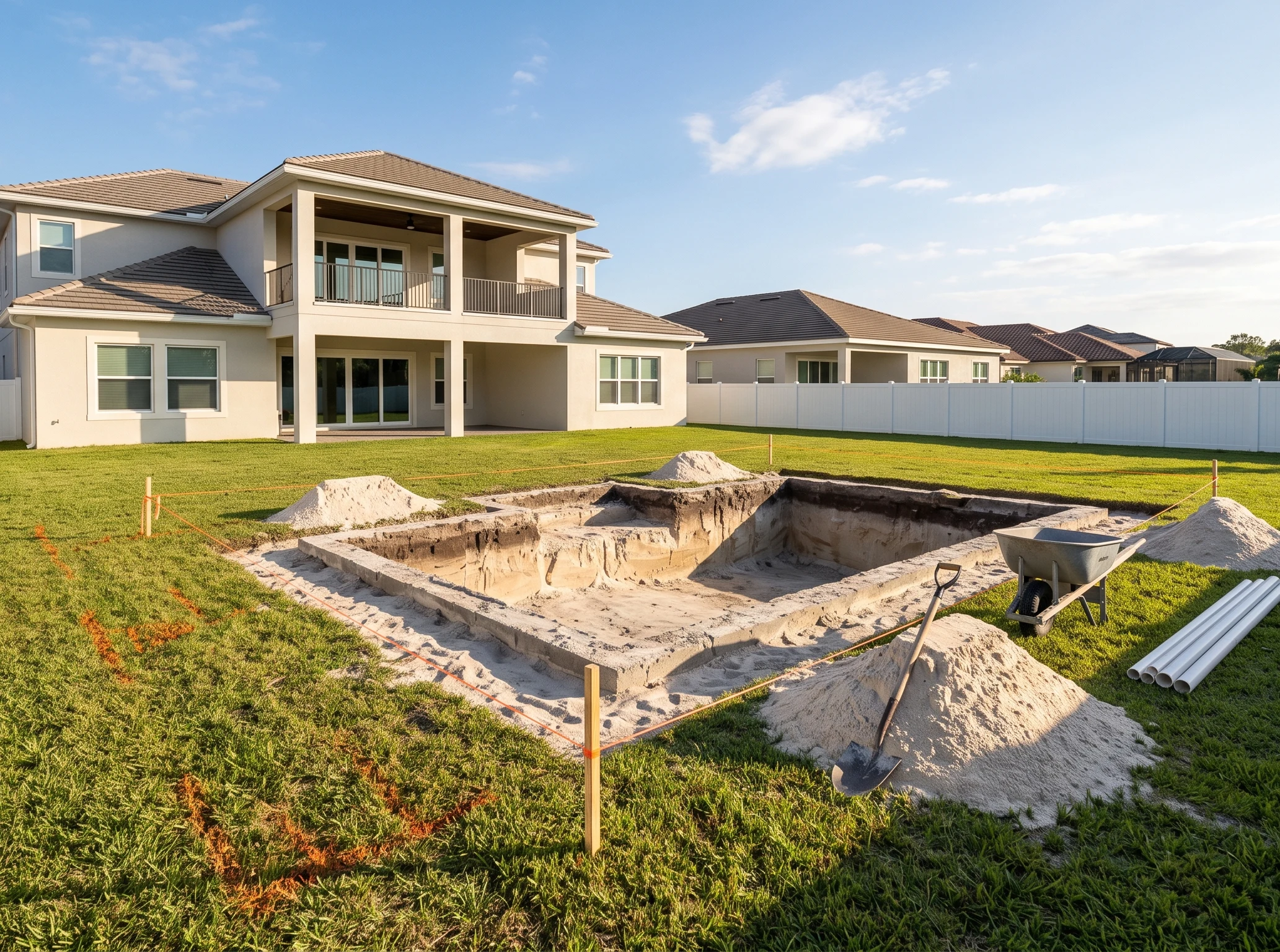
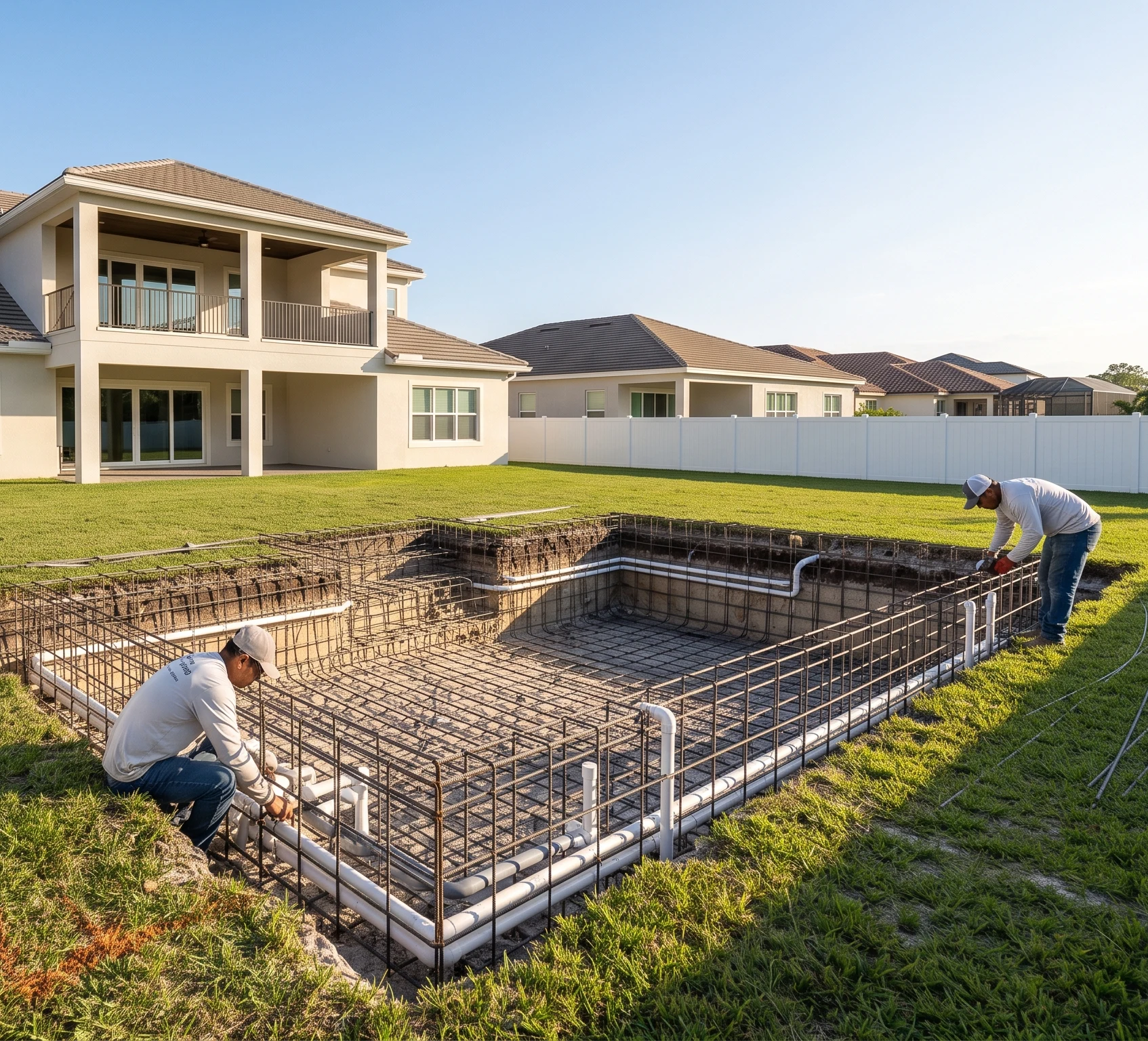
A healthy payment schedule releases money as stages are completed: after excavation and steel, after the shell, after tile and deck, at interior finish and at final. Each payment should be tied to a stage you can see, not to a date.
Florida law adds a protection. Under section 489.126 of the Florida Statutes, a contractor who receives more than 10 percent of the contract price as an initial payment must apply for the necessary permits within 30 days and start work within 90 days after the permits are issued, unless there is just cause or you agreed otherwise in writing. Knowing this helps you judge whether a deposit request is reasonable.
The lien law matters too. When the contract exceeds $5,000, a notice of commencement is recorded before the first inspection. Subcontractors and suppliers who are not paid by the contractor may have lien rights against your property, and those who want to preserve them typically send you a Notice to Owner. Before final payment, collect releases from them and the contractor’s final payment affidavit. The notice of commencement is also part of what the permit side involves, since building departments ask for it before the first inspection.
Subcontractors vs In-House Crews
Most pool builders use specialized crews for parts of the job. Excavation, steel, shotcrete, plumbing, tile and interior finishes are often done by different teams, and electrical work is done under its own permit. That is normal and not a quality problem in itself.
What matters is coordination and accountability. The permit holder is responsible for all of it. Ask who schedules the trades, who inspects each stage before the next one covers it, and who you call if a subcontractor’s work has to be redone. Knowing how the construction stages follow each other makes those answers easier to judge.
Warranty: What Is Actually Covered
“Lifetime warranty” means little until you know what it covers. Pools have several warranties at once, and each should be in writing:
| Item | Usually covered by | What to ask |
|---|---|---|
| Structure (shell) | The builder | What defects, for how long, and what voids it? |
| Interior finish | The applicator and the finish manufacturer | What water chemistry records are required? |
| Equipment | Each manufacturer | Does it need registration, and who handles claims? |
| Workmanship | The builder | Which items, and for how long? |
Many finish and equipment warranties depend on proper startup and chemistry, so keep records from the first week.
After the Build: Service and Support
The builder’s job does not end at final inspection. You should receive a proper handover: how the equipment works, what the startup schedule requires, what the safety features are and how to keep them working. Florida’s pool safety law requires pool contractors to provide buyers with information on the law and on drowning prevention.
Ask before signing what happens after the pool is finished. Who answers when the heater faults in January? Does the builder offer service, or refer you to someone? A builder with a clear answer to these questions is usually one that expects to be around.
These questions apply to any builder, including us. How we plan a pool, from the survey and permit to the enclosure and heating, is described on our custom pool design and construction page.
If you would rather ask them directly about your own project, the team is reachable through our contact page.
Share this article